


Have you ever wondered why some experts effortlessly attract high-paying clients while others struggle to fill their pipeline? In the fast-paced world of professional services, the secret often lies in how you nurture your professional network.
Email Marketing for Consultants serves as the most reliable bridge between your expertise and your ideal audience. By mastering direct outreach, you can consistently generate leads while positioning your brand as a trusted authority in your niche.
Digital communication remains the backbone of sustainable business growth. Email marketing for consultants provides one of the most effective ways to build lasting client relationships. When you prioritize high-value interactions, you transform cold prospects into long-term partners. This guide will show you how to scale your practice through intentional, strategic messaging that resonates with your target market.
Key Takeaways
- Direct outreach is the most effective way to build sustainable consulting pipelines.
- Establishing thought leadership requires consistent and valuable communication.
- Strategic messaging helps you connect with high-value prospects effectively.
- Scaling your business depends on nurturing long-term professional relationships.
- Modern outreach tools allow you to automate growth without losing a personal touch.
Start Growing Your Consulting Business
Stop relying on unpredictable social media algorithms to find new clients. Build meaningful relationships, automate follow-ups, and turn subscribers into loyal consulting clients with powerful email marketing tools. Start your free trial today and experience an easier way to generate consistent leads.
The Strategic Value of Email Marketing for Consultants
You might wonder why email remains the gold standard for high-ticket consulting in an era of fleeting social media trends. While platforms come and go, your email list serves as a permanent asset that you fully own. Implementing effective Email Marketing for Consultants allows you to bypass the noise and reach your ideal clients directly in their private inbox.
Building Authority Through Consistent Communication
Consistency is the bedrock of professional trust. With email marketing for consultants, consistency helps establish long-term credibility. When you show up regularly with high-value insights, you transform from a stranger into an indispensable expert. By sharing case studies, industry analysis, and actionable advice, you demonstrate your competence long before a contract is signed.
This steady stream of communication keeps your brand top-of-mind for prospects who are not yet ready to buy. Over time, this nurturing process builds the deep credibility required to secure high-ticket engagements. Successful Email Marketing for Consultants relies on providing genuine value rather than just pushing for a sale.
Why Email outperforms Social Media for High-Ticket Services
Social media platforms rely on complex algorithms that often hide your content from your own followers. You are essentially renting space on someone else’s platform, which leaves your business vulnerable to sudden policy changes. In contrast, email provides a stable and reliable channel for your most important messages.
High-ticket services require a level of intimacy and focus that a public feed cannot provide. This is why email marketing for consultants remains highly effective. When you send an email, you are invited into a private space where the reader can focus entirely on your expertise. This direct connection fosters a professional relationship that is far more likely to convert into a lucrative consulting partnership.
Defining Your Target Audience and Ideal Client Profile
Precision in your messaging begins with a deep understanding of your target audience. When you know exactly who you are serving, your consultant email marketing efforts become far more effective. You stop casting a wide net and start speaking directly to the people who value your expertise most.
Segmenting Your List by Industry and Pain Points
Generic emails rarely convert because they fail to address the specific hurdles your prospects face. By segmenting your list, you ensure that your content remains highly relevant to the recipient’s current situation. You should categorize your subscribers based on their industry vertical and the primary challenges they encounter daily.
For instance, a healthcare executive deals with different regulatory pressures than a retail manager. When you tailor your consultant email marketing to these specific pain points, you demonstrate that you understand their world. This level of detail builds immediate trust and positions you as a problem-solver rather than just another vendor.
Creating Buyer Personas for Personalized Outreach
Developing detailed buyer personas allows you to humanize your data. A persona is a semi-fictional representation of your ideal client based on real research and educated assumptions. By mapping out their goals, fears, and decision-making processes, you can craft messages that resonate on a personal level.
Consider the following table to help you organize your outreach strategy based on different client archetypes:
| Client Persona | Primary Pain Point | Desired Outcome | Communication Focus |
|---|---|---|---|
| The Busy Executive | Lack of time | Operational efficiency | Concise, ROI-driven data |
| The Startup Founder | Scaling challenges | Rapid market growth | Innovation and agility |
| The Operations Manager | Process bottlenecks | System optimization | Technical implementation |
| The HR Director | Talent retention | Cultural alignment | People-centric solutions |
Using these personas ensures that your consultant email marketing remains focused and impactful. When you speak to the specific needs of these individuals, you increase the likelihood of engagement. Remember, the goal is to provide value that makes your prospect feel understood and supported in their professional journey.
Building a High-Quality Consulting Email List
Building a high-quality consulting email list is the cornerstone of a sustainable and profitable practice. Email marketing for consultants starts with a quality subscriber list. Rather than focusing on vanity metrics like total subscriber count, you should prioritize the relevance and engagement of your audience. A smaller, highly targeted list often yields better results than a massive, disinterested one.
Effective consultant email marketing relies on the principle of value exchange. You provide high-level insights, and in return, your prospects grant you access to their inbox. This foundation of trust is essential for long-term business growth.
Developing Lead Magnets That Solve Specific Problems
To attract the right people, your lead magnet must address a pressing pain point. Avoid generic offerings like “sign up for my newsletter.” Instead, create resources that provide immediate, actionable solutions to your clients’ most difficult challenges.
“The best marketing doesn’t feel like marketing; it feels like a helpful conversation that solves a real problem.”
Consider the following types of lead magnets that resonate with high-ticket clients:
- Industry Benchmarking Reports: Data-driven insights that help clients compare their performance.
- Strategic Checklists: Step-by-step guides for complex operational tasks.
- Video Mini-Courses: Short, high-impact lessons that demonstrate your expertise.
Optimizing Landing Pages for Maximum Conversion
Your landing page serves as the digital storefront for your expertise. To effectively generate leads, you must remove distractions and focus the visitor’s attention on a single, clear objective. A cluttered page often leads to higher bounce rates and missed opportunities.
The following table highlights the key differences between high-converting and low-converting landing pages:
| Feature | High-Converting Page | Low-Converting Page |
|---|---|---|
| Headline | Benefit-driven and clear | Vague or overly clever |
| Navigation | Removed to focus attention | Full site menu included |
| Call to Action | Specific and urgent | Generic “Submit” button |
Essential Elements of a High-Converting Opt-in Form
The opt-in form is the final hurdle in your lead generation process. Keep your form fields to a minimum to reduce friction; usually, a name and email address are sufficient. Psychological triggers, such as social proof or a clear privacy statement, can significantly increase your conversion rates.
Ensure your button copy is action-oriented, such as “Get My Free Guide” rather than “Subscribe.” By refining these small details, you will consistently generate leads that are genuinely interested in your services. This systematic approach ensures your consultant email marketing efforts remain both efficient and highly effective.
Crafting an Effective Email Marketing Strategy
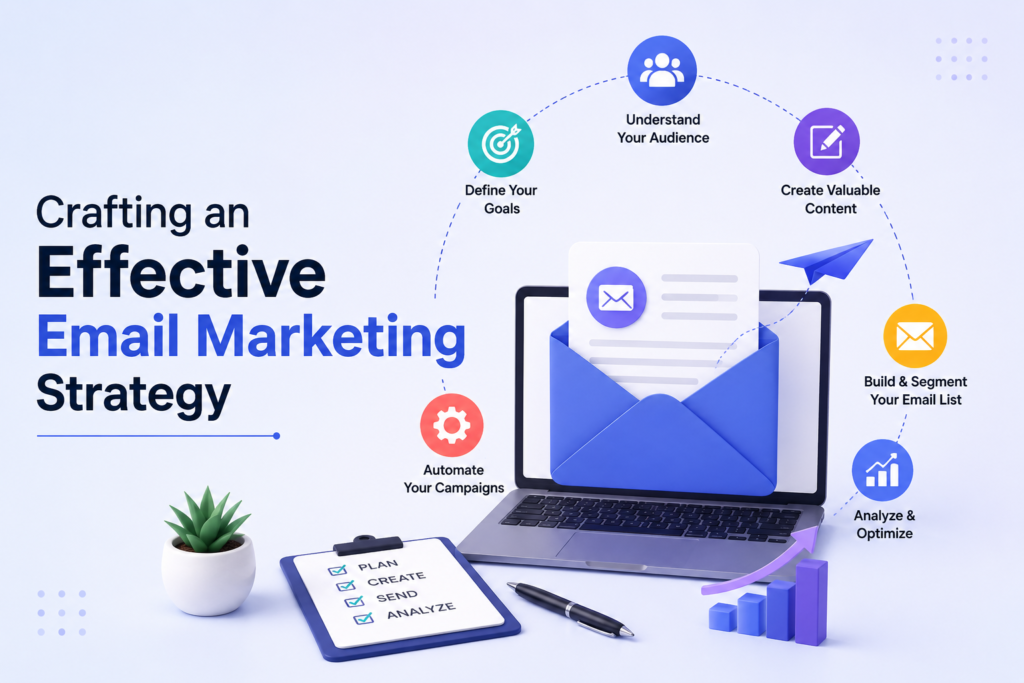
Building a sustainable email marketing strategy is the foundation of long-term growth for your consulting practice. An effective email marketing for consultants strategy delivers consistent leads. A well-defined plan ensures that every message you send aligns with your broader business goals and resonates with your ideal clients. By moving beyond random outreach, you create a predictable path for lead generation and client retention.
Defining Your Content Pillars and Value Proposition
Your content pillars act as the thematic anchors for your communication. These pillars should directly reflect your unique value proposition, highlighting the specific problems you solve for your clients. When you consistently address these core topics, you establish yourself as a trusted authority in your niche.
Start by identifying three to four key areas where your expertise provides the most impact. Whether you focus on operational efficiency, leadership development, or financial strategy, ensure your content remains laser-focused on these themes. This clarity helps subscribers understand exactly why they should keep reading your emails.
Establishing a Sustainable Sending Cadence
Consistency is more important than frequency when it comes to maintaining a healthy email marketing strategy. You must choose a schedule that you can realistically maintain over the long term without burning out. Whether you decide on a weekly newsletter or a bi-weekly deep dive, the key is to show up when your audience expects you.
A predictable cadence keeps you top-of-mind without overwhelming your subscribers’ inboxes. If you struggle to find time, consider batching your content creation to stay ahead of your deadlines. Remember, reliability builds trust, and trust is the currency of high-ticket consulting.
Balancing Educational Content with Promotional Offers
Finding the right mix between providing value and asking for business is a delicate art. A common mistake is to lean too heavily into sales pitches, which can quickly lead to list fatigue. Instead, prioritize educational content that solves immediate pain points for your readers.
Aim to provide value in at least 80% of your communications. Use the remaining 20% to introduce your services, share case studies, or invite subscribers to discovery calls. By leading with helpful insights, you ensure that your promotional offers feel like a natural next step rather than an intrusion.
Writing Emails That Drive Engagement and Action
If you want to turn prospects into clients, email marketing for consultants requires persuasive email copy. The effectiveness of your outreach depends on your ability to write compelling copy that resonates with your audience. When you master these techniques, you will find it much easier to generate leads and build a sustainable pipeline of high-value consulting work.
Mastering Subject Lines That Increase Open Rates
Your subject line is the gatekeeper of your message. Successful email marketing for consultants depends on compelling subject lines. If it fails to pique interest, the rest of your hard work remains unseen. To increase your open rates, keep your subject lines short, relevant, and focused on the specific benefit you offer.
Avoid generic phrases that sound like automated spam. Instead, use curiosity or a direct promise to encourage the click. Testing different variations will help you identify what resonates best with your specific audience as you generate leads consistently.
Structuring Your Body Copy for Readability and Impact
Once a prospect opens your email, your structure determines whether they read it or delete it. Use short paragraphs and bullet points to make your content easy to scan. Most professionals read emails on mobile devices, so brevity is your best friend.
Ensure your primary call to action is clear and easy to find. Do not bury your request in a wall of text. By keeping your message focused on one clear goal, you significantly improve the chances that your reader will take the next step.
Using Storytelling to Build Trust with Prospects
Facts and figures are important, but stories build authentic trust. When you share a brief, relevant anecdote about a challenge you helped a client overcome, you demonstrate your expertise in a human way. This approach makes your outreach feel personal rather than transactional.
Effective storytelling allows your prospects to see themselves in your narrative. It bridges the gap between being a stranger and becoming a trusted advisor. As you refine your storytelling skills, you will notice a higher quality of engagement as you generate leads for your consulting business.
Automating Your Lead Nurturing Process
Implementing a robust email marketing strategy allows you to stay top-of-mind while you focus on billable client work. Automation serves as the engine that keeps your pipeline moving, ensuring that no prospect is left behind due to a busy schedule. By setting up these systems, you create a professional experience that builds trust automatically.
Automate Your Emails. Focus on Your Clients.
Save hours every week with automated email sequences, audience segmentation, and personalized campaigns that work around the clock. Let automation nurture your leads while you focus on delivering exceptional consulting services.
Designing Welcome Sequences for New Subscribers
The first interaction a new subscriber has with your brand sets the tone for the entire relationship. A well-crafted welcome sequence should immediately introduce your unique expertise and solve a pressing problem for the reader. Consistency is key during these first few days to ensure your brand remains memorable.
Start by delivering the value you promised in your lead magnet. Follow this with a brief introduction that highlights your background and the specific results you have achieved for past clients. This approach establishes your authority and encourages the subscriber to look forward to your future messages.
Setting Up Drip Campaigns for Long-Term Nurturing
Once the initial welcome phase concludes, you must maintain engagement through consistent, high-value content. Drip campaigns allow you to nurture prospects over weeks or months without requiring daily manual input. This email marketing strategy ensures that you remain a helpful resource until the prospect is ready to hire you.
Focus your drip content on educational insights, case studies, and industry trends that matter to your target audience. By providing genuine value rather than constant sales pitches, you foster a deeper connection. This long-term approach keeps your consulting services at the forefront of their minds when a need arises.
Triggering Emails Based on User Behavior
Modern automation tools allow you to send messages based on how a user interacts with your content. If a subscriber clicks a link about a specific service, you can trigger a follow-up email that provides more detailed information on that topic. This level of personalization makes your communication feel timely and highly relevant.
Behavioral triggers ensure that your outreach aligns with the prospect’s current stage in the decision-making process. Whether they download a white paper or visit your pricing page, you can respond with the exact information they need to move forward. Utilizing this dynamic email marketing strategy significantly increases your chances of converting leads into high-paying clients.
Measuring Success Through Key Performance Indicators
Transforming raw email data into actionable business intelligence is a critical skill for consultants. Measuring email marketing for consultants performance is essential. By tracking specific metrics, you gain a clear view of how your email marketing strategy performs in the real world. This objective approach allows you to move beyond guesswork and focus on what truly drives growth for your practice.
Analyzing Open Rates and Click-Through Rates
Your open rate serves as the primary indicator of your subject line effectiveness and brand recognition. If your subscribers consistently open your emails, it suggests that your content resonates with their current needs. High engagement at this stage is the first step toward building a lasting professional relationship.
Click-through rates provide deeper insight into the relevance of your call-to-action. When readers click your links, they demonstrate a clear interest in your expertise or services. Monitoring these clicks helps you identify which topics spark the most curiosity among your target audience.
Tracking Conversion Rates to Revenue
Connecting your metrics to actual revenue is the ultimate test of your email marketing strategy. You must track how many subscribers transition from passive readers to active consulting clients. This conversion data reveals the true financial value of your list and helps justify the time spent on content creation.
By integrating your email platform with your CRM, you can attribute specific leads to individual campaigns. This level of visibility ensures that you understand exactly which messages lead to booked discovery calls or signed contracts. Data-driven decision-making allows you to prioritize high-converting content over vanity metrics.
Refining Your Strategy Based on Data Insights
Once you have gathered sufficient data, you can begin to optimize your outreach efforts. Use your findings to adjust your sending cadence, refine your messaging, or pivot your content pillars. Continuous improvement is the hallmark of a sophisticated email marketing strategy that evolves alongside your business goals.
| Metric | Purpose | Actionable Insight |
|---|---|---|
| Open Rate | Measures interest | Test new subject lines |
| Click-Through Rate | Measures engagement | Optimize call-to-action placement |
| Conversion Rate | Measures revenue | Refine your service offer |
| Unsubscribe Rate | Measures list health | Adjust content frequency |
Regularly reviewing these indicators ensures that your communication remains sharp and effective. Optimizing email marketing for consultants is an ongoing process. By staying committed to this analytical process, you will consistently improve your results and maximize your return on investment over time.
Common Pitfalls to Avoid in Consultant Email Marketing
Protecting your sender reputation is the cornerstone of successful consultant email marketing. Reliable email marketing for consultants depends on strong sender reputation. When you prioritize technical health alongside your creative strategy, you ensure that your messages land in the inbox rather than the junk folder. Small oversights can lead to significant deliverability issues that hinder your growth.
Avoiding Over-Promotion and Spam Triggers
It is tempting to push your services in every message, but aggressive sales tactics often trigger spam filters. Internet Service Providers (ISPs) monitor your content for excessive use of promotional language, such as all-caps subject lines or too many exclamation points. Balance is essential to keep your audience engaged without appearing intrusive.
You should also be wary of technical triggers that flag your emails as suspicious. Avoid using too many images without accompanying text, as this can confuse spam filters. Always provide a clear, honest value proposition that encourages readers to open your emails because they find the content genuinely helpful.
Maintaining List Hygiene and Managing Unsubscribes
A healthy email list is defined by quality, not just the total number of subscribers. If you ignore inactive users, your engagement rates will drop, which signals to ISPs that your content is not relevant. Regularly cleaning your list by removing inactive contacts is a vital practice for any professional.
Managing unsubscribes should be a seamless process for your readers. Healthy email marketing for consultants practices respect subscriber preferences. Never hide the unsubscribe link or make it difficult for users to opt out of your communications. When you make it easy for people to leave, you actually improve the quality of your list and protect your sender reputation over the long term.
Ensuring Compliance with CAN-SPAM Regulations
Operating within the law is non-negotiable for Email Marketing for Consultants. The CAN-SPAM Act sets specific requirements for commercial messages that you must follow to avoid heavy penalties. Failure to comply can result in significant fines and permanent damage to your professional brand.
To stay compliant, ensure you follow these core rules:
- Include your valid physical mailing address in every email.
- Clearly identify the message as an advertisement if applicable.
- Provide a visible and functional way for recipients to opt out of future emails.
- Honor all unsubscribe requests promptly, typically within ten business days.
By adhering to these standards, you demonstrate professionalism and respect for your audience. This commitment to compliance builds trust and ensures that your outreach efforts remain sustainable and effective for years to come.
Ready to Generate More Consulting Leads?
Everything you need to attract, nurture, and convert high-value clients is just a few clicks away. Launch professional email campaigns, track performance, and scale your consulting business with a platform built for growth.
Conclusion
Your email list serves as the most valuable asset for your consulting practice. Email marketing for consultants helps maximize the value of that asset. You now possess the framework to turn passive subscribers into active, high-paying clients through strategic communication.
Success requires a commitment to providing genuine value in every message. You must prioritize the needs of your audience to foster deep professional trust. This approach ensures your brand remains top-of-mind when prospects face complex business challenges.
Take the first step by auditing your current outreach efforts today. Small adjustments to your messaging or automation workflows often yield significant improvements in lead quality. You have the tools to scale your influence and drive sustainable revenue growth.
Begin refining your email strategy right now to see immediate results. Strengthen your email marketing for consultants approach with consistent optimization. Your path to becoming a trusted authority starts with the next message you send to your subscribers. Put these insights into practice to secure your position as a leader in your industry.
FAQs
Why is email marketing for consultants more effective than social media for securing high-ticket clients?
While platforms like LinkedIn are excellent for networking, they are subject to volatile algorithm changes that can limit your reach. Email marketing for consultants provides a direct, stable line of communication that you own. It allows you to build deep authority and trust over time through consistent, value-driven messaging, which is essential for closing high-ticket consulting engagements that require a high degree of professional confidence.
How can I use my email marketing strategy to generate leads more consistently?
To effectively generate leads, you must shift from broad broadcasting to targeted communication. This involves creating high-quality lead magnets, such as specialized industry reports or diagnostic checklists, that solve a specific problem for your ideal client. By optimizing your landing pages with tools like Leadpages or Unbounce, you can capture qualified prospects and move them into an automated nurturing sequence that demonstrates your expertise.
What is the best way to approach segmentation in consultant email marketing?
You should segment your list based on industry-specific challenges and the unique pain points of your buyer personas. Instead of sending the same message to everyone, use tags in platforms like ConvertKit or ActiveCampaign to categorize subscribers by their interests or professional level. This ensures your email marketing strategy remains highly relevant, significantly increasing engagement and conversion rates by addressing the specific needs of each prospect.
How often should I send emails to my subscribers without being intrusive?
The key is to establish a sustainable sending cadence that balances educational value with promotional offers. For most consultants, a weekly or bi-weekly newsletter works best to remain top-of-mind without overwhelming the recipient’s inbox. The goal of consultant email marketing is to become a welcomed guest rather than a nuisance; as long as you are providing actionable insights and solving problems, your audience will look forward to your correspondence.
What automation tools do you recommend for nurturing new consulting prospects?
For a professional consulting practice, HubSpot and Salesforce offer robust automation features that allow you to design sophisticated welcome sequences and behavior-based triggers. These tools enable you to set up drip campaigns that deliver value-driven content automatically, ensuring that no lead is forgotten while you are busy delivering results for your current clients.
How do I write subject lines that actually get my emails opened?
To master subject lines, you must focus on curiosity, urgency, or direct utility. Avoid “salesy” language that triggers spam filters and instead use professional, intrigue-based headlines that speak directly to a pain point your client is facing. Personalization, such as including the recipient’s name or company, can also significantly boost open rates and foster a sense of individual connection.
Which metrics are most important for measuring the ROI of my email marketing efforts?
While open rates and click-through rates (CTR) are important for measuring engagement, the most critical metric is your conversion rate to revenue. You should track how many subscribers move from your email list to a discovery call and, ultimately, to a signed contract. By analyzing this data, you can refine your email marketing strategy to focus on the content and sequences that drive the highest financial return for your business.
How do I ensure my emails don’t end up in the spam folder?
Protecting your sender reputation is vital. This involves maintaining strict list hygiene by regularly removing inactive subscribers and ensuring you are fully compliant with CAN-SPAM regulations, which include providing a clear unsubscribe link and your physical business address. Using reputable email service providers like Mailchimp or Constant Contact also helps ensure your technical configurations, such as SPF and DKIM records, are correctly set to maximize deliverability.
Can email marketing for consultants help build long-term client relationships?
Yes. Email marketing for consultants is not only a lead generation tool but also an effective way to nurture long-term client relationships. By consistently sharing valuable insights, industry updates, case studies, and practical advice, you stay top-of-mind with both prospects and existing clients. This ongoing engagement builds trust, encourages repeat business, and increases the likelihood of referrals over time.
What types of emails should consultants send to engage potential clients?
Consultants should create a balanced mix of educational and promotional content. Effective email marketing for consultants includes welcome emails, newsletters, industry insights, case studies, client success stories, webinar invitations, event announcements, and follow-up sequences. Providing valuable content before promoting your services helps establish credibility and encourages prospects to take the next step in working with you.