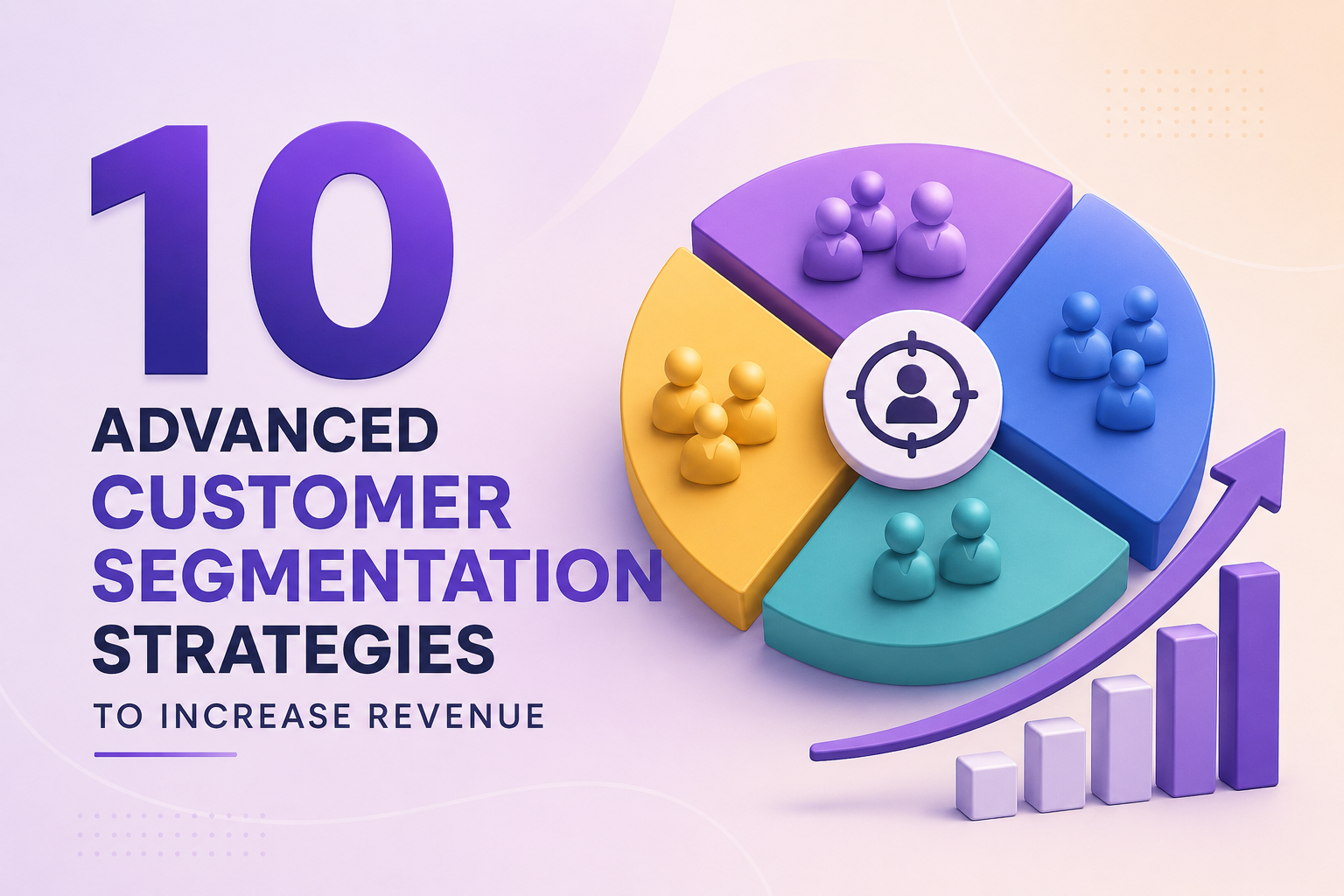


Have you ever wondered why some brands seem to know exactly what you want before you even click “buy”? In today’s fast-paced digital landscape, relying on generic marketing is a recipe for stagnation. To truly increase revenue, you must move beyond basic demographics and embrace a data-driven approach that speaks directly to individual needs.
Implementing advanced customer segmentation strategies is no longer just an option for growing businesses; it is a necessity. By refining your target audience segmentation, you can align your offerings with specific user behaviors and preferences. This precision allows you to capture higher lifetime value from every visitor who lands on your site.
When you leverage these Segmentation Strategies, you transform raw data into actionable insights. This shift ensures that your marketing efforts are not just seen, but felt by the right people at the right time. Prepare to scale your brand effectively by mastering the art of personalized engagement.
Key Takeaways
- Data-driven marketing is essential for modern business growth.
- Refining your audience groups helps align products with user needs.
- Personalization is the primary driver for higher lifetime customer value.
- Advanced methods allow brands to scale effectively in competitive markets.
- Precision targeting ensures your marketing messages reach the right people.
Ready to Reach the Right Customers Every Time?
Stop wasting budget on broad marketing campaigns that miss the mark. Sign up for free and learn how advanced segmentation can help you connect with the people most likely to buy.
The Strategic Importance of Advanced Segmentation Strategies
You can transform your bottom line by shifting from generic outreach to hyper-personalized engagement. Moving away from broad-spectrum marketing is the first step toward true business growth. By focusing on specific audience needs, you create a foundation for sustainable profitability.
Effective market segmentation strategies serves as the backbone for your long-term success. When you categorize your database with precision, you gain the ability to tailor your messaging to the right people at the right time. This level of detail is essential to increase revenue across all your product lines.
Modern segmentation tools allow you to move beyond basic demographics. These platforms provide the data-driven insights necessary to identify high-value behaviors and preferences. Utilizing these advanced systems ensures that your marketing efforts remain relevant and highly effective.
| Strategy Type | Focus Area | Primary Benefit |
|---|---|---|
| Broad-Spectrum | Mass Market | Brand Awareness |
| Advanced Segmentation | Individual Needs | Higher Conversion |
| Predictive Modeling | Future Value | Revenue Growth |
Understanding these strategic pillars is vital before you implement technical methodologies. By mastering these concepts, you position your brand to outperform competitors who rely on outdated, generalized tactics. Precision is the key to unlocking your full potential in today’s competitive landscape.
Behavioral Segmentation Based on Purchase Velocity
Purchase velocity serves as a critical metric for understanding the heartbeat of your customer base. By tracking the time elapsed between transactions, you gain a clear view of how your audience interacts with your brand over time. These segmentation strategies allow you to move beyond basic demographics and focus on the actual behavior of your buyers.
Identifying High-Frequency Buyers
High-frequency buyers are the backbone of your revenue stream. These individuals demonstrate a consistent pattern of returning to your store, signaling deep brand loyalty and high satisfaction. By applying target audience segmentation, you can isolate these power users to provide them with exclusive rewards or early access to new products.
To effectively manage this group, consider the following actions:
- Create VIP loyalty programs that offer tiered benefits based on purchase frequency.
- Send personalized “thank you” communications to maintain their high engagement levels.
- Use predictive modeling to anticipate their next purchase window and offer relevant upsells.
Re-engaging Lapsed Customers
Not every customer maintains a steady buying pace, and that is where customer segmentation strategies become vital for recovery. When a user’s purchase velocity slows down significantly, it often indicates a potential churn risk. Identifying these patterns early allows you to intervene before the relationship fades entirely.
You can re-engage these users by analyzing their historical data to understand their typical buying cycle. Once you identify a deviation from their norm, deploy targeted win-back campaigns that address their specific needs. Whether through personalized discounts or helpful content, these efforts ensure your target audience segmentation remains dynamic and responsive to changing buyer habits.
Psychographic Profiling for Personalized Messaging
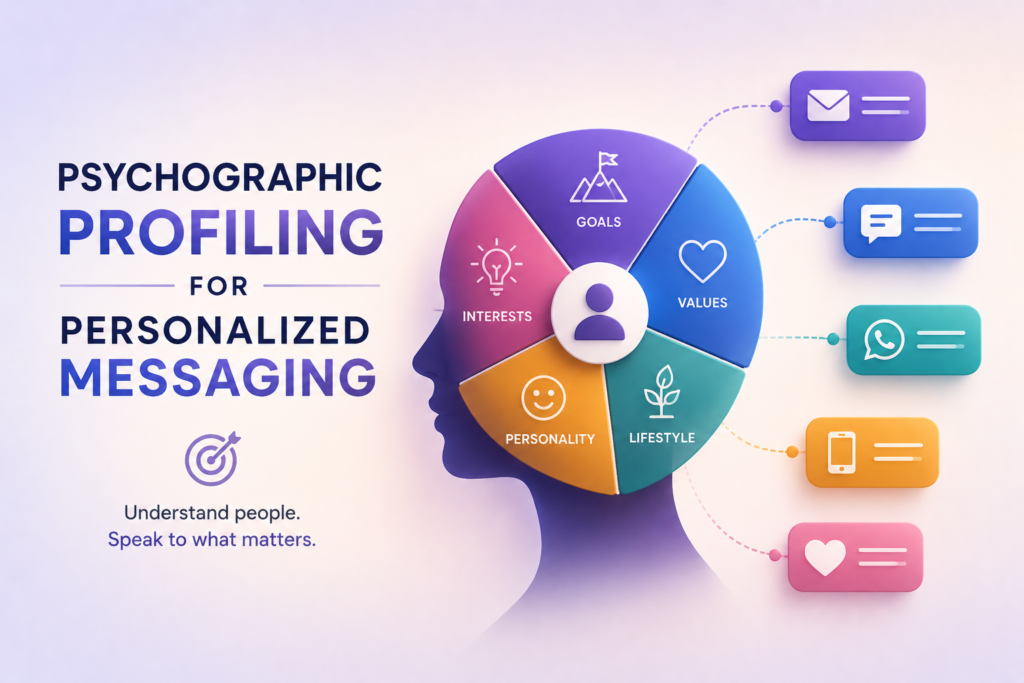
To truly increase revenue, you must align your brand with the specific lifestyle choices and core values of your target market. While demographics tell you who your customers are, psychographics reveal the hidden motivations behind their purchasing decisions. By moving beyond basic data, you gain a clearer picture of what drives your audience to choose your brand over competitors.
Mapping Customer Values and Interests
Effective market segmentation requires you to look at the personality traits, hobbies, and belief systems of your buyers. You can start by analyzing survey data or social media interactions to identify common themes among your most loyal customers. When you understand these underlying values, you can craft messages that feel personal and relevant.
This process helps you categorize your audience into groups based on their passions rather than just their zip codes. By identifying these shared interests, you create a foundation for meaningful engagement that resonates on a deeper level. This emotional connection is often the catalyst for long-term brand loyalty.
Aligning Brand Voice with Lifestyle Segments
Once you have mapped these segments, you must ensure your brand voice speaks directly to their unique lifestyle. Using advanced segmentation tools, you can tailor your communication style to match the tone and preferences of each specific group. Whether your audience values sustainability, luxury, or convenience, your messaging should reflect those priorities consistently.
Consistency in your brand voice builds trust and makes your marketing efforts feel more authentic. When customers feel understood, they are far more likely to engage with your content and complete a purchase. Ultimately, this strategic alignment is a powerful way to increase revenue while fostering a community of dedicated brand advocates.
Leveraging the right market segmentation strategies allows you to refine your outreach and minimize wasted ad spend. By utilizing modern segmentation tools, you can automate these personalized experiences at scale. This ensures that every interaction feels intentional and perfectly timed for your customer’s specific journey.
Predictive Analytics for Future Value Forecasting
Moving beyond historical data, predictive analytics allows you to anticipate future customer behavior with precision. By utilizing these advanced segmentation strategies, you can shift your focus from what happened yesterday to what will likely happen tomorrow. This proactive approach ensures that your resources are always directed toward the most profitable outcomes.
Turn Customer Data Into Predictable Growth
Identify your highest value customers, forecast future revenue, and create personalized campaigns that convert. Get started with a free account and see the difference data driven marketing can make.
Leveraging Machine Learning for Customer Lifetime Value
Machine learning models act as the engine for your future-proof marketing efforts. These algorithms process vast amounts of interaction data to calculate the projected Customer Lifetime Value (CLV) for every individual in your database. By identifying patterns that human analysts might miss, you gain a clearer picture of which clients will provide the most long-term stability.
Integrating these insights into your target audience segmentation allows for highly personalized outreach. When you know exactly which customers are poised for growth, you can tailor your communication to nurture those specific relationships. This level of detail is essential for maintaining a competitive edge in today’s fast-paced market.
Targeting High-Potential Prospects
Not all leads are created equal, and predictive analytics helps you separate the noise from the signal. By scoring prospects based on their statistical likelihood to convert and their potential for high spending, you can prioritize your sales efforts effectively. These customer segmentation strategies ensure that your team spends time on the individuals most likely to become your brand’s biggest advocates.
The following table highlights the key differences between traditional methods and predictive approaches to help you refine your strategy:
| Metric | Traditional Segmentation | Predictive Segmentation |
|---|---|---|
| Data Focus | Historical Transactions | Future Behavioral Trends |
| Goal | Descriptive Analysis | Revenue Forecasting |
| Efficiency | Reactive Adjustments | Proactive Optimization |
| Outcome | Broad Grouping | Individual Value Scoring |
By adopting these data-driven methods, you move away from guesswork and toward a model of sustainable growth. Implementing these customer segmentation strategies will ultimately allow you to maximize your marketing budget while delivering superior value to your most important clients.
RFM Analysis for Precision Marketing
You can transform raw sales data into actionable insights by applying the RFM methodology. This framework serves as a cornerstone for effective market segmentation, allowing you to categorize your audience based on their actual transactional behavior rather than simple demographics.
Recency, Frequency, and Monetary Scoring
The RFM model evaluates three critical dimensions of customer activity and is one of the most effective segmentation strategies for identifying valuable customers. Recency measures how recently a customer made a purchase, while Frequency tracks how often they return to your store. Finally, Monetary value quantifies the total spend associated with that specific account.
By assigning a score to each of these variables, you create a clear hierarchy of your customer base. This scoring system helps you identify your most valuable advocates and those who may be drifting away. It is a powerful way to increase revenue by focusing your efforts on the segments that offer the highest potential return.
Automating Campaigns Based on RFM Tiers
Modern segmentation tools allow you to move beyond manual data entry and into automated precision. Once you have established your RFM tiers, you can trigger personalized email or SMS workflows that speak directly to the customer’s current status.
For instance, you might send an exclusive loyalty reward to high-frequency buyers to maintain their engagement. Conversely, you can deploy automated win-back campaigns for customers who have not purchased in a while. This level of automation ensures your messaging remains relevant, which is essential to increase revenue and maintain long-term brand loyalty.
Leveraging these segmentation tools effectively turns your database into a dynamic engine for growth. By aligning your communication with the specific needs of each tier, you ensure that your market segmentation strategy delivers measurable results every single day.
Customer Journey Stage Segmentation
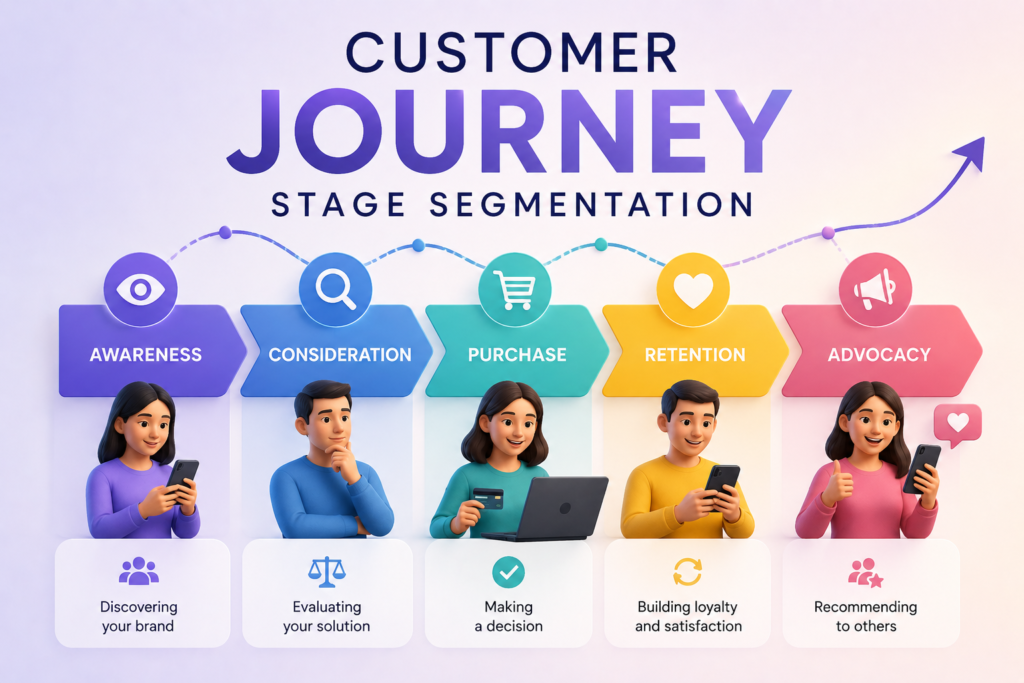
Effective marketing requires you to meet potential customers exactly where they are in their decision-making process. By implementing precise segmentation strategies, you can ensure that your communication remains relevant and helpful throughout the entire lifecycle.
When you ignore the specific needs of a user at a particular stage, you risk losing their interest. Instead, you should aim to provide value that matches their current level of intent.
Mapping Content to Awareness and Consideration
During the early phases, your target audience segmentation should focus on education rather than hard selling. Prospects in the awareness stage are often looking for solutions to a problem they have just identified.
You can nurture these leads by offering blog posts, white papers, or infographics that address their pain points. As they move into the consideration phase, they begin to compare different options.
At this point, your content should shift toward highlighting your unique value proposition. Providing case studies or comparison guides helps them see why your solution is the right fit for their specific needs.
Optimizing Conversion for Decision-Stage Users
Once a user reaches the decision stage, they are ready to buy. Your primary goal here is to reduce friction and provide a clear path to purchase.
You should utilize customer segmentation strategies to identify these high-intent users and present them with targeted offers. Examples include limited-time discounts, free trials, or personalized consultations that address final objections.
By streamlining the checkout process and removing unnecessary steps, you make it easier for the customer to say yes. Precision is vital when guiding a user toward the final transaction, as even minor obstacles can lead to cart abandonment.
Geographic and Micro-Local Targeting
Geographic precision and localized segmentation strategies allow you to move beyond generic messaging and connect with your audience on a personal level. By leveraging location-based data, you can ensure that your brand remains relevant in a crowded digital landscape. This approach to market segmentation helps you deliver the right message to the right person at the exact moment they are ready to engage.
Hyper-Local Campaigns for Regional Relevance
Modern consumers expect brands to understand their immediate environment. When you implement hyper-local campaigns, you acknowledge the unique cultural and social nuances of specific neighborhoods or cities. This strategy builds genuine trust and positions your business as a local authority rather than a distant corporate entity.
Consider these key advantages of focusing on regional relevance:
- Increased brand loyalty through community-focused messaging.
- Higher engagement rates by addressing local events or weather patterns.
- Improved conversion rates due to the perceived proximity of your services.
“The most successful brands are those that act like a local neighbor, regardless of their actual size or reach.”
Adapting Offers to Local Market Trends
To truly increase revenue, you must align your promotional offers with the specific economic and social trends of a region. Utilizing advanced segmentation tools allows you to analyze purchasing patterns across different zip codes or metropolitan areas. You can then tailor your discounts, product bundles, and service availability to match what local customers actually want.
For example, a retail chain might offer different inventory in coastal cities compared to inland regions based on climate-driven demand. By using data-driven segmentation tools, you ensure that your marketing budget is spent on high-impact areas. This level of customization is essential to increase revenue and maintain a competitive edge in diverse markets.
Technographic Segmentation for B2B Growth
If you want to scale your B2B revenue, you must look beyond firmographics and use advanced segmentation strategies to analyze the technology stacks your prospects use. By leveraging technographic data, you gain a clear window into the operational maturity of your target accounts. These customer segmentation strategies are essential for positioning your brand as a compatible and necessary partner for your B2B clients.
Analyzing Software Stacks and Digital Maturity
To execute effective target audience segmentation, you need to identify the specific software, hardware, and cloud infrastructure your prospects rely on daily. Tools like BuiltWith or Datanyze allow you to map out a company’s digital footprint with precision. This insight helps you determine if a prospect is a legacy user or an early adopter of modern cloud solutions.
Digital maturity is not just about the number of tools a company uses; it is about how well those tools integrate. When you analyze these stacks, you can categorize prospects based on their technological sophistication. This process ensures that your outreach efforts are directed toward companies that are actually ready to adopt your specific solution.
Tailoring Solutions to Technical Needs
Once you have identified the technical profile of your leads, you can customize your messaging to highlight specific integration benefits and help strengthen your segmentation strategies. For instance, if a prospect uses a specific CRM, emphasize how your product enhances their existing workflow rather than replacing it. These segmentation strategies reduce friction during the sales cycle by proving your product fits their current environment.
Effective target audience segmentation requires you to speak the language of your prospect’s IT department. By demonstrating that you understand their technical constraints, you build immediate trust. The following table outlines how different levels of digital maturity influence your approach to potential clients.
| Maturity Level | Technical Profile | Marketing Focus |
|---|---|---|
| Legacy | On-premise, manual processes | Digital transformation benefits |
| Emerging | Hybrid cloud, basic SaaS | Efficiency and scalability |
| Advanced | API-first, automated stacks | Integration and custom APIs |
Applying these customer segmentation strategies allows you to move away from generic pitches. Instead, you provide value-driven solutions that address the specific technical hurdles your prospects face every day.
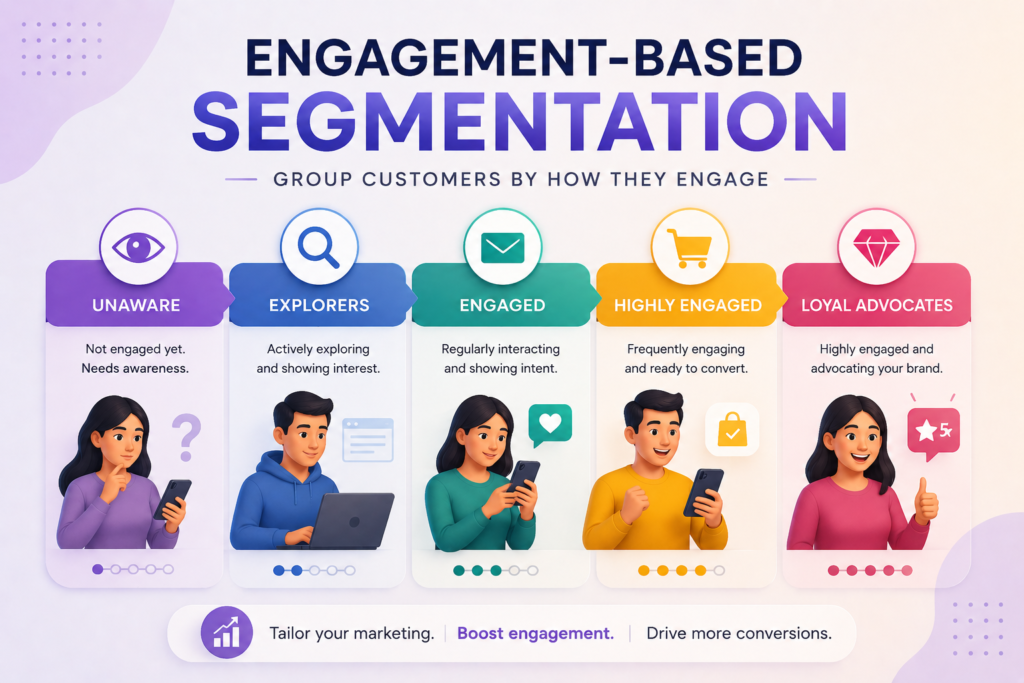
Engagement-Based Segmentation
You can transform raw interaction data into a powerful engine for sustainable business success using effective segmentation strategies. By analyzing how your audience interacts with your digital touchpoints, you gain a clearer picture of your brand’s health. This approach to market segmentation allows you to move beyond basic demographics and focus on actual user behavior.
Segmenting by Email Open and Click-Through Rates
Your email metrics serve as a direct pulse check on your audience’s interest levels. By tracking open and click-through rates, you can categorize users into distinct groups based on their level of activity. Highly active users are those who consistently engage with your content, while others may require a gentle nudge to stay connected.
This data helps you identify users who have become disengaged over time. You can then trigger automated re-engagement campaigns specifically designed to win them back. By focusing your efforts on these specific segments, you ensure that your communication remains relevant and timely.
Rewarding Brand Advocates and Loyalists
Once you identify your most active users, you should prioritize them with exclusive rewards. Utilizing advanced segmentation tools allows you to automate the delivery of personalized offers to your top-tier customers. This strategy not only strengthens your relationship with them but also helps to increase revenue through repeat purchases and brand advocacy.
Loyalists often act as your best marketing channel, so treating them with care is essential. When you provide value that aligns with their past interactions, you foster a deeper sense of loyalty. This cycle of engagement and reward is a proven method to drive long-term growth.
| Engagement Tier | Behavioral Metric | Marketing Action |
|---|---|---|
| Brand Advocates | High Open/Click Rate | Exclusive VIP Offers |
| Casual Users | Moderate Interaction | Educational Content |
| Lapsed Users | Low/No Interaction | Re-engagement Campaign |
Customer Sentiment and Feedback Segmentation
Beyond simple purchase data, your customers’ voices provide the most honest roadmap for your business. By integrating qualitative feedback into your quantitative models, you gain a deeper understanding of why users choose your brand. These segmentation strategies allow you to move past basic metrics and into the emotional core of your user base.
Categorizing Promoters and Detractors
You can effectively organize your audience by analyzing survey responses and direct feedback through data driven segmentation strategies. Promoters are your brand advocates who consistently report high satisfaction levels. Conversely, detractors are those who express frustration or unmet expectations.
Effective target audience segmentation requires you to map these sentiments to specific user behaviors. By identifying these groups, you can tailor your communication to reinforce loyalty among fans while addressing the concerns of critics. This approach ensures that your customer segmentation strategies remain dynamic and responsive to real-world experiences.
Turning Negative Feedback into Retention Opportunities
Negative feedback is not just a challenge; it is a valuable signal for improvement when refining your segmentation strategies. When you identify a detractor, you have a unique chance to resolve their specific pain points before they churn. Proactive outreach often turns a dissatisfied user into a long-term, loyal customer.
The following table illustrates how you can categorize your audience based on sentiment to drive better business outcomes:
| Segment Type | Sentiment Profile | Primary Goal |
|---|---|---|
| Promoters | High satisfaction, active referrals | Encourage advocacy and loyalty |
| Passives | Neutral, indifferent experience | Increase engagement and value |
| Detractors | Unmet needs, vocal frustration | Resolve pain points and retain |
By applying these segmentation strategies, you protect your brand reputation while improving the overall customer experience. Consistent monitoring of sentiment ensures your target audience segmentation remains accurate over time. Ultimately, these customer segmentation strategies help you build a more resilient and profitable business model.
Cross-Channel Interaction Segmentation
Achieving a truly holistic view of your audience requires breaking down the silos between your various digital channels with advanced segmentation strategies. When you treat social media, web browsing, and mobile app usage as separate entities, you miss critical opportunities to understand the full customer journey. Effective market segmentation relies on your ability to synthesize these disparate data points into a single, actionable narrative.
Integrating Social, Web, and Mobile Data
To gain a competitive edge, you must implement robust segmentation tools that pull data from every corner of your digital ecosystem. By centralizing this information, you can track how a user moves from a social media advertisement to your mobile application and finally to a desktop purchase. This integration is essential to ensure that your messaging remains consistent and relevant regardless of where the customer interacts with your brand.
Consider the following benefits of a unified data approach:
- Enhanced Personalization: Deliver tailored content based on the user’s specific history across all platforms.
- Improved Attribution: Understand exactly which channels drive the most value for your business.
- Reduced Friction: Identify and remove barriers that prevent users from completing their journey.
Creating Unified Customer Profiles
Once your data is integrated, you can build comprehensive customer profiles that serve as the foundation for your marketing strategy and future segmentation strategies. These profiles allow you to move beyond basic demographics and into behavioral patterns that predict future needs. By leveraging these insights, you can significantly increase revenue through highly targeted campaigns that speak directly to the user’s current intent.
Using advanced segmentation tools allows you to automate these processes, ensuring that your team spends less time on data entry and more time on strategy. When you successfully align your brand voice across every channel, you build deeper trust with your audience. This holistic approach to market segmentation is the key to long-term growth and the most effective way to increase revenue in a crowded digital marketplace.
Still Sending the Same Message to Every Customer?
Personalized marketing drives higher engagement and better results. Upgrade to a powerful segmentation solution and start turning customer insights into measurable revenue growth.
Conclusion
Implementing these advanced segmentation strategies transforms how your organization connects with its audience. You now possess the tools to leverage complex data sets into personalized experiences that foster deep brand loyalty. This shift in focus allows you to increase revenue by delivering the right message at the perfect moment.
Your marketing efforts remain agile and effective in a crowded digital marketplace by applying these methodologies consistently. You gain a competitive edge when you treat every customer interaction as a unique opportunity for engagement. This precision helps you optimize your resources and increase revenue across every department.
Start your journey by selecting one or two segmentation strategies to implement today. You will see measurable improvements in your campaign performance as you refine your approach. Your commitment to data-backed personalization ensures long-term success and sustainable growth for your business.
FAQs
How do specific customer segmentation strategies directly help to increase revenue for my business?
By implementing advanced customer segmentation strategies, you align your marketing messages with the precise needs and behaviors of different user groups. This level of relevance reduces wasted marketing spend and significantly boosts conversion rates. When you deliver the right offer to the right person at the optimal time as much like Amazon does with its personalized recommendation engine as you naturally increase revenue by capturing higher lifetime value from every customer interaction.
Which segmentation tools are most effective for managing complex customer data?
To execute sophisticated segmentation strategies, you should leverage industry-leading segmentation tools such as Salesforce Marketing Cloud, HubSpot, or Adobe Experience Cloud. These platforms allow you to integrate behavioral, geographic, and technographic data into a single interface, giving you the power to categorize your database with surgical precision and automate hyper-personalized campaigns.
Why is target audience segmentation now considered a requirement rather than an option?
In today’s competitive digital landscape, target audience segmentation is essential because consumers have come to expect personalized experiences. Brands like Nike and Netflix have set a high bar for engagement; if your marketing feels generic, your audience will likely tune out. Effective segmentation ensures your brand remains relevant by addressing the specific values and interests of different lifestyle segments.
How does market segmentation assist in re-engaging customers who have stopped buying?
Effective market segmentation allows you to identify “lapsed” customers by analyzing their purchase velocity. By isolating these users into a specific segment, you can deploy targeted re-engagement campaigns that address their previous buying habits. Using segmentation tools to offer personalized incentives to this group is a proven method to win back market share and increase revenue without the high cost of new customer acquisition.
What role does predictive analytics play in modern segmentation strategies?
Predictive analytics takes your customer segmentation strategies to the next level by using machine learning to forecast future behavior. Instead of just looking at what a customer did in the past, you can predict their future lifetime value. This allows you to focus your resources on high-potential prospects who are statistically most likely to become your most profitable advocates, ensuring a much higher return on your marketing investment.
How can I use technographic segmentation to improve my B2B sales performance?
For B2B organizations, technographic market segmentation involves analyzing the software stacks and digital maturity of your prospects. By understanding the tools your potential clients already use—such as Slack, Microsoft Azure, or Oracle as you can tailor your pitch to show exactly how your solution integrates with their existing workflow. This strategy positions you as a necessary partner rather than just another vendor, helping you close larger deals more efficiently.
What is the benefit of integrating cross-channel data into your segmentation models?
Integrating data from social media, web, and mobile app interactions allows you to create a unified customer profile. When your segmentation strategies are informed by a holistic view of the customer journey, you can provide a seamless experience across all touchpoints. This consistency builds deep brand trust and is one of the most effective ways to increase revenue through improved customer retention and higher engagement rates.