
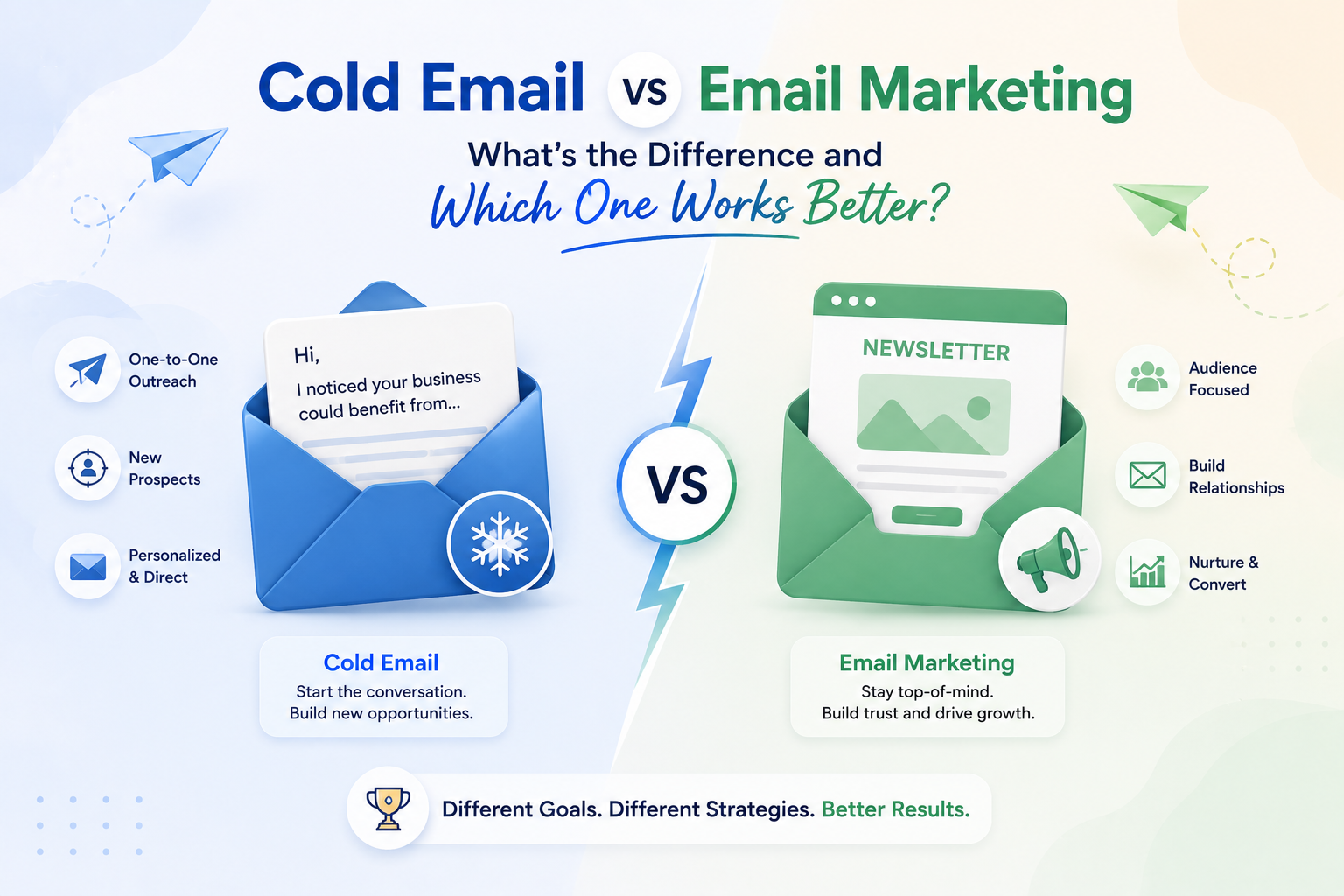





Did you know that over 300 billion messages are sent every single day? In this crowded digital landscape, choosing the right outreach method is vital for your growth. Many business owners struggle to understand the nuances of Cold Email vs Email Marketing, often treating them as the same tool.
While both rely on your inbox, they serve very different purposes in your sales funnel. One focuses on building long-term relationships with subscribers, while the other targets specific prospects who have never heard of your brand.
Understanding the differences in cold email vs email marketing allows you to allocate your resources effectively. By aligning your communication strategy with your current business objectives, you can maximize your return on investment. Let’s explore how these two approaches function and which one will drive the best results for your unique needs.
Key Takeaways
- Outbound strategies target prospects who have not yet engaged with your brand.
- Inbound methods focus on nurturing existing subscribers through consistent value.
- Each approach requires a different tone and content structure to succeed.
- Your choice should depend on your specific sales cycle and growth goals.
- Combining both tactics often creates a more robust digital presence.
Stop Guessing! Choose the Right Email Strategy Today.
Understand whether cold email or email marketing fits your business goals. Build stronger outreach, generate qualified leads, and improve conversions with the right approach from day one.
Defining the Core Concepts of Cold Email vs Email Marketing
Distinguishing between cold outreach and subscriber-based messaging is vital for your business growth. When you evaluate email marketing vs cold email, you are essentially choosing between two distinct ways to connect with your audience. In cold email vs email marketing, each method serves a unique purpose in your overall communication strategy.
What is Cold Emailing?
Cold emailing is a proactive, outbound sales tactic designed to initiate contact with individuals who have not previously interacted with your brand. You use this method to reach specific prospects who fit your ideal customer profile. The primary goal is to start a conversation that leads to a sales meeting or a business opportunity.
Because these recipients have not opted into your list, your approach in cold email vs email marketing must be highly personalized and relevant. Sending unsolicited messages requires strict adherence to regulations like the CAN-SPAM Act in the United States. Success in cold email vs email marketing depends on your ability to provide immediate value to a stranger.
What is Traditional Email Marketing?
Traditional email marketing focuses on nurturing an existing subscriber base that has already expressed interest in your company. You communicate with people who have voluntarily signed up for your newsletters, updates, or promotional offers. In the discussion of cold email vs email marketing, this strategy is essential for building long-term brand loyalty and keeping your business top-of-mind.
In cold email vs email marketing, providing consistent, high-quality content helps deepen the relationship with your audience over time. This inbound approach relies on permission, which makes it a powerful tool for retention and repeat sales. Understanding the nuances of email marketing vs cold email ensures you use the right tool for every stage of the customer journey.
| Feature | Cold Emailing | Email Marketing |
|---|---|---|
| Primary Goal | Lead Generation | Customer Retention |
| Audience | Unsolicited Prospects | Opt-in Subscribers |
| Strategy | Outbound Sales | Inbound Nurturing |
| Frequency | Low Volume/Targeted | High Volume/Scheduled |
Key Differences in Audience Acquisition
The way you acquire your subscribers is the primary factor that separates cold outreach from traditional marketing. Understanding these mechanics is essential for choosing the right communication path for your business goals. In cold email vs email marketing, you must decide whether you are nurturing a community or hunting for new business opportunities.
Permission-Based Lists vs. Prospecting
Permission-based lists are the gold standard for traditional email marketing. In this model, users explicitly agree to receive communications from your brand. This creates a foundation of trust and, in cold email vs email marketing, ensures that your messages reach people who are already interested in your value proposition.
Conversely, prospecting requires a more surgical approach to identify high-intent leads. You actively search for individuals who fit your ideal customer profile, even if they have not yet interacted with your brand. In cold email vs email marketing, this method is highly effective for B2B sales where you need to initiate contact with specific decision-makers.
The Role of Opt-in Forms and Lead Magnets
To build a permission-based list, you must provide immediate value to your visitors. Most successful companies use opt-in forms placed strategically on their websites to capture contact information. These forms often serve as the gateway to your ecosystem.
You can further incentivize sign-ups by offering lead magnets such as white papers, industry reports, or exclusive discount codes. This exchange of value ensures that your audience is genuinely interested in your content. By focusing on quality over quantity, you maintain a healthy sender reputation and higher engagement rates.
| Feature | Permission-Based Marketing | Cold Prospecting |
|---|---|---|
| Primary Goal | Relationship Nurturing | Lead Generation |
| Audience Source | Inbound Opt-ins | Outbound Research |
| Compliance | High (Explicit Consent) | Moderate (Legitimate Interest) |
| Effort Level | Long-term Content Creation | High-intensity Research |
Technical Infrastructure and Deliverability
Technical health is the silent engine driving your success in cold email vs email marketing. Without a solid foundation, even the most compelling messages will fail to reach their destination. You must prioritize your technical setup to ensure your communications land in the primary inbox rather than the spam folder.
Managing Sender Reputation for Cold Campaigns
When you launch cold email campaigns, your sender reputation is your most valuable asset. Internet Service Providers (ISPs) monitor your sending patterns closely to determine if you are a legitimate sender or a source of unwanted noise. For successful cold email vs email marketing, you should maintain low bounce rates by verifying your prospect lists before every send.
In cold email vs email marketing, consistent engagement signals help build trust with email providers over time. If you ignore these signals, your domain may be flagged, which makes it difficult to recover your standing. Always prioritize quality over quantity to protect your long-term outreach capabilities.
Maintaining High Engagement for Marketing Newsletters
Marketing newsletters rely on a different set of rules compared to outbound efforts. In cold email vs email marketing, your primary goal here is to keep your subscribers interested through relevant content and consistent value. High engagement rates, such as opens and clicks, act as positive signals that improve your overall deliverability.
“Deliverability is the result of a long-term commitment to sender reputation and audience relevance. If you treat your subscribers with respect, the inbox will reward you.”
The Impact of IP Warming and Domain Authentication
To establish trust, you must implement proper domain authentication protocols. Protocols like SPF, DKIM, and DMARC act as digital signatures that verify your identity to receiving servers. Without these, your messages are far more likely to be blocked or filtered as suspicious.
Furthermore, IP warming is essential when you scale your volume. By gradually increasing your sending capacity, you allow ISPs to recognize your domain as a reputable source. This careful approach prevents sudden spikes that often trigger spam filters during new cold email campaigns.
| Technical Element | Primary Purpose | Impact Level |
|---|---|---|
| SPF/DKIM/DMARC | Domain Verification | Critical |
| IP Warming | Trust Building | High |
| List Hygiene | Bounce Reduction | High |
| Engagement Tracking | Reputation Monitoring | Medium |
Content Strategy and Personalization
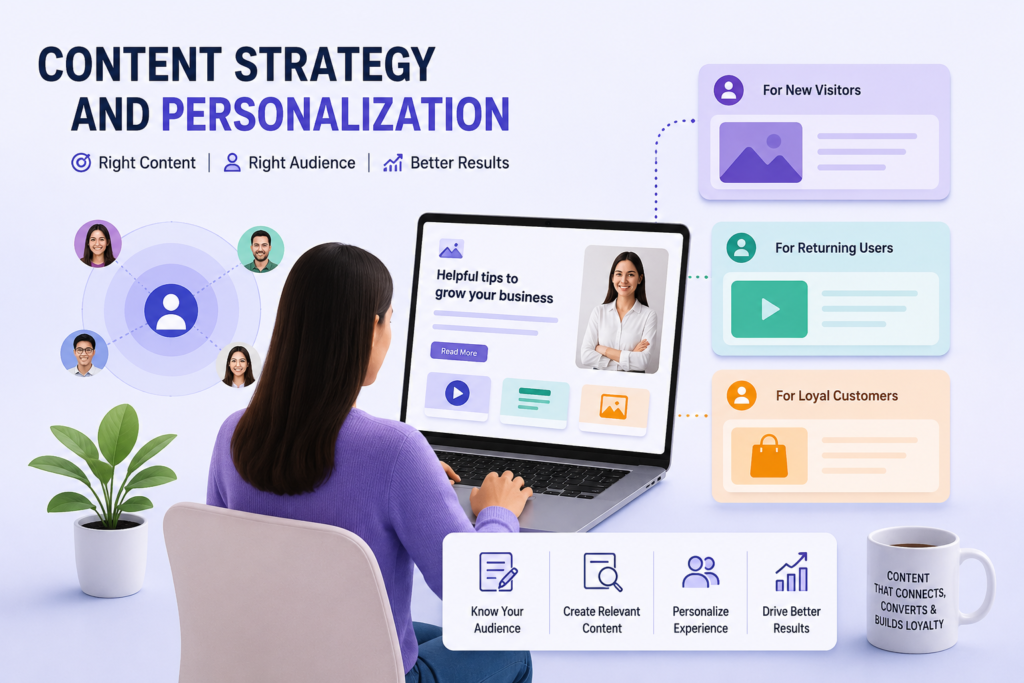
Whether you are reaching out to one person or thousands, your content strategy must remain authentic and purposeful. Adapting your messaging style is the key to succeeding with cold email vs email marketing across different communication channels. By understanding the nuances of your audience, you can create content that resonates deeply regardless of the scale.
Crafting One-to-One Cold Email Outreach
When you engage in direct outreach, personalization is your most powerful tool. You must move beyond simple placeholders and demonstrate that you have researched the recipient’s specific pain points or recent professional achievements. This level of detail shows respect for the prospect’s time and increases the likelihood of a meaningful response.
Effective one-to-one emails are a key part of cold email vs email marketing and should feel like a natural conversation rather than a sales pitch. Focus on providing value immediately by addressing a specific challenge the prospect faces. By keeping your message concise and relevant, cold email vs email marketing becomes more effective as you establish credibility and build a foundation for a long-term business relationship.
Designing One-to-Many Marketing Campaigns
Scaling your communication requires a shift toward broader, yet still highly relevant, messaging. In one-to-many campaigns, your focus should be on segmentation and consistent brand voice. By grouping your audience based on shared interests or behaviors, you ensure that your content remains useful to every recipient on your list.
Success in cold email vs email marketing relies on delivering consistent value through newsletters, product updates, or educational content. While you cannot research every individual recipient, you can tailor your messaging to address the common needs of your target segments. This approach allows you to maintain a professional presence while reaching a larger audience efficiently.
Balancing Automation with Human Touch
Automation tools are essential for managing workflows, but they should never replace the human element of your brand. You can use technology to handle scheduling and data management while improving your cold email vs email marketing strategy through high-quality, empathetic content. The goal is to use automation to enhance your reach, not to dilute your message.
Always review your automated sequences to ensure they sound natural and helpful. If a message feels too robotic, consider adding a personal anecdote or a specific call to action that invites genuine feedback. By maintaining this balance, you ensure that your communication remains both scalable and deeply engaging for your audience.
Cold Email vs Email Marketing: A Comparative Analysis
When you compare Cold Email vs Email Marketing, the metrics you track tell very different stories about your business growth. Each channel serves a distinct purpose, requiring you to adjust your expectations and analytical approach accordingly.
Turn Email Strategy into Measurable Business Growth
Ready to improve response rates, nurture customers, and maximise ROI? Discover proven email solutions designed to help you connect with the right audience at every stage.
Comparing Conversion Goals and Metrics
In cold outreach, your primary goal is often a direct reply or a booked meeting. When measuring cold email vs email marketing, you should prioritize tracking response rates and the quality of leads generated rather than just vanity metrics like total opens.
Conversely, traditional marketing focuses on long-term engagement and brand loyalty. Here, you should monitor click-through rates (CTR) and conversion rates on landing pages to gauge how well your content resonates with an existing audience.
“Measurement is the first step that leads to control and eventually to improvement. If you can’t measure it, you can’t improve it.”
Analyzing Cost-Effectiveness and ROI
Determining the efficiency of your strategy requires a look at the resources invested versus the revenue generated. Cold outreach often demands higher manual effort or specialized software, making the cost per lead higher but potentially more valuable for high-ticket sales.
Marketing newsletters scale more easily, offering a lower cost per contact over time. By evaluating ROI in cold email vs email marketing, you can decide where to allocate your budget for maximum impact.
| Metric | Cold Email | Email Marketing |
|---|---|---|
| Primary Goal | Direct Conversation | Brand Engagement |
| Success Indicator | Reply Rate | Conversion Rate |
| Cost Structure | High per lead | Low per contact |
Ultimately, choosing between cold email vs email marketing depends on your specific business objectives. By mastering the nuances of Cold Email vs Email Marketing, you ensure that every message you send contributes to your bottom line.
When to Prioritize Cold Email Campaigns
Knowing when to deploy cold email campaigns can transform your business development strategy. While inbound marketing builds long-term authority, direct outreach provides the precision needed to engage specific accounts immediately. This approach is particularly effective when you have a clear understanding of your ideal customer profile.
Targeting High-Value B2B Prospects
In the complex world of B2B sales, reaching the right person is often the biggest hurdle. Traditional marketing channels may fail to penetrate the layers of management protecting key decision-makers. By utilizing cold email campaigns, you can bypass these gatekeepers and land directly in the inbox of the individuals who hold the power to approve your solutions.
This method allows you to craft highly personalized messages that address specific pain points. When you demonstrate a deep understanding of a prospect’s industry challenges, you establish instant credibility. This level of relevance is difficult to achieve through broad, one-to-many advertising efforts.
Accelerating Outbound Sales Cycles
Speed is a critical factor in competitive markets. If your goal is to shorten the time between initial contact and a closed deal, direct outreach is your most effective lever. Cold email campaigns enable you to initiate conversations on your own timeline rather than waiting for prospects to discover your brand organically.
By focusing on high-intent leads, you ensure that your sales team spends time on prospects who are ready for a meaningful discussion. This proactive approach makes cold email vs email marketing more effective by helping you qualify leads faster and move them through your pipeline with greater efficiency. Ultimately, this strategy turns your outreach into a predictable engine for revenue growth.
When to Leverage Traditional Email Marketing
If your goal is to turn casual readers into brand advocates, traditional email marketing is the strategy you need. This approach focuses on building long-term value rather than immediate sales. By prioritizing your existing audience, you create a sustainable ecosystem for growth.
Nurturing Existing Customer Relationships
Once a lead enters your ecosystem, the real work of relationship building begins. You should utilize automated drip campaigns to guide subscribers through their journey with your brand. These sequences provide consistent value without requiring manual intervention for every touchpoint.
Newsletters serve as a vital tool for staying top-of-mind with your audience. By sharing helpful tips, company updates, or exclusive insights, you reinforce your authority in the industry. Consistent communication builds the trust necessary for long-term customer retention.
Scaling Brand Awareness and Content Distribution
Traditional email marketing acts as a powerful engine for distributing your best content. When you share high-quality blog posts or white papers, you keep your audience engaged and informed. This process ensures that your brand remains a primary resource for your subscribers.
You can effectively scale your reach by turning passive readers into active brand advocates. When subscribers find genuine value in your emails, they are more likely to share your content with their own networks. Strategic content distribution transforms your email list into a loyal community that supports your business goals.
Essential Cold Emailing Tips for Better Results
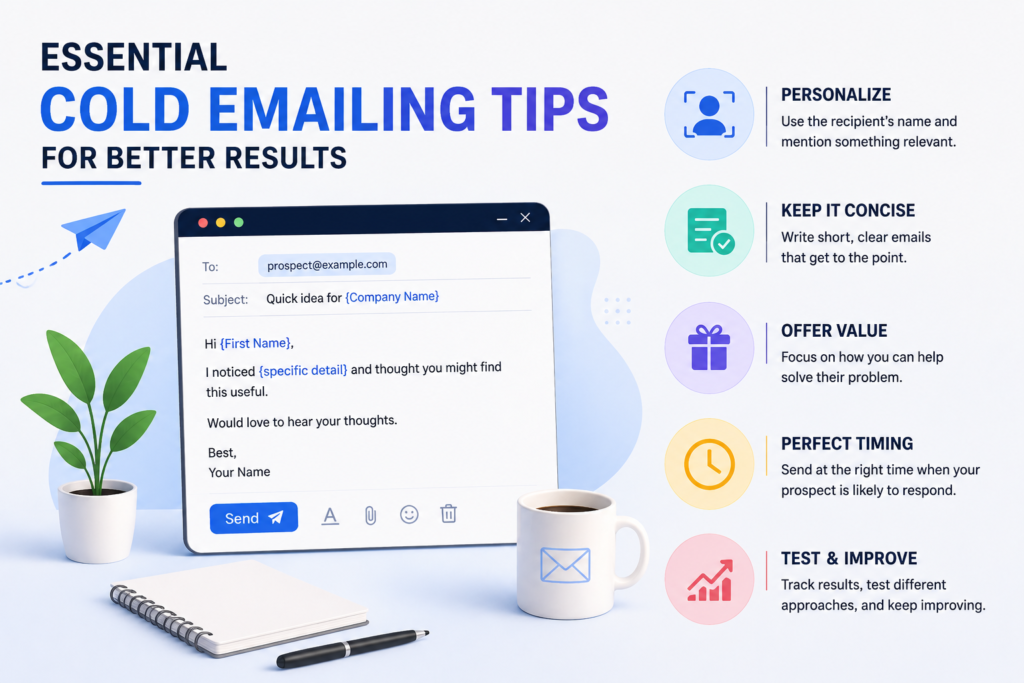
You can transform your outreach results by implementing these proven cold emailing tips. Success in outbound communication relies on how well you connect with your prospects from the very first line. By focusing on precision and value, you ensure your message stands out in a crowded inbox.
Writing Subject Lines That Get Opened
Your subject line serves as the gatekeeper for your entire message. To increase open rates, keep your text short and intriguing while avoiding clickbait tactics that feel dishonest. Personalization is your strongest tool here, as mentioning a prospect’s company or a recent achievement creates an immediate sense of relevance.
Psychologically, people respond best to curiosity or a clear benefit. Avoid generic phrases that scream automation. Instead, frame your subject line as a direct solution to a problem your prospect likely faces every day.
Structuring Your Call to Action for Maximum Response
A clear call to action (CTA) guides your prospect toward the next logical step without causing confusion. You should focus on low-friction requests that require minimal effort from the recipient. Asking for a quick fifteen-minute chat is often more effective than requesting a full product demonstration immediately.
Ensure your CTA is easy to find and written in a conversational tone. By keeping the request simple, you remove the mental burden from the reader. This approach significantly boosts the likelihood of receiving a positive reply.
Avoiding Spam Triggers and Blacklists
Maintaining a clean sender reputation is vital for long-term success. Certain words and formatting choices can flag your emails as spam, causing them to land in the junk folder. Use these cold emailing tips to keep your domain healthy and your deliverability high.
| Strategy Element | Recommended Practice | Avoid This |
|---|---|---|
| Subject Lines | Personalized and relevant | All caps or excessive symbols |
| Call to Action | Single, clear request | Multiple, confusing links |
| Content Style | Conversational and brief | Spammy sales jargon |
| Technical Setup | Verified domain records | High bounce rates |
Always audit your content for common triggers like excessive exclamation points or aggressive sales language. Regularly cleaning your prospect list ensures you only reach out to valid, interested parties. This discipline protects your sender reputation and keeps your outreach efforts sustainable.
Best Practices for Scaling Email Marketing
When you aim to scale your email efforts, the quality of your engagement must remain your top priority. Moving beyond basic outreach requires a strategic approach that balances volume with genuine value. By applying professional cold emailing tips, you can ensure that your growth remains sustainable and effective.
Segmenting Your Audience for Relevance
Segmentation is the cornerstone of any successful scaling strategy. Instead of sending one message to your entire list, you should group subscribers based on their behavior, demographics, or purchase history. This ensures that your content resonates with the specific needs of each persona.
Personalized content leads to higher open rates and deeper trust. When you tailor your messaging, you demonstrate that you understand your audience’s unique challenges. This level of care is essential when you are trying to maintain high engagement at scale.
Optimizing Send Times and Frequency
Finding the perfect cadence for your emails is a continuous process of discovery. Sending too many messages can lead to fatigue, while sending too few might cause your brand to be forgotten. You must analyze when your audience is most active to maximize your reach.
“Consistency is the key to building a relationship, but relevance is the key to maintaining it.”
Use your analytics dashboard to identify patterns in your engagement data. By adjusting your schedule based on these insights, you can improve your deliverability and overall impact. Remember that even the best cold emailing tips require consistent testing to remain effective over time.
Analyzing A/B Testing Results for Growth
Rigorous A/B testing allows you to make data-backed decisions that drive growth. You should test one variable at a time, such as subject lines, call-to-action buttons, or email layouts. This method provides clear evidence of what truly motivates your subscribers to take action.
Once you gather enough data, look for statistically significant trends that you can apply to future campaigns. Continuous optimization is the secret to scaling without sacrificing the quality of your connection. By refining your approach through testing, you ensure that every email sent contributes to your long-term business goals.
Integrating Both Strategies for a Unified Approach
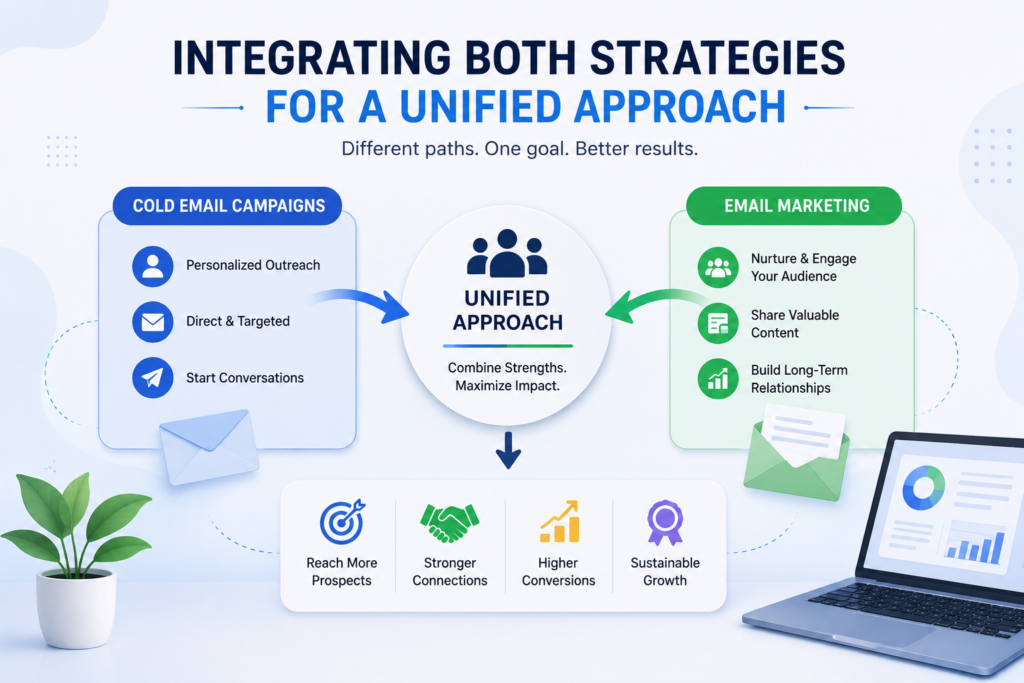
Combining cold email with traditional marketing creates a powerful engine for customer acquisition. When you view email marketing vs cold email as complementary forces rather than competing channels, you unlock new growth opportunities. This synergy allows you to reach prospects who do not yet know your brand while simultaneously nurturing those already in your ecosystem.
Using Cold Email to Feed Your Marketing Funnel
Cold outreach serves as the primary driver for filling the top of your sales funnel. By identifying high-value prospects and initiating direct conversations, you introduce your brand to a targeted audience. This proactive outreach ensures that your pipeline remains full of qualified leads who might otherwise never discover your services.
Once you establish initial contact, you can invite these prospects to join your broader marketing lists. This transition is vital for maintaining momentum. By offering valuable resources like white papers or industry reports, you encourage prospects to opt into your long-term communication streams.
Transitioning Leads from Outbound to Inbound
The true power of a unified strategy lies in how you move leads from outbound prospecting into your automated nurturing sequences. After a successful cold email interaction, you should shift the focus toward providing consistent value. This process builds trust and keeps your brand top-of-mind as the prospect moves toward a purchasing decision.
Effective integration requires a clear plan for data management and lead scoring. You must ensure that your CRM tracks every interaction, whether it originated from a cold outreach campaign or a newsletter sign-up. This holistic view allows you to tailor your messaging based on the specific stage of the customer journey.
| Strategy Component | Cold Email Role | Marketing Email Role |
|---|---|---|
| Primary Goal | Lead Generation | Relationship Nurturing |
| Audience Type | Cold Prospects | Existing Subscribers |
| Conversion Focus | Initial Meeting | Long-term Retention |
| Success Metric | Response Rate | Click-Through Rate |
By balancing cold email vs email marketing, you create a seamless experience for your audience. Understanding the nuances of email marketing vs cold email enables you to deploy the right message at the right time. This unified strategy ultimately maximizes your conversion potential and drives sustainable revenue growth.
Combine Cold Email and Email Marketing for Better Results
Don’t limit your growth to a single strategy. Create a high-performing outreach system that attracts prospects, nurtures relationships, and consistently drives more qualified opportunities.
Conclusion
Choosing between cold email and email marketing requires a clear understanding of your specific business goals. You now possess the knowledge to distinguish between high-touch outbound prospecting and broad inbound nurturing efforts.
Successful organizations like HubSpot or Salesforce often blend these tactics to maximize their reach. You can adopt this hybrid model to fill your sales pipeline while keeping your current audience engaged with valuable content.
Your ability to select the right tool at the right time determines your long-term success. Whether you’re using cold email vs email marketing, focus on the unique needs of your prospects to ensure every message delivers genuine value.
Start implementing the right cold email vs email marketing strategy today to see measurable improvements in your outreach performance. Consistent testing and refinement will help you build a sustainable growth engine for your brand.
FAQs
What is the primary difference between cold email vs email marketing?
The fundamental difference lies in the relationship with the recipient and the intent of the message. Cold email is an outbound sales strategy where you reach out to prospects who have no prior relationship with your brand, typically targeting high-value B2B decision-makers at companies like Google or Oracle. In contrast, email marketing involves sending content to a permission-based list of subscribers who have explicitly opted in to receive updates, newsletters, or promotions from you.
When comparing email marketing vs cold email, which offers a better ROI?
The return on investment depends entirely on your business objectives. Cold email campaigns often yield a higher ROI for high-ticket B2B services because a single successful response can lead to a massive contract. On the other hand, traditional email marketing is more cost-effective for maintaining brand awareness, driving repeat purchases, and nurturing a large audience over time using platforms like Mailchimp or Klaviyo.
Can I use the same software for both types of outreach?
Generally, no. Most traditional email marketing platforms, such as HubSpot or Constant Contact, strictly prohibit uploading purchased or scraped lists for cold email campaigns to protect their server reputation. For cold outreach, you should use specialized tools like Lemlist, Woodpecker, or Salesloft, which are designed to send personalized, one-to-one messages through your own SMTP or Microsoft 365 account.
What are some essential cold emailing tips for improving deliverability?
To ensure your messages land in the inbox rather than the spam folder, you must focus on technical infrastructure. Some of the most effective cold emailing tips include setting up SPF, DKIM, and DMARC records for your domain. Additionally, you should practice IP warming by gradually increasing your sending volume and use “custom tracking domains” to maintain a professional sender reputation with providers like Gmail.
How should the content differ between a cold email and a marketing newsletter?
A cold email should feel like a personal note from one human to another; it should be plain text, highly personalized, and focused on a specific pain point the prospect is facing. A marketing newsletter, however, is often a “one-to-many” communication that uses professional branding, images, and multiple links to drive traffic to your website or blog.
Is it possible to integrate both strategies into one growth funnel?
Absolutely. Many successful growth teams use cold email campaigns to start a conversation and identify interest. Once a prospect engages or requests more information, you can transition them into your email marketing ecosystem. For instance, after a successful discovery call, you might add the lead to a specialized nurturing sequence in Salesforce to keep your brand top-of-mind during a long sales cycle.
What is the best way to write a call to action for cold outreach?
One of the most important cold emailing tips is to keep your call to action (CTA) “low friction.” Instead of asking for a 30-minute demo immediately, try asking a simple interest-based question, such as “Would you be open to a brief exchange of ideas regarding your current workflow?” This approach feels less intrusive and significantly increases your response rates.
How does audience segmentation work in traditional email marketing?
In traditional marketing, you segment your audience based on behavioral data and demographics. By using tools like ActiveCampaign, you can tag subscribers based on which links they click or which products they view. This allows you to send highly relevant content that resonates with their specific interests, which is the cornerstone of a successful email marketing vs cold email strategy for long-term retention.