
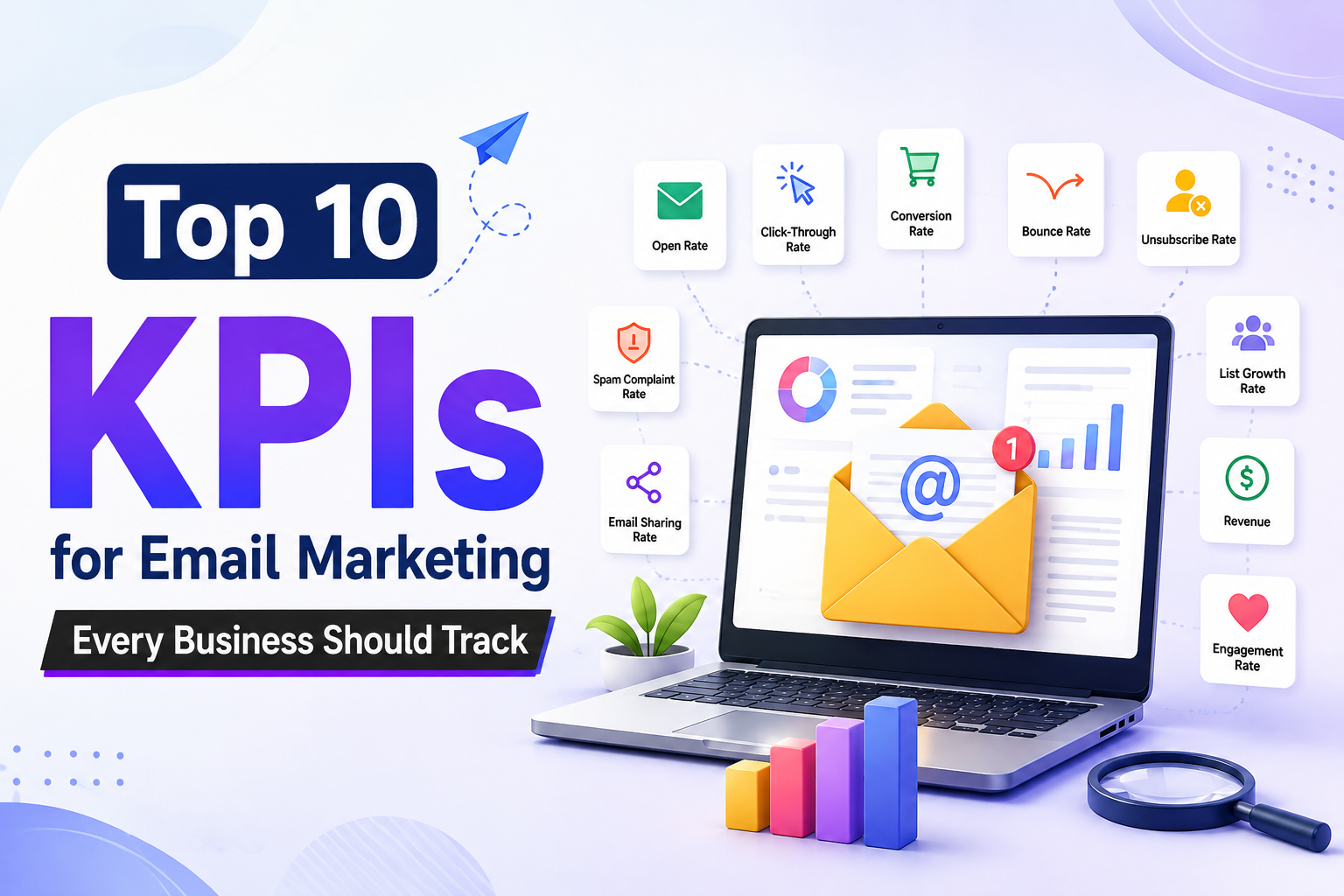


Did you know that over 300 billion messages are sent daily, yet most businesses fail to measure their true impact? In the competitive United States landscape, relying on intuition is no longer enough to sustain growth. You must embrace data-driven decision-making to ensure your messages actually reach and resonate with your audience.
Tracking specific performance indicators for kpis for email marketing serves as the backbone of any successful digital strategy. By monitoring these metrics, you gain the power to refine your outreach and boost long-term subscriber loyalty. Understanding these essential benchmarks allows you to transform raw numbers into actionable insights that drive consistent revenue.
Key Takeaways
- Data-driven strategies are vital for maintaining a competitive edge in the U.S. market.
- Tracking performance metrics helps you understand subscriber behavior and preferences.
- Consistent analysis of your outreach leads to higher brand loyalty over time.
- You can optimize your communication efforts by focusing on measurable results.
- Effective measurement turns raw engagement data into sustainable business growth.
Turn Data Into Growth
Turn your email data into measurable growth with the right KPIs. Discover actionable insights, improve engagement, strengthen deliverability, and make smarter marketing decisions today.
Understanding the Importance of KPIs for Email Marketing
Mastering the art of email analytics transforms your guesswork into a precise science. When you track the right data, you gain a clear window into how your audience interacts with your brand. Utilizing kpis for email marketing allows you to move beyond simple intuition and rely on concrete evidence to guide your future decisions.
Identifying the best kpis for email marketing is the first step toward optimizing your outreach efforts. By monitoring these specific indicators, you can quickly pivot your strategy based on real-time audience feedback. This agility ensures that your messaging remains relevant and resonates with your subscribers as their needs evolve.
Focusing on high-impact kpis for email marketing metrics helps you allocate your budget and time toward campaigns that deliver the most value. Without a clear analytical framework, you risk wasting resources on tactics that fail to convert. Consider these primary benefits of prioritizing data-driven insights:
- Improved Resource Allocation: Direct your efforts toward high-performing segments.
- Enhanced Audience Targeting: Use behavioral data to personalize your future communications.
- Higher Return on Investment: Focus on the best kpis for email marketing to maximize your financial gains.
- Strategic Agility: Adapt your content strategy instantly when engagement trends shift.
Ultimately, consistent monitoring of kpis for email marketing creates a sustainable growth loop. You learn what works, refine your approach, and repeat the process for better results. This disciplined focus is what separates successful brands from those that struggle to maintain meaningful connections with their customers.
Core Engagement Metrics You Must Monitor
Monitoring the right engagement data is the secret to transforming your email campaigns into high-performing assets and improving kpis for email marketing. By focusing on how your audience interacts with your messages, you can make data-driven decisions that boost your overall results. Effective email marketing analytics provide the clarity needed to optimize your communication strategy.
Analyzing Email Open Rate Tracking
The open rate is often the first indicator of kpis for email marketing and whether your message resonates with your audience. Mastering email open rate tracking allows you to see exactly how many people are interested in your subject lines. When you notice low open rates, it is usually a sign that your subject lines need more personalization or urgency.
Technical nuances play a significant role in how these numbers are reported. Most platforms track opens by loading a tiny, invisible pixel within the email. You should remember that privacy settings can sometimes impact the accuracy of this data, so look for trends rather than absolute numbers.
Evaluating Click-Through Rates for Content Relevance
While opens show interest in your subject line, click-through rates (CTR) serve as a vital kpis for email marketing indicator for content relevance. A high CTR indicates that your audience finds your offers or information valuable enough to take action. If your clicks are low, you may need to refine your messaging to better align with subscriber interests.
You can use these kpis for email marketing insights to segment your audience more effectively. By testing different calls to action and content formats, you will learn what drives your specific subscribers to engage. Consistent analysis of these metrics ensures your strategy remains agile and effective.
| Metric | Primary Purpose | Actionable Insight |
|---|---|---|
| Open Rate | Subject Line Success | Refine subject line copy |
| Click-Through Rate | Content Relevance | Adjust offer or design |
| Click-to-Open Rate | Engagement Quality | Improve call-to-action |
Measuring Conversion and Revenue Impact
While engagement is vital, the ultimate success of your email marketing hinges on your ability to convert subscribers into paying customers through effective kpis for email marketing. You must look past simple clicks to understand the true financial impact of your campaigns. This shift in focus allows you to justify your marketing budget and refine your strategy for better results.
Tracking Email Conversion Rates
To measure success, you need to monitor your email conversion rates consistently. This metric identifies the percentage of recipients who completed a specific action, such as making a purchase or signing up for a webinar, after clicking a link in your message.
You can calculate this by dividing the number of people who completed the goal by the total number of emails delivered. Multiplying that figure by 100 gives you the final percentage. Tracking email conversion rates helps you determine which specific content types drive the most value for your business.
Calculating Return on Investment for Campaigns
Calculating the return on investment (ROI) provides a clear picture of your program’s financial health. You should subtract the total cost of the campaign from the revenue generated by that campaign. Then, divide that result by the total cost of the campaign to find your ROI percentage.
Demonstrating financial value to stakeholders through kpis for email marketing requires consistent reporting on these figures. When you can prove that every dollar spent on email marketing yields a specific return, you build trust and secure future resources. Use this framework to turn your data into a compelling narrative about your marketing success.
Assessing List Health and Deliverability
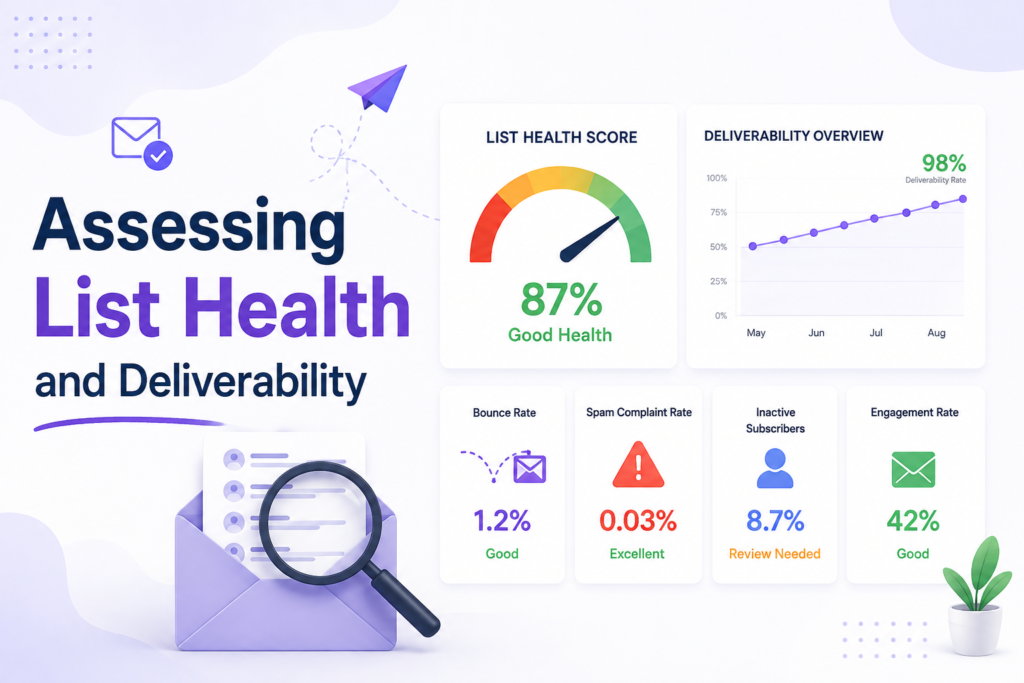
Your sender reputation depends entirely on the technical health of your subscriber database and effective kpis for email marketing tracking. When you prioritize list maintenance, you ensure that your messages land in the inbox rather than the spam folder. This proactive approach is essential for maintaining high engagement and protecting your domain authority over time.
Managing Bounce Rates and List Hygiene
Bounce rates serve as a primary indicator of your list quality. A hard bounce occurs when an email address is invalid or no longer exists, while a soft bounce typically suggests a temporary issue like a full inbox. You must remove hard bounces immediately to prevent damage to your sender score.
“A clean list is not just about numbers; it is about the quality of the connection you build with your audience.”
Consistent list hygiene involves scrubbing inactive users who no longer interact with your content. By removing these dead accounts, you improve your overall kpis for email marketing tracking and ensure your metrics reflect a truly engaged audience. Consider the following table to understand how different bounce types impact your strategy:
| Bounce Type | Action Required | Impact on Deliverability |
|---|---|---|
| Hard Bounce | Remove immediately | High negative impact |
| Soft Bounce | Monitor and retry | Low to moderate impact |
| Inactive User | Re-engagement campaign | Neutral to positive |
Monitoring Unsubscribe Rates to Prevent Churn
High unsubscribe rates often signal that your content is no longer meeting the expectations of your subscribers. When you track these departures, you gain valuable insights into why users leave, allowing you to adjust your frequency or messaging style. This data is vital for stabilizing your audience growth.
If you notice a sudden spike in unsubscribes, evaluate your recent campaigns for relevance. Improving your content quality often leads to better email conversion rates, as you focus on delivering value to those who truly want to hear from you. Remember that email open rate tracking is only half the battle; keeping your subscribers happy is the key to long-term retention.
Advanced Metrics for Deep Performance Insights
Moving beyond basic engagement metrics allows you to see the true potential of your email marketing strategy. By analyzing how your audience interacts with your brand, you can identify the best kpis for email marketing that drive long-term success. These advanced indicators reveal how your brand expands its reach through organic advocacy and sustainable growth.
Measuring List Growth Rate Over Time
Your list growth rate is a vital indicator of whether your acquisition strategies are actually working. It measures the speed at which your subscriber base expands, helping you determine if your marketing efforts are sustainable. Consistent growth ensures that you are constantly reaching new potential customers rather than just recycling the same audience.
To calculate this, subtract your unsubscribes and bounces from your new sign-ups, then divide by the total number of subscribers. Monitoring this metric helps you refine your lead magnets and sign-up forms. Utilizing the best kpis for email marketing, such as net growth, allows you to pivot your strategy before your list begins to stagnate.
Analyzing Email Sharing and Forwarding Rates
Sharing and forwarding rates serve as powerful indicators of high-value content that resonates deeply with your existing subscribers. When a reader forwards your email, they are essentially acting as a brand ambassador. This organic advocacy is often more effective than traditional advertising because it comes with a personal recommendation.
You should track these metrics to identify which topics or offers trigger the most excitement among your audience. High forwarding rates suggest that your content provides genuine value that your subscribers want to share with their own networks. By focusing on these best kpis for email marketing, you can tailor your future campaigns to encourage more of this high-impact engagement.
Technical Performance Indicators
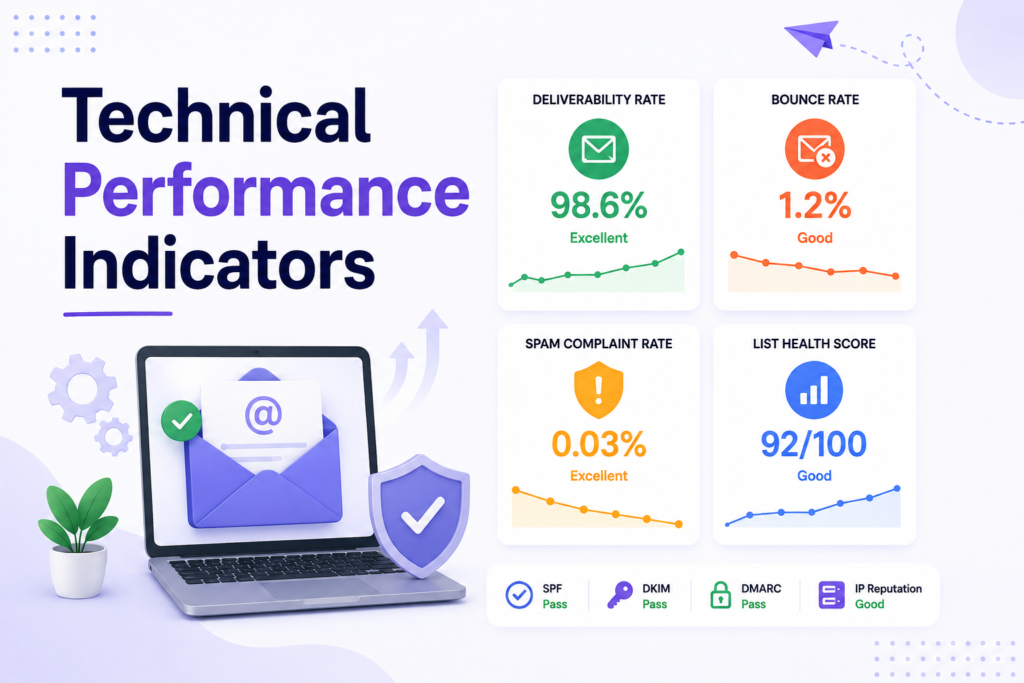
If you want to master the best KPIs for email marketing, you must look at technical health. While engagement metrics tell you what subscribers like, technical indicators reveal whether your emails actually reach the inbox. Ignoring these data points can lead to your domain being blacklisted by major internet service providers.
Tracking Spam Complaint Rates
Your spam complaint rate is a critical indicator of how your audience perceives your content. When a user clicks the “mark as spam” button, it sends a negative signal to email providers like Gmail or Outlook. Maintaining a rate below 0.1% is vital for your sender reputation.
High complaint rates often stem from poor list hygiene or sending irrelevant content. You should monitor this metric daily to identify spikes that might indicate a problematic campaign. By addressing these issues early, you protect your ability to reach your subscribers consistently.
Evaluating Revenue Per Email Sent
Beyond deliverability, you need to understand the financial efficiency of your efforts. Revenue per email (RPE) provides a clear view of the monetary value generated by every individual message you deploy. This is one of the best KPIs for email marketing because it ties your technical output directly to business growth.
To calculate this, divide your total revenue from a campaign by the number of emails successfully delivered. This metric helps you determine which segments or content types drive the most profit. Use the table below to compare how these technical indicators influence your overall strategy.
| Metric | Primary Goal | Target Threshold |
|---|---|---|
| Spam Complaint Rate | Protect Deliverability | Below 0.1% |
| Revenue Per Email | Maximize Profitability | Industry Average |
| Bounce Rate | Maintain List Health | Below 2.0% |
Tracking these technical metrics ensures your email program remains sustainable. By balancing inbox placement with revenue generation, you utilize the best KPIs for email marketing to drive long-term success.
Tools and Strategies for Effective Analytics
You cannot improve what you do not measure, which makes your choice of technology stack critical for kpis for email marketing success. Establishing a solid foundation for email marketing analytics ensures that every click, open, and conversion is captured with precision. Without the right tools, you risk losing valuable insights that could otherwise drive your growth.
Start Measuring What Matters
Ready to improve your email performance? Track the metrics that matter, identify winning strategies, and transform campaign insights into stronger engagement, loyalty, and business results.
Selecting the Right Email Marketing Platforms
Choosing a platform requires looking beyond basic templates and focusing on robust reporting capabilities. You need a system that provides real-time data visualization and deep segmentation options. These features allow you to identify trends quickly and adjust your strategy based on actual user behavior.
Look for platforms that offer automated reporting and custom dashboard creation. This functionality saves time and ensures that your team stays focused on high-impact metrics. A reliable tool should also provide A/B testing analytics to help you refine your content strategy continuously.
Integrating Analytics with Customer Relationship Management Systems
Connecting your email data to a Customer Relationship Management (CRM) system creates a unified view of the customer journey. This integration allows you to see how email interactions influence long-term purchasing decisions. By bridging these gaps, you gain a 360-degree perspective on your audience across all touchpoints.
“Data integration is the bridge between knowing your customers and truly understanding their needs across every digital channel.”
When your CRM and email tools communicate effectively, you can trigger personalized campaigns based on offline behavior. This level of sophistication is essential for modern email marketing analytics. The following table highlights the key differences between basic and integrated systems.
| Feature | Basic Platform | Integrated CRM System |
|---|---|---|
| Data Scope | Email activity only | Full customer lifecycle |
| Segmentation | Static lists | Dynamic, behavior-based |
| Reporting | Standard metrics | Revenue attribution |
| Automation | Simple triggers | Cross-channel workflows |
Common Pitfalls When Interpreting Email Data
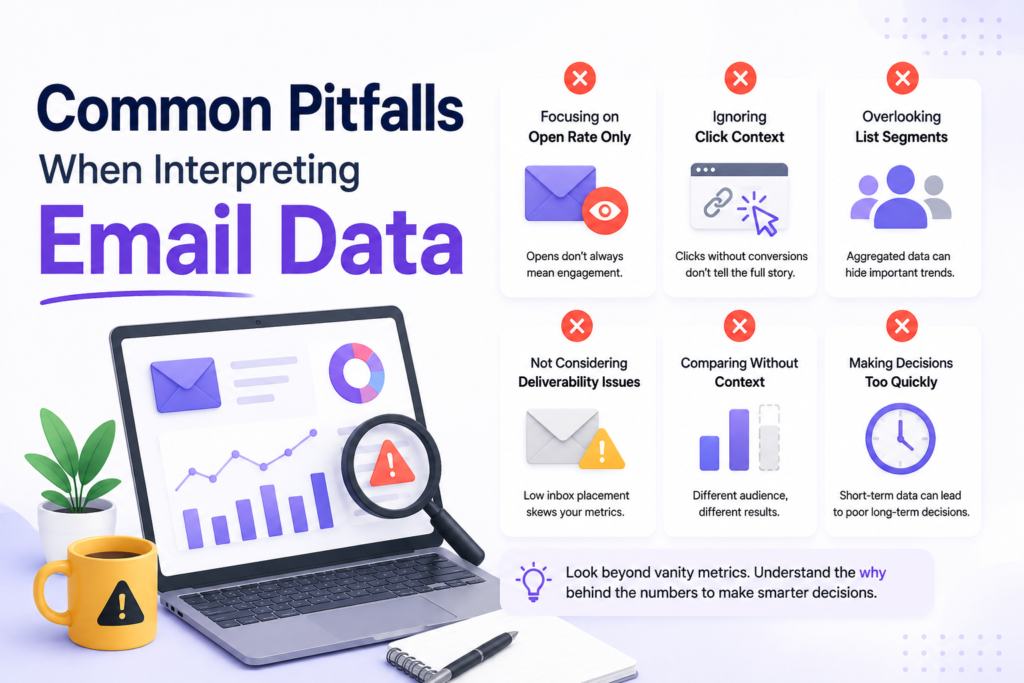
Many marketers fall into the trap of prioritizing numbers that look good but mean little for their bottom line. When you dive into email marketing analytics, it is easy to get distracted by high-level figures that do not actually drive revenue or customer loyalty. Misinterpreting these signals often leads to a false sense of security while your core business objectives remain unmet.
Avoiding Vanity Metrics That Mislead Strategy
Vanity metrics are data points that make your campaigns look successful on the surface but lack actionable depth. For example, a high number of total subscribers might look impressive, but it tells you nothing about the quality of your list or the engagement level of your audience.
To refine your strategy, you must shift your focus toward metrics that indicate genuine interest and intent. Consider the following distinctions when reviewing your reports:
- Vanity Metric: Total email opens (can be inflated by bots or auto-previews).
- Actionable Metric: Unique click-through rates (shows actual user interest).
- Vanity Metric: Total list size (includes inactive or disengaged users).
- Actionable Metric: Conversion rate per segment (shows real revenue impact).
Contextualizing Data Against Industry Benchmarks
Even accurate data can be misleading if you do not have a frame of reference. Evaluating your performance in a vacuum often leads to unrealistic expectations or unnecessary panic. You should always compare your email marketing analytics against established industry standards to see where you truly stand.
The table below highlights how different sectors experience varying performance levels, which helps you set grounded goals for your own campaigns.
| Industry Sector | Avg. Open Rate | Avg. Click Rate |
|---|---|---|
| E-commerce | 15-20% | 1-2% |
| B2B Services | 20-25% | 2-3% |
| Non-Profit | 25-30% | 2-4% |
By using these benchmarks, you can determine if your kpis for email marketing analytics reflect a healthy strategy or if you need to pivot your approach. Remember that your specific audience behavior is unique, so use these numbers as a guide rather than a rigid rulebook. Consistent monitoring and contextual analysis will ensure your long-term success.
Explore Your Email KPIs
Stop guessing and start optimizing every campaign. Use meaningful email KPIs to uncover performance gaps, increase conversions, protect your sender reputation, and grow revenue consistently.
Conclusion
Data serves as the compass for your digital marketing journey. By prioritizing the right kpis for email marketing, you transform raw numbers into actionable growth strategies. This shift in focus ensures your brand remains relevant in a crowded inbox.
Consistent monitoring of these metrics builds a foundation for sustainable results. You gain the ability to pivot quickly when audience preferences change. Platforms like Mailchimp or HubSpot provide the infrastructure needed to track these vital indicators with precision.
Your commitment to analyzing kpis for email marketing directly impacts your bottom line. You foster deeper connections with subscribers by delivering content that resonates with their specific needs. This disciplined approach turns casual readers into loyal brand advocates.
Start applying these insights to your daily operations today. Review your current performance reports to identify areas for immediate optimization. Your path to improved engagement and higher revenue begins with a clear understanding of your data.
FAQs
Why are kpis for email marketing essential for your business strategy?
Tracking kpis for email marketing is the only way to move beyond guesswork and make data-driven decisions. By monitoring these metrics, you gain a clear understanding of your audience’s behavior in the United States market, allowing you to refine your messaging and build long-term brand loyalty through consistent, relevant communication.
How can you identify the best kpis for email marketing to maximize your ROI?
The best kpis for email marketing are those that align directly with your specific business goals, such as revenue growth or lead generation. By prioritizing metrics like conversion rates and revenue per email, you ensure that your resources are allocated toward high-performing campaigns that deliver a tangible return on investment.
What is the significance of email open rate tracking in modern campaigns?
Email open rate tracking serves as a vital indicator of your subject line’s effectiveness and your brand’s perceived value. While updates like Apple Mail Privacy Protection have changed how this data is collected, monitoring these trends helps you understand which hooks successfully capture your subscribers’ attention in a crowded inbox.
How do email conversion rates differ from simple click-through rates?
While click-through rates measure interest and content relevance, email conversion rates measure actual results, such as a completed purchase or a whitepaper download. By focusing on conversions, you can determine if your landing pages and calls-to-action are successfully driving the desired bottom-line impact.
How does list hygiene affect your sender reputation with providers like Gmail and Outlook?
Maintaining strict list hygiene by managing bounce rates and removing inactive subscribers is critical for your deliverability. High bounce rates signal to major internet service providers like Gmail and Outlook that your list may be outdated, which can lead to your messages being diverted to the spam folder rather than the primary inbox.
Why should you integrate email marketing analytics with a CRM like Salesforce or HubSpot?
Integrating your email marketing analytics with a robust Customer Relationship Management (CRM) system like Salesforce or HubSpot provides a 360-degree view of the customer journey. This integration allows you to see how email interactions influence sales pipeline velocity and overall customer lifetime value.
What are the dangers of relying on vanity metrics when evaluating performance?
Vanity metrics, such as total subscriber counts or raw open numbers, can be misleading if they don’t correlate with actual business growth. To avoid these pitfalls, you must contextualize your data against industry benchmarks from leaders like Campaign Monitor or Statista to ensure your strategy is producing meaningful results.
How do email sharing and forwarding rates contribute to organic brand advocacy?
High sharing and forwarding rates indicate that your content is so valuable that your subscribers are willing to vouch for your brand to their own networks. This metric is a powerful indicator of high-value content and serves as a low-cost method for organic list growth and expanded brand reach.
How can you proactively use unsubscribe rates to prevent audience churn?
Monitoring your unsubscribe rates allows you to identify patterns and triggers that cause subscribers to leave. By analyzing these trends, you can adjust your content frequency and quality, ensuring you maintain a healthy balance that keeps your audience engaged without overwhelming their inboxes.
What does Revenue Per Email (RPE) reveal about your campaign’s financial health?
Revenue Per Email (RPE) provides a clear view of the monetary value generated by every individual message you deploy. By calculating this kpis for email marketing metric, you can compare the effectiveness of different segments and automated workflows.