


Studies show that nearly 20% of commercial emails never reach the inbox, while poor targeting and weak engagement cost affiliate marketers thousands in lost commissions every year. Despite email being one of the highest ROI channels, many affiliates struggle to generate consistent conversions because of avoidable Email Marketing Mistakes that silently damage performance.
From poor list segmentation and low open rates to weak subject lines and spam folder issues, even small email marketing fails can reduce clicks, hurt deliverability, and weaken subscriber trust. Many affiliate marketers unknowingly repeat these errors, making it harder to scale campaigns and build predictable income.
The good news is that most common email marketing mistakes are completely fixable. By understanding the email marketing mistakes affiliate marketers make and applying the best practices for email marketing, you can improve engagement, increase conversions, and build stronger relationships with your audience. In this guide, you will discover the top mistakes and practical ways to fix them.
Key Takeaways
- Understanding common Email Marketing Mistakes can significantly improve open rates and conversions.
- Small technical and content-related issues often lead to major email marketing fails.
- Following best practices for email marketing helps improve subscriber trust and long-term engagement.
- Avoiding common email marketing mistakes can protect your sender reputation and boost deliverability.
- Learning the email marketing mistakes affiliate marketers make allows you to optimize campaigns for sustainable affiliate growth.
Struggling with Low Opens and Weak Affiliate Conversions?
Small Email Marketing Mistakes can quietly reduce clicks, damage trust, and lower commissions. Learn how to fix poor targeting, weak engagement, and email marketing fails before they hurt your growth.
Why Avoiding Email Marketing Mistakes Matters for Affiliate Marketers
Email marketing plays a critical role in affiliate success because it gives you direct access to an audience that already trusts your recommendations. Unlike paid ads or social media platforms, your email list is an owned asset that can consistently drive clicks and commissions.
However, small Email Marketing Mistakes such as poor targeting, irrelevant messaging, or inconsistent communication can significantly reduce conversions. A well-planned email strategy helps nurture subscribers, improve engagement, and turn casual readers into loyal buyers who repeatedly interact with your affiliate offers.
The Hidden Cost of Poor Email Campaigns
Many affiliate marketers underestimate how damaging poor email campaigns can be. Weak subject lines, low deliverability, and irrelevant promotions often result in lower open rates and missed sales opportunities. These email marketing fails not only affect short-term revenue but also weaken subscriber trust over time.
If readers stop opening your emails or mark them as spam, your sender reputation can suffer, making it even harder for future campaigns to perform effectively. Ignoring these issues often creates a cycle of declining engagement and lost income.
Why Affiliate Marketers Face Unique Email Challenges
Affiliate marketers face different challenges compared to traditional brands because they rely heavily on trust and timely offers. Subscribers expect valuable content rather than constant promotions. This is why following best practices for email marketing is essential.
Balancing education with promotion, maintaining deliverability, and avoiding common email marketing mistakes can help affiliates build stronger relationships and sustain long-term growth in a highly competitive market.
Mistake #1: Neglecting Email List Segmentation
One of the biggest Email Marketing Mistakes affiliate marketers make is sending the same email to every subscriber. Not everyone on your list has the same interests, buying behavior, or needs. Some subscribers may be beginners looking for tips, while others are ready to purchase a product. When everyone receives identical emails, your content feels less relevant, which can lower open rates, clicks, and conversions.
Sending generic emails also increases unsubscribe rates because people may feel your content does not match their interests. Over time, this can hurt trust and reduce engagement with your campaigns.
Common Segmentation Errors Affiliate Marketers Make
Many affiliate marketers make simple segmentation mistakes without realizing the impact. One common error is grouping all subscribers into one list without separating them based on interests or actions. Another mistake is ignoring user behavior, such as email opens, link clicks, or past purchases.
Some marketers also send too many promotional emails to inactive subscribers, which often leads to poor engagement. These common email marketing mistakes can affect both conversions and sender reputation.
How to Fix It with Behavioral and Interest-Based Segmentation
The best way to solve this problem is by using behavioral and interest-based segmentation. Divide your subscribers based on what they like, what they click on, or what products they have shown interest in.
For example, if someone clicks on content related to SEO tools, send them emails about SEO offers instead of general marketing products. This makes your emails more relevant and increases the chances of conversions while reducing email marketing fails caused by poor targeting.
Best Practices for Better Subscriber Targeting
To improve targeting, regularly update your email list and track subscriber behavior. Use tags, interests, and engagement levels to personalize content. Following these best practices for email marketing helps you send the right message to the right people, improving trust and long-term affiliate revenue.
Mistake #2: Sending Too Many Promotional Emails
One of the most common Email Marketing Mistakes affiliate marketers make is sending too many sales-focused emails. While promoting products is important, constantly pushing offers can frustrate subscribers. If every email feels like a sales pitch, readers may lose interest, stop opening your emails, or unsubscribe completely.
People join email lists to get useful information, tips, or solutions to their problems. When subscribers only receive promotional content, trust starts to fade. Over time, this can lead to lower click-through rates and poor engagement. Many email marketing fails happen because marketers focus too much on selling and not enough on building relationships.
The 80/20 Content-to-Promotion Rule
A simple way to avoid overpromotion is by following the 80/20 rule. This means around 80% of your emails should focus on helpful, educational, or entertaining content, while only 20% should promote products or affiliate offers.
For example, instead of sending daily product promotions, you can share useful guides, industry tips, or problem-solving advice. Then, naturally include an affiliate recommendation where it fits. This keeps your audience engaged while still creating opportunities for sales.
How to Balance Educational and Promotional Content
Balancing content is one of the best practices for email marketing. Try mixing educational emails with promotional ones. Share case studies, tutorials, product comparisons, or personal experiences before recommending a product.
For example, if you promote SEO tools, first send an email explaining common SEO problems and then introduce a tool that solves them. This makes promotions feel helpful rather than forced.
Real Examples of Value-Driven Email Campaigns
Successful affiliate marketers often focus on value first. A fitness affiliate may share workout tips before recommending supplements, while a marketing affiliate may teach email strategies before promoting software. Avoiding these common email marketing mistakes helps build trust, improve engagement, and increase long-term conversions.
Mistake #3: Ignoring Mobile Email Optimization
One of the biggest Email Marketing Mistakes affiliate marketers make is ignoring mobile users. Today, most people open emails on smartphones rather than desktops. If your email is hard to read, takes too long to load, or looks broken on mobile devices, subscribers may leave without clicking anything.
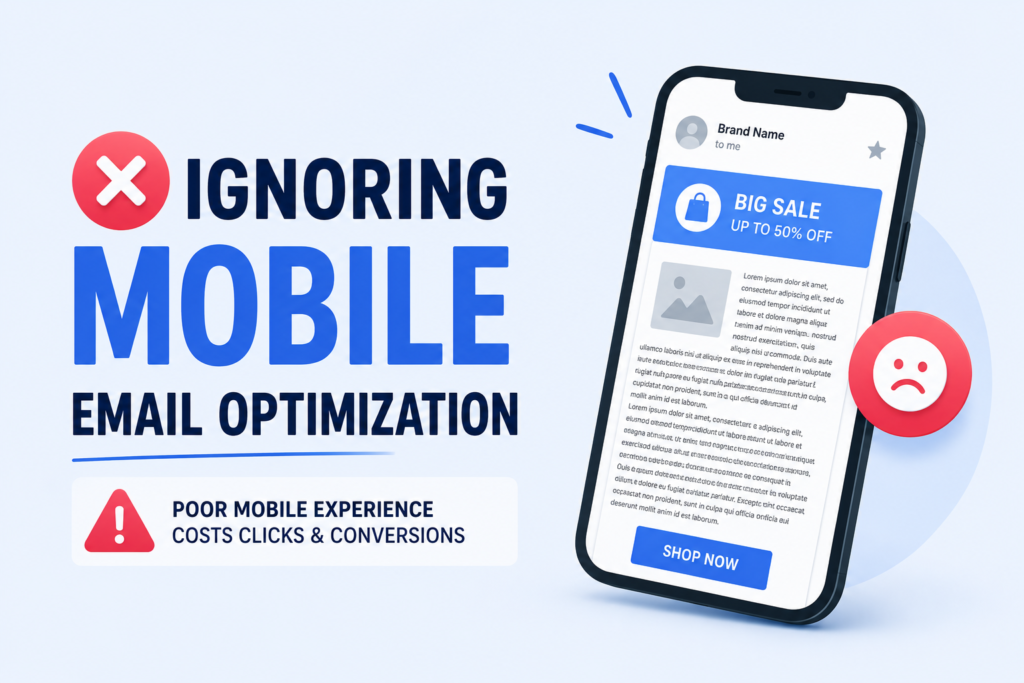
A mobile-friendly email improves user experience and increases the chances of engagement. Clear text, easy navigation, and clickable buttons make it simple for readers to interact with your content. Since mobile users often make quick decisions, a poor experience can mean lost conversions.
Common Mobile Design Email Marketing Fails
Many email marketing fails happen because emails are not designed for smaller screens. Tiny fonts, large images, long paragraphs, or buttons that are difficult to click can frustrate readers. Some emails also fail to adjust properly on mobile devices, forcing users to zoom in or scroll sideways.
Another common mistake is placing too much content above the call-to-action button. If readers cannot quickly understand the message or find the next step, they are more likely to ignore the email completely.
Best Practices for Mobile Optimization
Following best practices for email marketing can help improve mobile performance. Use short paragraphs, larger font sizes, and responsive email templates that automatically adjust to different screen sizes. Keep subject lines short so they display properly on mobile inboxes.
Also, make your CTA buttons large and easy to tap. Avoid adding too many images or unnecessary design elements that slow loading speed.
How to Test Emails Across Devices
Before sending any campaign, test your emails on different devices such as smartphones, tablets, and desktops. Check how the layout, text, and buttons appear on each screen size. Avoiding these common email marketing mistakes helps improve user experience, increase clicks, and boost affiliate conversions.
Mistake #4: Poor Email Deliverability and Sender Reputation
One of the most serious Email Marketing Mistakes affiliate marketers make is ignoring email deliverability. No matter how good your email content is, it will not generate results if it lands in the spam folder. Emails often end up in spam because of poor sender reputation, spammy subject lines, too many promotional links, or low engagement from subscribers.
When subscribers stop opening your emails or mark them as spam, email providers may start treating your messages as unwanted content. This lowers inbox placement and reduces your chances of getting clicks and conversions.
Common Deliverability Mistakes Affiliate Marketers Make
Many affiliate marketers unknowingly make mistakes that hurt deliverability. One common problem is buying email lists instead of building an audience naturally. Purchased lists often contain inactive or fake emails, which increase bounce rates.
Another mistake is sending too many promotional emails without providing value. Poor list cleaning, ignoring inactive subscribers, and using spam-triggering words are also major email marketing fails that can damage sender reputation over time.
How SPF, DKIM, and DMARC Improve Deliverability
Setting up email authentication is an important step for improving deliverability. Tools like SPF, DKIM, and DMARC help email providers verify that your emails are safe and trustworthy.
SPF confirms that your sending server is authorized to send emails. DKIM adds a security signature to protect email content, while DMARC helps prevent email fraud and phishing. These tools increase trust with inbox providers and reduce the chances of your emails landing in spam.
Best Practices for Maintaining a Healthy Email List
Following best practices for email marketing can help maintain a healthy list and strong sender reputation. Remove inactive subscribers regularly, avoid purchased email lists, and only send relevant content to engaged users.
Cleaning your list and monitoring open rates helps avoid common email marketing mistakes while improving deliverability, engagement, and long-term affiliate results.
Mistake #5: Writing Weak or Misleading Subject Lines
Your subject line is the first thing subscribers notice in their inbox. It decides whether someone opens your email or ignores it completely. Even if your content is valuable, weak subject lines can stop people from reading your message. This is one of the most common Email Marketing Mistakes affiliate marketers make.
A good subject line creates curiosity, shows value, or solves a problem. Since inboxes are crowded, your email must quickly grab attention. Poor or boring subject lines usually lead to low open rates, fewer clicks, and missed affiliate sales.
Email Marketing Fails Caused by Clickbait Headlines
Many affiliate marketers try to increase opens by using clickbait headlines such as “You Won’t Believe This Secret” or “Instant Success Guaranteed.” While these subject lines may attract attention at first, they often disappoint readers if the content does not match the promise.
These types of email marketing fails reduce trust and may cause subscribers to ignore future emails. In some cases, misleading subject lines can even increase spam complaints, hurting your sender reputation over time.
How to Write High-Converting Subject Lines
Writing strong subject lines does not need to be complicated. Keep them short, clear, and focused on a benefit. Ask questions, create curiosity, or mention a solution to a common problem.
For example, instead of writing “Best Marketing Tool,” try “Struggling with Low Conversions? Try This Simple Fix.” Following best practices for email marketing can help improve open rates and engagement.
Also, avoid spammy words like “Free Money” or too many capital letters, as these may trigger spam filters.
Personalization Techniques That Improve Opens
Personalization is a smart way to improve email performance. Adding a subscriber’s name or mentioning their interests makes emails feel more relevant. Avoiding these common email marketing mistakes helps build trust, improve open rates, and increase affiliate conversions over time.
Turn More Subscribers into Affiliate Buyers
Avoid costly email marketing fails by improving subject lines, engagement, and deliverability. Learn the best practices for email marketing that help increase clicks and affiliate revenue.
Mistake #6: Using Weak Calls to Action
A call to action (CTA) tells readers what to do next after reading your email. If your CTA is weak, confusing, or unclear, subscribers may leave without clicking your affiliate link. This is one of the most overlooked Email Marketing Mistakes that can directly reduce conversions and affiliate earnings.
Even if your email content is valuable, poor CTAs can stop people from taking action. A simple mistake like using boring text or not clearly showing the benefit can lead to fewer clicks and lost sales. Strong CTAs guide readers toward the next step and make decisions easier.
Common CTA Mistakes in Affiliate Emails
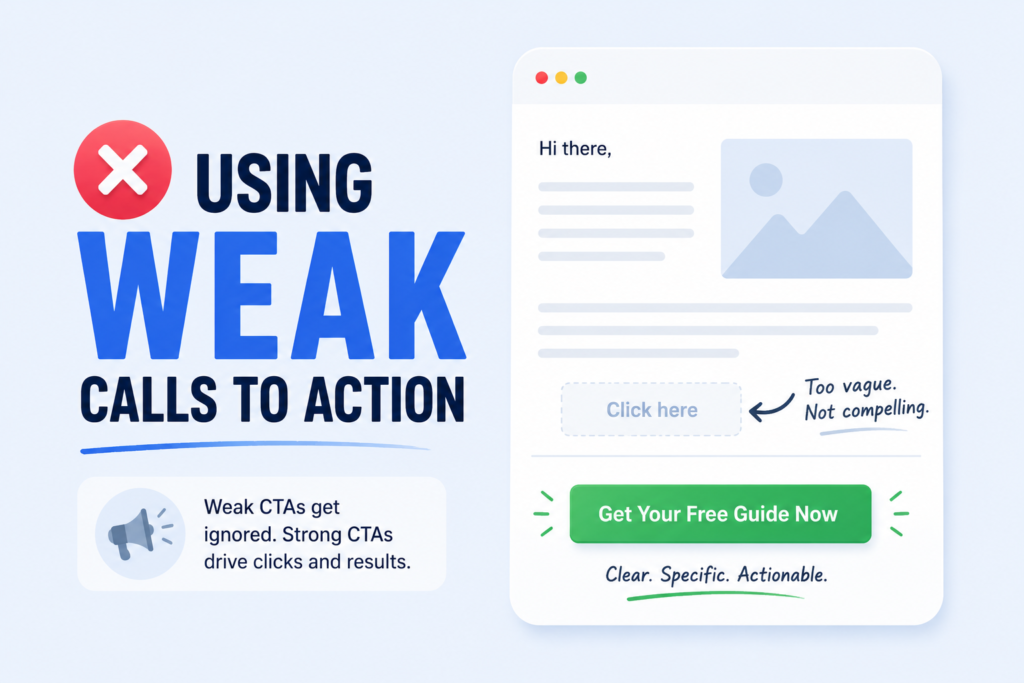
Many affiliate marketers make small CTA mistakes without noticing their impact. One common error is using vague phrases like “Click Here” or “Learn More” without explaining why someone should click. Another mistake is adding too many CTA buttons in one email, which confuses readers.
Some marketers also place their CTA too far down the email or hide it inside long paragraphs. These common email marketing mistakes reduce engagement and make it harder for subscribers to take action.
How to Create Click-Worthy CTA Buttons
Creating better CTAs starts with clear and simple language. Instead of generic text, focus on benefits. For example, use phrases like “Start Growing Your Email List” or “Get Your Free Marketing Guide.”
CTA buttons should stand out with clear colors, short text, and action-focused words. Following best practices for email marketing means making it easy for subscribers to understand exactly what they will get after clicking.
Best CTA Placement Practices
Where you place your CTA matters just as much as the wording. Add one CTA near the top for quick readers and another at the end for those who finish the email. Avoiding these email marketing fails can improve click-through rates and increase affiliate sales over time.
Mistake #7: Inconsistent Email Sending Schedule
One of the most ignored Email Marketing Mistakes affiliate marketers make is sending emails without a proper schedule. If you send emails randomly, subscribers may forget about your brand or lose interest over time. Sending too many emails suddenly or disappearing for weeks can confuse your audience and reduce trust.
When subscribers do not know when to expect your emails, engagement often drops. Some people may even mark your emails as spam because they no longer remember signing up. These small email marketing fails can hurt your open rates and overall campaign performance.
How Consistency Builds Brand Familiarity
Consistency helps subscribers become familiar with your brand. When people regularly see your emails in their inbox, they start recognizing your name and content style. This creates trust and makes readers more likely to open your future emails.
For affiliate marketers, building trust is important because subscribers are more likely to click recommendations from someone they know. Following best practices for email marketing means creating a schedule and sticking to it. Whether you send emails weekly or twice a week, consistency matters more than frequency.
Finding the Best Email Frequency for Your Audience
There is no perfect email schedule that works for everyone. Some audiences prefer daily updates, while others may only want weekly emails. The best approach is to test different sending frequencies and monitor open rates, clicks, and unsubscribes.
If engagement drops after increasing email frequency, it may be a sign that you are sending too many emails. Understanding your audience helps avoid common email marketing mistakes that reduce trust and engagement.
Weekly vs Daily Email Campaign Strategy
Daily emails can work well for time-sensitive offers, news, or active audiences. However, too many emails may overwhelm subscribers. Weekly emails are often better for sharing educational content and affiliate recommendations. Choosing the right balance helps improve engagement and long-term results.
| Email Frequency | Best For | Risk |
| Daily Emails | Promotions, flash deals, active audiences | Subscriber fatigue |
| Weekly Emails | Education and trust building | Slower promotion cycle |
Mistake #8: Not Using Automated Email Sequences
One of the biggest Email Marketing Mistakes affiliate marketers make is relying only on manual emails. Sending every email manually takes time and makes it difficult to stay consistent. It also increases the chances of missing follow-ups or forgetting to engage new subscribers at the right moment.
Manual emailing may work when your list is small, but as your audience grows, it becomes harder to manage. This often leads to delayed communication, lower engagement, and missed affiliate sales. Many email marketing fails happen because subscribers stop hearing from a brand after signing up.
Essential Automated Sequences for Affiliate Marketers
Automation helps you send the right email at the right time without extra effort. Here are some important email sequences every affiliate marketer should use.
Welcome Email Sequence
A welcome email is the first message subscribers receive after joining your list. It helps introduce your brand, set expectations, and build trust. You can also share a helpful resource or beginner-friendly guide before promoting products. A strong welcome email creates a better first impression and improves engagement.
Lead Nurturing Drip Campaign
A drip campaign sends a series of emails over time to educate subscribers and guide them toward a purchase. Instead of promoting products immediately, share useful tips, case studies, or solutions to common problems. Following best practices for email marketing means focusing on value before asking for a sale.
Re-Engagement Emails
Not every subscriber stays active forever. Re-engagement emails help reconnect with inactive users by offering useful content, discounts, or asking if they still want updates. This helps clean your list and improve engagement.
How Automation Improves Conversions
Automation helps deliver relevant content at the perfect time, which increases trust and engagement. Avoiding common email marketing mistakes like inconsistent follow-ups can improve conversions and make affiliate campaigns more effective in the long run.
Mistake #9: Ignoring Email Marketing Analytics
One of the most costly Email Marketing Mistakes affiliate marketers make is ignoring email performance data. If you are not tracking how your emails perform, it becomes difficult to understand what is working and what needs improvement. Simply sending emails without checking results can lead to poor engagement and missed affiliate sales.
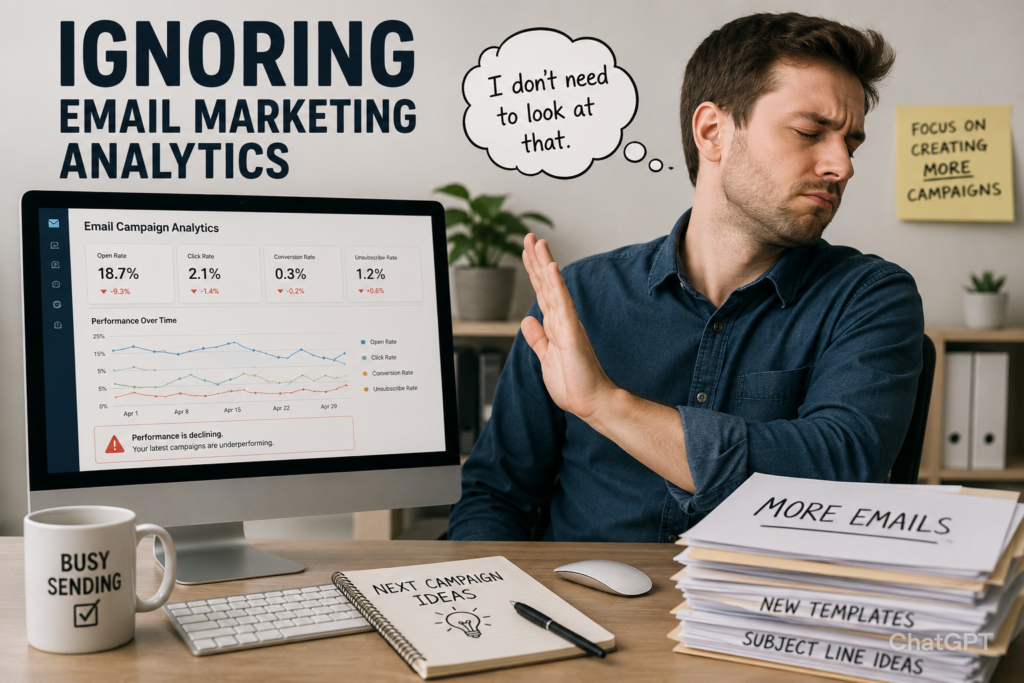
Tracking analytics helps you understand subscriber behavior. You can see which emails people open, what links they click, and which campaigns bring the best results. Ignoring this data often leads to repeated email marketing fails that reduce conversions over time.
Key Metrics Every Affiliate Marketer Should Monitor
To improve email performance, you should regularly monitor important metrics.
Open Rate
Open rate shows how many people opened your email. A low open rate may mean your subject line is weak or your emails are landing in spam folders. Improving subject lines can increase engagement.
Click-Through Rate
Click-through rate (CTR) measures how many people clicked on links in your email. A low CTR may suggest weak content or unclear call-to-action buttons.
Conversion Rate
Conversion rate tracks how many subscribers completed the desired action, such as purchasing a product through your affiliate link. This metric directly impacts your earnings.
Bounce Rate
Bounce rate shows how many emails failed to reach inboxes. High bounce rates usually happen because of inactive or incorrect email addresses.
Unsubscribe Rate
This metric tells you how many people leave your list after receiving an email. High unsubscribe rates may signal poor content or too many promotions.
| Metric | What It Measures | Why It Matters |
| Open Rate | Email opens | Shows subject line performance |
| Click Through Rate | Link clicks | Measures engagement |
| Conversion Rate | Sales or actions | Tracks affiliate performance |
| Bounce Rate | Failed deliveries | Signals list quality |
| Unsubscribe Rate | People leaving list | Indicates content problems |
How Data Helps Improve Future Campaigns
Following best practices for email marketing means using data to improve future campaigns. Analytics help you understand what content works best and what mistakes to avoid. By fixing common email marketing mistakes, you can improve open rates, engagement, and long-term affiliate conversions.
Mistake #10: Ignoring Email Compliance and Privacy Rules
One of the most serious Email Marketing Mistakes affiliate marketers make is ignoring email compliance and privacy rules. While sending promotional emails may seem simple, failing to follow legal guidelines can lead to penalties, poor sender reputation, and loss of subscriber trust.
Subscribers want to feel safe when sharing their email addresses. If people think their data is being misused or they are receiving unwanted emails, they may unsubscribe or report your emails as spam. Following legal rules helps protect both your business and your audience.
Understanding CAN-SPAM and GDPR Basics
Two important email laws marketers should understand are CAN-SPAM and GDPR. The CAN-SPAM Act applies mainly to commercial emails and requires marketers to include honest subject lines, sender information, and an easy unsubscribe option.
GDPR focuses on data privacy and is especially important for users in Europe. It requires businesses to get clear permission before sending marketing emails and explain how subscriber data will be used.
Ignoring these rules can lead to major email marketing fails, including low trust and poor deliverability.
Common Legal Email Marketing Mistakes
Many affiliate marketers unknowingly make legal mistakes. Buying email lists, hiding unsubscribe buttons, using misleading subject lines, or sending emails without permission are some common email marketing mistakes that can damage reputation.
Another mistake is collecting subscriber data without clearly explaining how it will be used. These actions can make subscribers feel uncomfortable and hurt long-term engagement.
How to Build Trust Through Transparent Practices
Following best practices for email marketing means being transparent with subscribers. Always ask for permission before sending emails, explain what type of content people will receive, and make unsubscribing easy.
Being honest and respectful builds trust over time. When subscribers feel safe and valued, they are more likely to open emails, engage with content, and trust your affiliate recommendations.
Best Practices for Email Marketing Success
Focus on Value Before Promotion
- Share helpful tips, guides, and solutions before promoting affiliate products.
- Avoid sending only sales-focused emails to prevent subscriber fatigue.
- Build trust first to improve long-term engagement and conversions.
Prioritize List Hygiene and Deliverability
- Regularly remove inactive or invalid email addresses from your list.
- Avoid purchased email lists to protect sender reputation.
- Monitor spam complaints and follow best practices for email marketing to improve inbox placement.
Segment Your Audience for Better Results
- Divide subscribers based on interests, behavior, or purchase activity.
- Send targeted content instead of the same email to everyone.
- Avoid common email marketing mistakes by making emails more relevant.
Test, Analyze, and Optimize Regularly
- Track open rates, clicks, and conversions to measure performance.
- Test subject lines, CTA buttons, and email timing for better results.
- Fix Email Marketing Mistakes early to improve engagement and reduce email marketing fails over time.
Ready to Fix the Email Marketing Mistakes Affiliate Marketers Make?
Stop losing subscribers, clicks, and commissions to poor email strategies. Apply the best practices for email marketing to improve deliverability, boost engagement, and grow affiliate revenue consistently.
Final Thoughts on Avoiding Email Marketing Mistakes
Avoiding Email Marketing Mistakes is essential for affiliate marketers who want steady growth and better conversions. From poor email segmentation and weak subject lines to ignoring analytics, automation, and deliverability, these issues can quietly reduce engagement and sales. Understanding these common email marketing mistakes helps you create stronger campaigns that connect better with subscribers and improve overall performance.
One of the smartest ways to improve results is to regularly review your email strategy. Check your open rates, click through rates, subscriber engagement, and content quality to identify what needs improvement. Even small updates can help reduce email marketing fails and increase long term results.
Following the best practices for email marketing is not only about getting more clicks. It is about building trust and creating a stronger relationship with your audience through valuable and consistent communication.
Start fixing the email marketing mistakes affiliate marketers make today and use smarter email practices to improve engagement, increase conversions, and grow your affiliate revenue.
FAQs
What are the most common email marketing mistakes?
Some of the most common Email Marketing Mistakes include poor email segmentation, weak subject lines, sending too many promotional emails, ignoring mobile optimization, and failing to track email performance. These mistakes can reduce engagement, lower conversions, and hurt sender reputation over time.
How can affiliate marketers improve email open rates?
Affiliate marketers can improve open rates by writing clear subject lines, personalizing emails, sending relevant content, and choosing the right sending time. Avoiding spammy words and following best practices for email marketing can also improve inbox visibility.
Why do affiliate emails go to spam folders?
Affiliate emails often go to spam because of poor sender reputation, spammy content, too many affiliate links, or low subscriber engagement. Setting up SPF, DKIM, and DMARC records can help improve deliverability and reduce email marketing fails.
What are the best practices for email marketing?
The best practices for email marketing include sending valuable content, segmenting subscribers, maintaining a clean email list, testing campaigns regularly, and using automation to improve consistency and engagement.
How often should affiliate marketers send emails?
The ideal email frequency depends on your audience. Many affiliate marketers find success with one to three emails per week. The key is consistency and providing value instead of sending too many promotional emails.
Why is email segmentation important for affiliate marketers?
Email segmentation helps you send relevant content to the right audience. Instead of sending the same email to everyone, subscribers receive personalized recommendations based on interests or behavior, which improves engagement and conversions.
Can too many promotional emails hurt affiliate sales?
Yes, sending too many promotional emails can reduce trust and increase unsubscribe rates. A balanced mix of educational and promotional content helps avoid common email marketing mistakes and improves long term engagement.
How does email automation help affiliate marketers?
Automation saves time and helps send emails at the right moment. Welcome emails, drip campaigns, and re engagement emails can improve communication and increase conversions without manual effort.
What metrics should affiliate marketers track in email campaigns?
Affiliate marketers should monitor open rates, click through rates, conversion rates, bounce rates, and unsubscribe rates. These metrics help identify what works and improve future campaigns.
How can affiliate marketers avoid email marketing mistakes?
The best way to avoid email marketing mistakes affiliate marketers make is by regularly auditing campaigns, testing different strategies, improving deliverability, and focusing on value driven content that builds trust with subscribers.