
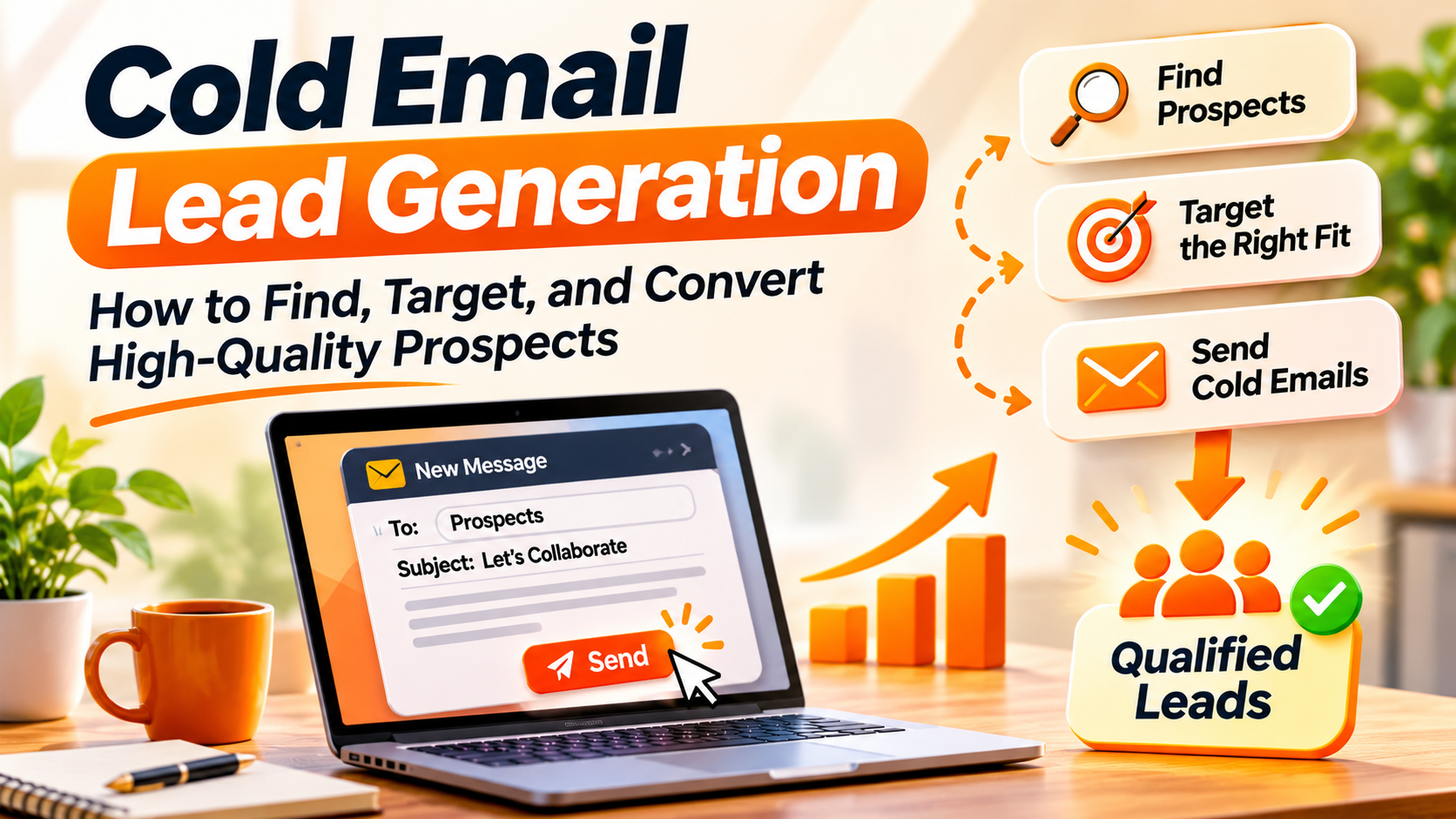





Have you ever sent dozens of business emails, waited for replies, and heard absolutely nothing back? You’re not alone. Many businesses spend hours on cold email lead generation, reaching out to potential customers but struggling to turn those conversations into actual sales opportunities.
The problem isn’t always the number of emails you’re sending. Sometimes, you’re contacting the wrong people, using generic messages, or approaching prospects without understanding what they actually need.
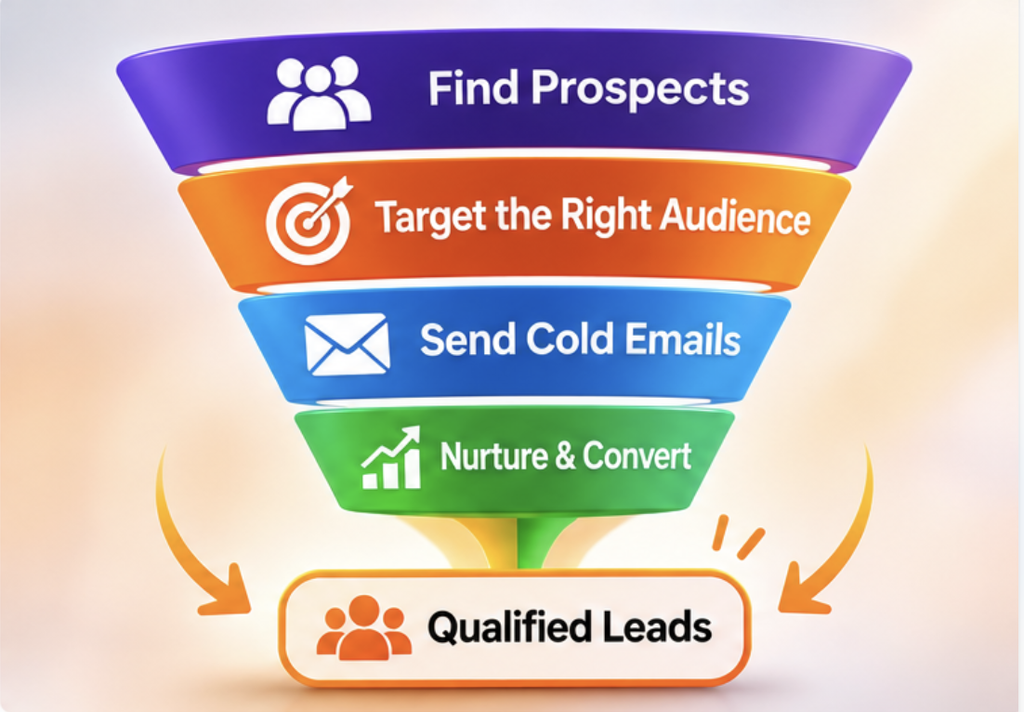
That’s where a well-planned cold email lead generation strategy becomes important. Instead of sending random emails to hundreds of addresses, you build a structured approach to finding relevant prospects, understanding their challenges, starting meaningful conversations, and guiding interested people toward the next step.
For startups, agencies, consultants, SaaS companies, and B2B sales teams, this approach can create new business opportunities without depending entirely on paid advertisements or social media algorithms.
However, successful outreach requires more than writing an attractive subject line. You need the right audience, accurate contact information, relevant messaging, thoughtful follow-ups, reliable email infrastructure, and a way to measure your results.
In this guide, we’ll cover everything you need to understand about finding prospects, building targeted lists, writing effective emails, improving deliverability, managing follow-ups, and converting conversations into qualified leads. We’ll also explore how email marketing platforms like MailerRocket can help organize and manage your broader email communication activities.
Key Takeaways
- Target the right people: A smaller, carefully researched prospect list is often more valuable than a huge, unqualified database.
- Personalization matters: Show prospects that you understand their business instead of sending the same generic message to everyone.
- Focus on their problems: Explain how your product or service can address a relevant challenge rather than immediately asking for a sale.
- Follow up thoughtfully: A well-planned follow-up sequence can help you reconnect with people who missed your first message.
- Measure and improve: Monitor replies, positive responses, meetings, conversions, and negative feedback to understand what works.
Turn Your Email Strategy Into Meaningful Results
You’ve learned the strategy. Now put it into action with MailerRocket. Create professional campaigns, organize subscribers, automate emails, and simplify your email marketing.
What Is Cold Email Lead Generation?
Cold email lead generation is the process of identifying potential customers and contacting them through email even though they haven’t previously interacted with your business.
The purpose of cold email lead generation isn’t simply to introduce your company. It’s to start a relevant conversation with someone who could genuinely benefit from what you offer.
For example, imagine you run a digital marketing agency that helps small businesses improve their online visibility.
You research companies that have outdated websites, poor search visibility, or limited online marketing activity. You identify their business owners or marketing managers and send a short, personalized email explaining an opportunity to improve their digital presence.
If someone responds positively and agrees to discuss their requirements, that person may become a qualified sales lead.
This is the basic idea behind cold email lead generation: identifying potential customers, reaching out with relevant information, and creating opportunities for future business.
How Is Cold Email Different From Regular Email Marketing?
Although both approaches use email, they serve different purposes.
| Cold email outreach | Regular email marketing |
|---|---|
| Contacts relevant prospects who haven’t interacted with your business | Communicates with people who have subscribed or otherwise agreed to receive marketing |
| Usually begins with an introduction | Usually builds on an existing relationship |
| Focuses on starting a business conversation | Focuses on engagement, education, retention, or promotion |
| Often involves individual research and personalization | Often uses audience segments and campaign automation |
| Requires careful prospect selection and applicable outreach compliance | Requires subscriber consent and applicable marketing compliance |
Understanding this difference is essential.
A business should not assume that an email address found online automatically gives permission to send promotional campaigns. Different countries have different rules governing unsolicited commercial email.
For example, the CAN-SPAM Act applies to commercial email in the United States, while GDPR and PECR can apply to business outreach in the UK and Europe, depending on the recipient and circumstances.
Always check the laws that apply to your business and recipients before starting a campaign.
Why Is Cold Email Still Useful for B2B Lead Generation?
Despite the popularity of social media, online advertising, and networking platforms, email remains an important channel for cold email lead generation.
One reason cold email lead generation remains useful is that it allows you to communicate directly with relevant decision-makers without depending entirely on an algorithm to display your message.
Let’s understand some of its practical advantages.
1. Direct Access to Relevant Decision-Makers
In many B2B industries, purchasing decisions involve specific people, such as founders, department heads, procurement managers, or marketing directors.
A carefully researched email can help you introduce your business directly to someone involved in the buying process.
For example, if you provide accounting software, contacting a finance manager at a growing company is generally more relevant than approaching an unrelated employee.
2. More Control Over Audience Selection
One of the biggest advantages of this approach is that you can define exactly whom you want to contact.
You can narrow your prospects based on:
- Industry.
- Company size.
- Business location.
- Job title.
- Department.
- Business model.
- Existing technology.
- Potential business requirements.
This makes cold email lead generation particularly useful when your product or service solves a specific business problem.
3. Cost-Effective Business Outreach
Cold email can be less expensive than many traditional advertising methods, particularly when you already have the research process, email infrastructure, and content resources in place.
However, it isn’t completely free.
You may need to invest in prospect research, contact verification, domain setup, email infrastructure, software, and campaign management.
The goal is to use those resources efficiently by contacting relevant prospects rather than sending unnecessary messages.
4. Opportunities for Long-Term Business Relationships
Not every prospect will be ready to purchase immediately.
Some may need your services next month, while others may have an upcoming project or budget review.
A respectful conversation can create an opportunity to reconnect when the timing is more suitable, provided the prospect is comfortable with further contact and applicable rules are followed.
5. Easier Campaign Measurement
Email outreach also provides measurable information.
You can review:
- Number of messages successfully delivered.
- Bounce rate.
- Positive replies.
- Negative replies.
- Meetings scheduled.
- Qualified opportunities.
- Sales generated.
These measurements help you understand whether your targeting and messaging are working.
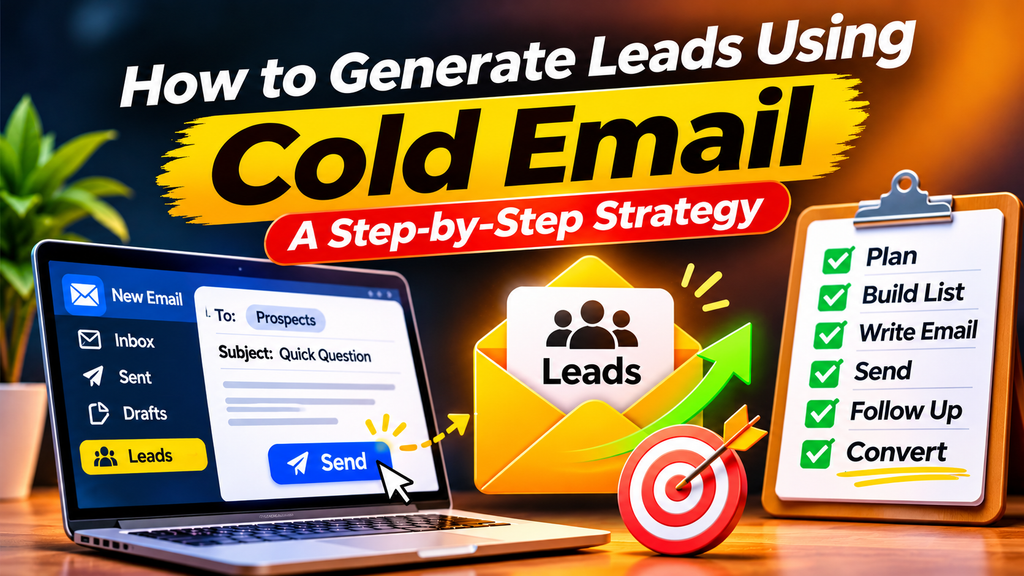
How to Generate Leads Using Cold Email: A Step-by-Step Strategy
If you’re wondering how to generate leads using cold email, the answer begins long before you write your first message.
A successful cold email lead generation strategy requires a repeatable process that connects prospect research, targeting, communication, and follow-up.
Here are the steps to build one.
Step 1: Define Your Ideal Customer Profile (ICP)
Before searching for email addresses, decide exactly what kind of business or individual you want to reach.
This description is commonly called an Ideal Customer Profile, or ICP.
Your ICP represents the type of customer who is most likely to benefit from your product or service.
For example, suppose you provide email automation software.
Your ideal customer might be:
- A small or medium-sized B2B company.
- A business with an established customer database.
- A marketing team managing recurring campaigns.
- A company that needs audience segmentation.
- A business looking to organize its email communication.
This description helps you avoid wasting time on people who have little reason to consider your solution and makes cold email lead generation more effective.
Create a Simple ICP Checklist
Before researching prospects, answer these questions:
- What industry does my ideal customer operate in?
- What is the typical company size?
- Which geographical markets do I serve?
- Who makes the purchasing decision?
- What business problem does my product solve?
- What circumstances indicate that a prospect might need my solution?
- What budget or purchasing requirements are realistic?
You don’t need complicated market research software to begin cold email lead generation. A spreadsheet containing these details can provide a useful starting point.
Practical tip: Don’t define your audience too broadly. If you sell marketing automation software, targeting every business owner is less useful than targeting companies that already manage regular marketing campaigns.
A focused ICP makes every later stage of cold email lead generation easier.
Step 2: Find High-Quality Prospects
Once you know whom you’re targeting, start building your prospect list.
The quality of your prospect list directly affects the effectiveness of your cold email lead generation efforts.
A list of 100 carefully researched prospects may offer better opportunities than thousands of unrelated contacts.
Where Can You Find Potential B2B Leads?
There are several legitimate ways to research potential customers for your cold email lead generation campaigns.
1. LinkedIn
LinkedIn is useful for identifying companies, job titles, departments, and professional backgrounds.
You can search for:
- Company founders.
- Marketing managers.
- Sales directors.
- Operations managers.
- Business development executives.
- Department heads.
Use the available information to understand whether the person is relevant to your offer.
2. Company Websites
Visit company websites to understand their services, business model, target audience, and current activities.
Look at their:
- About Us page.
- Services page.
- Leadership team.
- Case studies.
- Careers page.
- Contact information.
These details can reveal whether a company matches your ICP.
3. Industry Directories
Industry associations, professional directories, and business listings can help you discover companies operating within a particular market.
Always review the source’s terms and applicable privacy requirements before collecting or using contact details.
4. Business Events and Trade Shows
Industry events are useful for discovering businesses with specific professional interests.
Public attendee or exhibitor information can help you research relevant organizations. However, attending an event or appearing in a directory does not automatically mean someone has consented to marketing emails.
5. Existing Business Networks
Your professional network, referrals, business partners, and previous conversations can help identify potential opportunities.
A relevant introduction is often more meaningful than an entirely unfamiliar message.
What Information Should Your Prospect List Include?
Organize your research in a spreadsheet or CRM.
| Field | Purpose |
|---|---|
| Contact name | Identify the person |
| Company name | Understand the organization |
| Job title | Check decision-making relevance |
| Industry | Group similar businesses |
| Company website | Research business requirements |
| Business email | Contact information where lawful |
| Prospect segment | Organize similar prospects |
| Personalization notes | Record relevant business observations |
| Contact source | Track where the information came from |
| Outreach status | Monitor communication |
| Last contact date | Avoid unnecessary repeated messages |
This simple structure makes cold email lead generation more organized and easier to manage as your prospect list grows.
Step 3: Identify the Right Decision-Makers
Finding a company that matches your ICP is only half the job in cold email lead generation.
You also need to identify the person who can understand, evaluate, or influence a purchasing decision.
For instance, if you sell HR management software, contacting an HR manager may be more relevant than contacting someone from the company’s design department.
Similarly:
| Product or service | Potential decision-maker |
|---|---|
| Marketing automation software | Marketing manager |
| Accounting software | Finance manager |
| Recruitment services | HR manager |
| Cybersecurity services | IT director |
| Sales consulting | Sales director |
| Website development | Founder or marketing head |
The appropriate contact depends on company size and structure.
At a small startup, the founder may handle several responsibilities. At a larger organization, purchasing decisions may involve multiple departments.
How to Verify Whether a Prospect Is Relevant
Before contacting someone, check:
- Does their job title match your intended audience?
- Does their company operate in your target industry?
- Is your service relevant to their responsibilities?
- Does the business show signs of needing your solution?
- Can you explain why you’re contacting this particular person?
If you cannot answer the last question clearly, research the prospect further.
Good targeting in cold email lead generation isn’t about finding as many contacts as possible. It’s about finding people with a reasonable connection to the problem you solve.
Step 4: Verify Contact Information and Maintain List Hygiene
Incorrect email addresses can create unnecessary delivery problems.
A prospect list containing outdated, misspelled, or invalid addresses can increase bounce rates and damage your sender reputation.
Before sending messages as part of your cold email lead generation process, review your contact information carefully.
Practical Ways to Maintain a Clean List
Check email formatting: Look for missing characters, extra spaces, and incorrect domain names.
Use reputable verification services: Email verification tools can help identify addresses that appear invalid, risky, or undeliverable. However, verification is not a guarantee that an address belongs to the intended person or that sending to it is lawful.
Remove invalid contacts: Don’t repeatedly send messages to addresses that have permanently bounced.
Watch catch-all domains: Some company servers accept messages without confirming whether a particular mailbox exists. Treat these results cautiously.
Maintain suppression lists: Record unsubscribes, objections, and contacts who should not receive further messages.
Review old records: Business employees change roles, companies close, and email addresses become outdated.
A clean contact database supports more reliable cold email lead generation and helps you avoid unnecessary delivery issues.
One important point: email verification does not replace consent, lawful-basis requirements, or compliance checks.
Step 5: Segment Your Prospects Into Relevant Groups
Would you send the same message to a startup founder, an agency owner, and a corporate finance manager?
Probably not.
Their responsibilities, priorities, and business challenges are different.
That’s why segmentation is so important for successful cold email lead generation.
Segmentation means dividing your audience into smaller groups based on shared characteristics.
Useful Ways to Segment Prospects
By industry: Group healthcare companies, SaaS businesses, financial services, real estate agencies, and marketing firms separately.
By company size: Small businesses, startups, mid-sized organizations, and enterprises may have different requirements.
By job role: Founders, sales managers, marketing professionals, and operations leaders should receive messages relevant to their responsibilities.
By business challenge: Some companies need more qualified leads, while others need better customer retention or more efficient marketing workflows.
By geographical location: Different regions may have different business practices, time zones, and legal requirements.
Example of Effective Segmentation
Suppose you run a marketing agency offering SEO services.
Instead of creating one large list, divide your prospects into:
- Local service businesses.
- Ecommerce companies.
- SaaS companies.
- Professional consulting firms.
Then create a different message for each group.
For local service businesses, you might discuss local search visibility.
For ecommerce companies, you could focus on product category visibility and organic traffic.
For SaaS companies, you might discuss content strategy and search visibility for product-related queries.
This makes your cold email lead generation messages more relevant without requiring you to write every email entirely from scratch.

Step 6: Write Cold Emails That Make People Want to Respond
Now comes one of the most important parts: writing your actual email.
You can have a perfect prospect list for cold email lead generation, but if your message is confusing, overly promotional, or irrelevant, people are unlikely to respond positively.
For effective cold email lead generation, every message should be short, clear, personalized, and focused on the recipient.
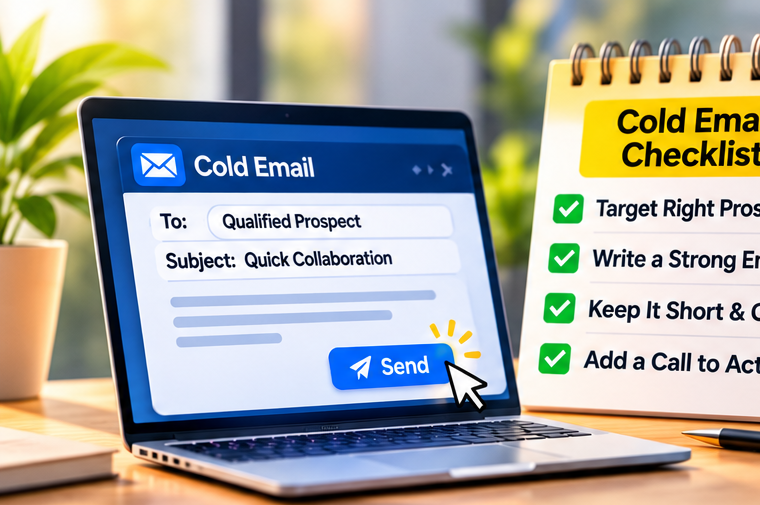
1. Write a Relevant Subject Line
Your subject line should help the recipient understand what your message concerns.
Avoid exaggerated promises, misleading statements, or artificial urgency.
Here are some practical examples:
- Question about your company’s marketing process
- Idea for improving your website visibility
- Exploring a potential partnership
- A suggestion for your sales workflow
- Question about your customer onboarding process
A relevant subject line is more useful than trying to trick someone into opening an email.
2. Start With a Personalized Opening
Your opening sentence should demonstrate why you’re contacting that particular person.
For example:
“Hi Sarah, I noticed your company recently expanded its services into the healthcare sector. I wanted to reach out because we work with businesses looking to improve their digital visibility.”
This is more meaningful than:
“Hello, we are the best digital marketing company and offer excellent services.”
Personalization doesn’t mean inserting someone’s name into a generic template. It means connecting your message with something relevant about their business.
3. Explain the Problem You Can Solve
After introducing yourself, explain the reason for contacting them.
Keep the explanation simple.
For example:
“We often see growing businesses struggle to turn website visitors into qualified enquiries. Our team helps companies improve their landing pages and conversion processes.”
Notice that the message focuses on a business problem rather than listing every service you offer.
4. Include a Clear Call to Action
Your call to action should make it easy for the recipient to respond.
Examples include:
- Would you be open to discussing this?
- Is improving this process a current priority?
- Would a short overview be useful?
- Are you the right person to speak with about this?
Avoid asking for too much in your first message.
A request for a brief conversation is generally less demanding than immediately asking someone to purchase a product or schedule a lengthy demonstration.
Step 7: Use Practical Cold Email Templates
Templates can save time in cold email lead generation, but they should never replace research and personalization.
Here are some cold email lead generation examples you can adapt to your target audience.
Template 1: First-Time B2B Outreach
Subject: A quick question about [Company Name]
Hi [First Name],
I came across [Company Name] while researching businesses in the [Industry] sector.
I noticed [specific and relevant business observation].
We help businesses address [specific problem] through [your service or solution].
I thought this might be relevant to your current priorities.
Would you be open to a brief conversation to explore whether there’s a potential fit?
Best regards,
[Your Name]
Template 2: Problem-Focused Outreach
Subject: An idea for [Company Name]
Hi [First Name],
I noticed that your company is working in [specific area].
Businesses operating in this space sometimes face challenges with [relevant problem].
We help address this by [brief explanation of your solution].
Would it be useful if I shared a few ideas that could help your team?
Best,
[Your Name]
Template 3: Partnership Outreach
Subject: Potential partnership opportunity
Hi [First Name],
I’ve been following [Company Name] and noticed your work in [industry or service area].
We work with businesses that focus on [related audience or market].
I believe there may be an opportunity for us to explore a partnership that benefits both audiences.
Would you be interested in discussing this?
Regards,
[Your Name]
Template 4: Follow-Up Email
Subject: Re: [Original Subject]
Hi [First Name],
I wanted to follow up on my earlier message about [specific topic].
I understand you may have other priorities, so I wanted to check whether this is something your team is currently considering.
If it’s not relevant, no worries.
Best regards,
[Your Name]
Template 5: Helpful Resource Outreach
Subject: Resource for your [specific business goal]
Hi [First Name],
I noticed your company is focused on [specific business activity].
I thought you might find our resource on [relevant topic] useful because it covers [specific benefit].
Here’s the resource: [Link]
If this is something your team is exploring, I’d be happy to share additional information.
Best,
[Your Name]
Important: Only use a real observation, resource, result, or business claim. Never invent a relationship, imply that someone requested information when they did not, or make unsupported performance promises.
Step 8: Build a Thoughtful Follow-Up Sequence
One email may not be enough to make your cold email lead generation efforts successful and start a conversation.
People receive many business messages, and your first email may arrive when someone is busy or focused on another task.
A thoughtful follow-up can strengthen your cold email lead generation efforts by reminding prospects about your earlier message and creating another opportunity to start a conversation.
However, repeated messages can quickly become irritating. The objective should be to provide a useful reminder, not pressure someone into responding.
Example of a Simple Follow-Up Schedule
| Timing | Action | Purpose |
|---|---|---|
| Day 1 | Initial email | Introduce yourself and your reason for reaching out |
| Day 4–5 | First follow-up | Briefly revisit the original message |
| Day 9–10 | Second follow-up | Share a useful insight or relevant resource |
| Day 14–15 | Final follow-up | Politely close the conversation |
These are illustrative intervals, not guaranteed optimal timings. Adjust them according to your audience, industry, and applicable rules.
Stop contacting people who unsubscribe, object, or ask you not to contact them. Don’t continue a sequence simply because an automation tool allows it.
What Should You Include in a Follow-Up?
A follow-up should add something useful or make the previous message easier to understand.
For example:
“Hi David, I wanted to revisit my earlier note about improving your team’s lead qualification process. We have seen that clearer qualification criteria can help sales teams spend more time on relevant opportunities. Is this something you’re currently reviewing?”
This gives the recipient additional context rather than simply saying, “Just checking in.”
Why Should You Avoid Excessive Follow-Ups?
Sending too many emails can:
- Damage your brand’s reputation.
- Increase spam complaints.
- Create a poor customer experience.
- Waste campaign resources.
- Reduce trust in your business.
A professional approach respects the recipient’s time and communication preferences.
Step 9: Improve Email Deliverability Before Scaling
Even a well-written cold email lead generation message is ineffective if it doesn’t reach the intended inbox.
Email deliverability is one of the most important parts of a reliable outreach process.
It refers to the ability of your emails to reach recipients’ inboxes rather than being rejected, blocked, or filtered into spam.
Set Up SPF, DKIM, and DMARC
These three authentication methods help receiving email systems verify that messages are authorized and properly authenticated.
SPF (Sender Policy Framework):
SPF identifies the mail servers authorized to send email for your domain.
DKIM (DomainKeys Identified Mail):
DKIM uses a digital signature that allows receiving servers to verify that a message was signed by an authorized domain and that signed content has not been altered.
DMARC (Domain-based Message Authentication, Reporting, and Conformance):
DMARC builds on SPF and DKIM. It tells receiving systems how to handle messages that fail authentication checks and provides reporting information.
All three should be configured carefully according to your email provider’s instructions.
Maintain a Healthy Sending Domain
Your domain reputation can influence whether receiving systems trust your cold email lead generation messages.
Follow these practices:
- Send relevant messages to appropriate recipients.
- Avoid sudden, unexplained increases in sending volume.
- Remove invalid addresses.
- Monitor bounce and complaint rates.
- Use accurate sender information.
- Avoid misleading subject lines.
- Keep your email content clear and useful.
- Honor opt-out requests.
Don’t assume that warming up a domain guarantees inbox placement. Sending behavior, recipient engagement, authentication, infrastructure, and provider policies all matter.
Make Your Emails Easy to Read
Long, complicated messages can make your communication difficult to understand.
Use:
- Short paragraphs.
- Clear sentences.
- Relevant subject lines.
- A recognizable sender name.
- A simple signature.
- Minimal formatting.
- Relevant links only.
A clean email is easier for both people and email systems to process.
Monitor Bounces and Complaints
A hard bounce usually indicates that an email cannot be delivered because of a permanent issue, such as an invalid address.
A soft bounce may result from a temporary issue, such as a full mailbox or receiving server problem.
Review bounce reports and remove addresses that should no longer be contacted.
Also monitor spam complaints and suppression requests. A campaign that generates many complaints is a sign that your targeting, expectations, or sending practices need attention.
Make Every Email Campaign Easier to Manage
Simplify email marketing with MailerRocket. Design professional emails, schedule campaigns, manage subscriber lists, and automate repetitive tasks while keeping your marketing communication organized.
Step 10: Track the Metrics That Actually Matter
Sending more emails doesn’t automatically mean generating more business.
To measure the effectiveness of your cold email lead generation campaigns, you need to understand what happens after your messages leave your system.
Here are the most useful metrics to monitor when evaluating your cold email lead generation performance.
1. Delivery Rate
Delivery rate measures the proportion of sent emails that were accepted by receiving mail servers.
A delivered email isn’t necessarily an inbox email. It may still reach the spam or junk folder.
2. Bounce Rate
Bounce rate measures the proportion of emails that could not be delivered.
A high bounce rate may indicate poor contact data, outdated records, or technical issues.
3. Reply Rate
Reply rate measures how many recipients respond to your outreach.
For example, if you send 200 emails and receive 20 replies, your simple reply rate is 10%.
Always define whether you’re counting all replies or only unique recipients who responded.
4. Positive Reply Rate
Not every response is an opportunity.
Some people may decline, unsubscribe, or explain that they aren’t interested.
Positive reply rate focuses on responses that indicate genuine interest.
5. Meeting Booking Rate
This measures how many prospects agree to a sales conversation or meeting.
It helps you evaluate whether your messaging creates meaningful next steps.
6. Lead-to-Customer Conversion Rate
This measures how many qualified leads eventually become paying customers.
It connects your outreach activity with actual business results.
A Simple Example
Imagine your team sends 500 carefully researched outreach emails.
| Metric | Example result |
|---|---|
| Emails sent | 500 |
| Delivered | 475 |
| Replies | 45 |
| Positive replies | 18 |
| Meetings booked | 10 |
| Qualified opportunities | 7 |
| New customers | 2 |
These figures are illustrative, not industry benchmarks.
The important point is that you should measure the entire journey rather than judging success by the number of emails sent.
A campaign with fewer replies but more qualified opportunities may be more valuable than one with many irrelevant responses.
Step 11: Turn Interested Prospects Into Qualified Leads
Getting a reply during cold email lead generation is a positive development, but it doesn’t automatically mean that someone is ready to buy.
You need to understand whether the person has a genuine business requirement.
This is where lead qualification becomes important.
Use a Simple Qualification Framework
Consider these questions:
Need: Does the prospect have a problem your product or service can solve?
Authority: Is the person involved in the purchasing decision?
Budget: Does the company have a realistic budget for the solution?
Timing: Is the business planning to address the problem soon?
You don’t need to ask all these questions in your first reply.
Start with a natural conversation.
For example:
“Thanks for getting back to me. To make sure I share something relevant, could you tell me a little about how your team currently manages this process?”
Their answer can help you understand their requirements.
Respond Quickly but Thoughtfully
If someone expresses genuine interest, avoid sending a generic sales pitch.
Instead:
- Thank them for responding.
- Acknowledge their specific question.
- Provide the information they requested.
- Ask one relevant follow-up question.
- Suggest a suitable next step.
The purpose is to move the conversation forward without making the prospect feel pressured.
Create a Clear Handoff to Your Sales Team
If multiple people manage outreach and sales, establish a simple handoff process.
Record:
- Prospect details.
- Original email.
- Reply history.
- Business requirement.
- Qualification status.
- Agreed next action.
- Follow-up owner.
This prevents promising leads from getting lost between marketing and sales.
Step 12: Use A/B Testing to Improve Your Campaigns
You don’t have to guess which message works best in your cold email lead generation campaigns.
A/B testing allows you to compare different versions of an email to see which produces better results.
For example, you could compare two subject lines:
Version A: Question about your sales process
Version B: An idea for your sales team
You could also test:
- Different opening sentences.
- Short versus slightly detailed messages.
- Different calls to action.
- Different value propositions.
- Different prospect segments.
Follow a Proper Testing Process
- Select one element to test.
- Create two meaningful versions.
- Keep the audience and other conditions reasonably similar.
- Use enough observations to avoid making decisions based on a handful of replies.
- Compare positive responses and qualified opportunities.
- Apply the learning to future campaigns.
Avoid changing five things simultaneously. If the results improve, you won’t know which change made the difference.
Also, don’t rely entirely on open rates. Email privacy features and automated image loading can make open tracking unreliable. Replies, meetings, and qualified opportunities are generally more meaningful indicators of outreach quality.
Step 13: Common Mistakes That Hurt Cold Email Campaigns
Even experienced marketers can make mistakes when planning cold email lead generation campaigns.
Here are some common problems to avoid.
1. Sending Emails Without Research
A generic message that could apply to any company rarely gives a prospect a compelling reason to respond.
Research the business and explain why your offer is relevant.
2. Buying Large, Unverified Email Lists
Purchased databases may contain outdated, inaccurate, or inappropriate contacts.
They can also create privacy and compliance risks.
Build a relevant prospect list using legitimate sources and review the applicable rules before contacting anyone.
3. Writing Extremely Long Emails
A first email should not explain your company’s entire history.
Focus on one relevant business problem and one clear next step.
4. Making Unsupported Claims
Avoid statements such as:
“We guarantee 10 times more leads.”
Unless you have reliable evidence and can substantiate the claim, don’t make promises about results.
Honest communication builds more trust than exaggerated marketing.
5. Ignoring Email Authentication
Poorly configured SPF, DKIM, and DMARC records can create authentication problems.
Set up your domain correctly and monitor authentication results.
6. Sending Too Many Follow-Ups
Repeated messages can damage your reputation and create negative experiences.
Use a reasonable schedule and stop when someone objects or opts out.
7. Focusing Only on Open Rates
An opened email is not necessarily an interested prospect.
Measure meaningful outcomes, especially positive replies, meetings, qualified opportunities, and conversions.
8. Failing to Maintain Records
Without proper records, you may contact the same person repeatedly, miss an important reply, or overlook an unsubscribe request.
Keep your prospect and suppression records organized.
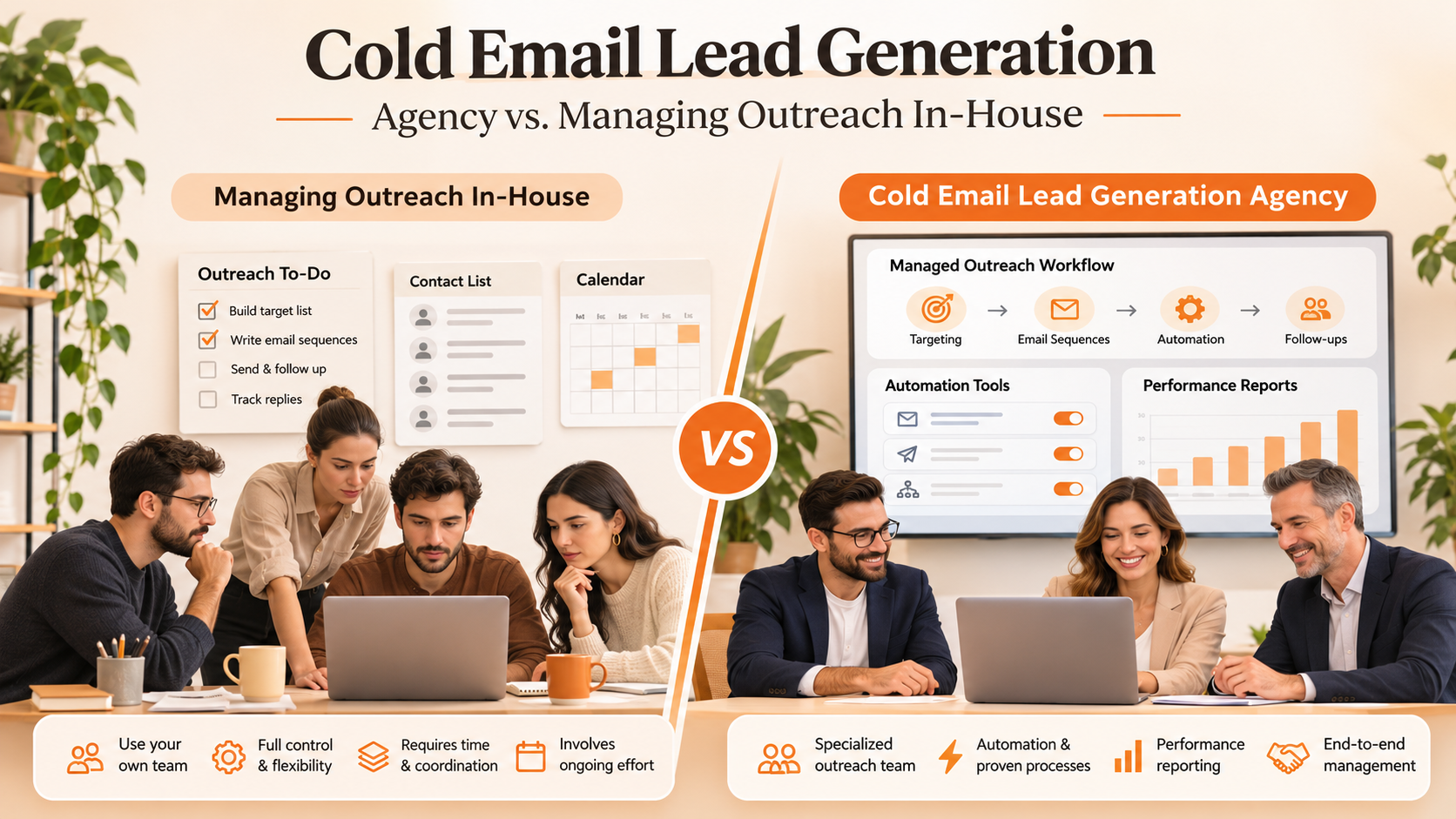
Cold Email Lead Generation Agency vs. Managing Outreach In-House
Should you manage outreach yourself or hire a specialist?
Choosing the right approach for managing cold email lead generation depends on your budget, internal experience, campaign complexity, and available resources.
A cold email lead generation agency can help businesses that lack the time or expertise to manage prospect research, messaging, campaign planning, and reporting.
However, outsourcing isn’t automatically the better choice.
When Should You Hire an Agency?
Consider an agency when:
- You need support with prospect research.
- Your internal team lacks outreach experience.
- You want help developing messaging strategies.
- You need campaign management support.
- You want external reporting and optimization.
Before hiring one, ask how it sources contacts, handles privacy requirements, manages suppression lists, configures email authentication, and measures campaign success.
Make sure it doesn’t rely on indiscriminate bulk sending or questionable contact databases.
When Should You Manage Outreach In-House?
Managing campaigns internally may be suitable when:
- You have a small, clearly defined target market.
- Your team understands your product and customers.
- You can conduct prospect research.
- You want direct control over messaging.
- You have the resources to monitor performance.
An in-house process also gives your team direct access to customer feedback, which can improve your product positioning and sales conversations.
Which Approach Is Better?
Neither approach is universally better.
An agency can provide experience and additional capacity, while an internal team may have deeper product knowledge and stronger control over communication.
You can also use a hybrid model: outsource specific tasks such as research or campaign consulting while keeping sales conversations and customer relationships in-house.
How Do You Generate Leads Through Cold Email for Different Industries?
A strategy that works for a software company may not work for a real estate agency or consulting business.
Let’s look at a few practical cold email lead generation examples across different industries.
1. SaaS Companies
SaaS businesses can target organizations that experience problems their software solves.
For example, a project management platform might reach out to growing agencies that coordinate multiple client projects.
The email should explain the relevant workflow challenge rather than simply listing software features.
2. Marketing Agencies
Marketing agencies can research companies with specific marketing gaps.
Examples include:
- Weak local search visibility.
- Outdated website content.
- Limited landing page optimization.
- Poorly organized marketing campaigns.
Their outreach should focus on one identifiable opportunity instead of offering every marketing service at once.
3. Real Estate Businesses
Real estate companies can approach relevant professional partners, property management firms, developers, or other businesses where a genuine commercial relationship exists.
A useful message might introduce a service that helps improve enquiry management or property marketing.
4. Consultants and Freelancers
Consultants can identify businesses facing challenges related to their expertise.
For example, an HR consultant might approach growing companies that are expanding their teams and may need help improving recruitment processes.
A freelancer specializing in website design might focus on businesses with outdated websites or poor mobile experiences.
5. B2B Service Providers
IT companies, accounting firms, recruitment agencies, and business consultants can use industry-specific research to identify relevant organizations.
The common principle is simple: understand the prospect’s business before explaining your solution.
How MailerRocket Can Help Manage Your Email Marketing Activities
Building a successful outreach process involves several moving parts.
You need to create email content, organize contact records, manage campaign schedules, review engagement, and maintain consistent communication.
This is where a dedicated email marketing platform can help with the operational side of your broader email strategy.
MailerRocket provides email marketing features designed to help businesses and marketers create, manage, schedule, and automate email campaigns.
It is important to understand that campaign management and cold prospect discovery are separate activities. MailerRocket should not be treated as a substitute for prospect research, contact verification, or legal compliance checks.
Here are some of its relevant capabilities.
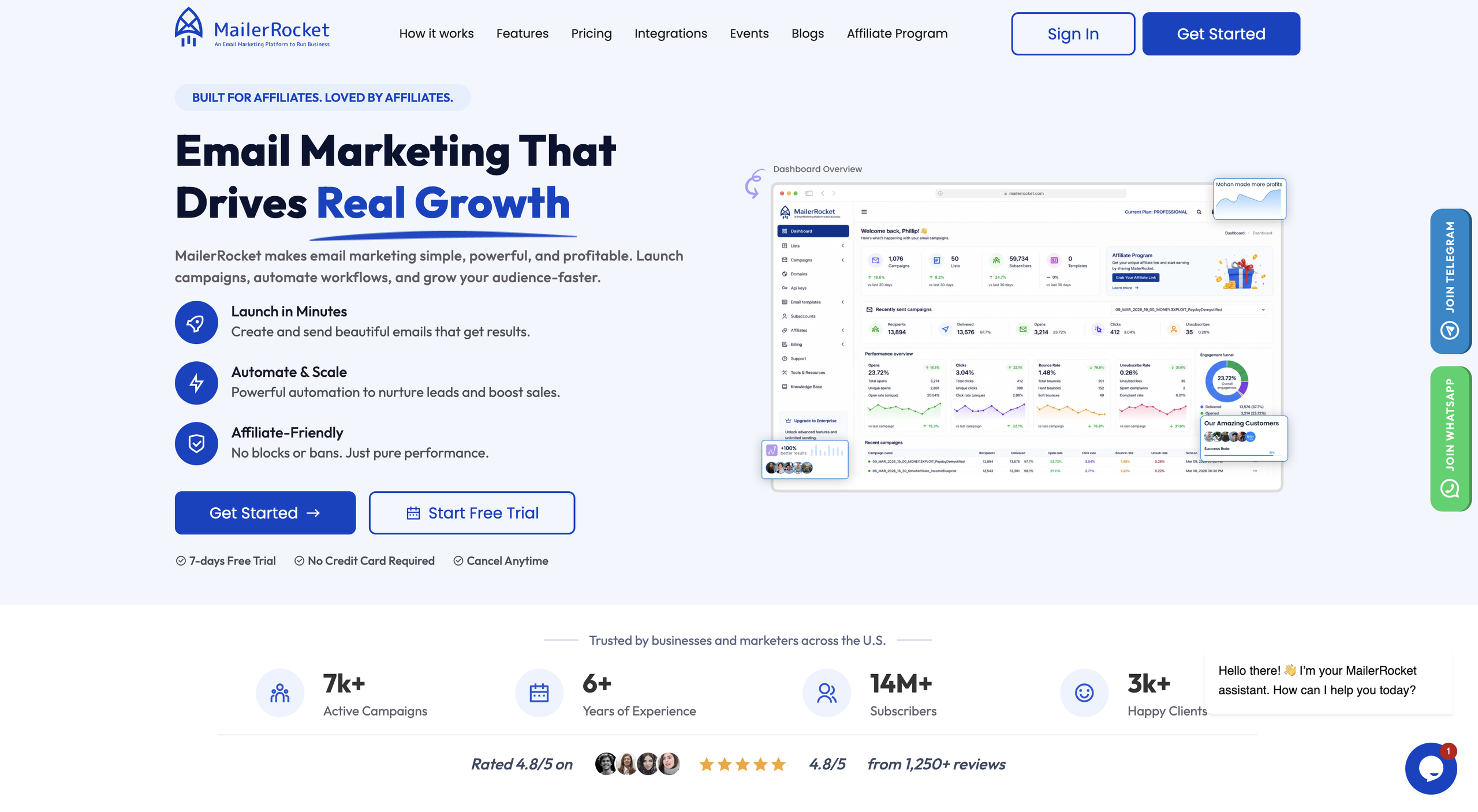
1. Email List Management and Segmentation
Managing contacts in an organized way is important when your business communicates with different audience groups.
MailerRocket provides email list management, subscriber import and export, list segmentation, custom fields, and list management tools.
These features can help organize appropriate marketing audiences and make it easier to create more relevant campaigns.
For example, a business could maintain separate subscriber segments for customers, product updates, educational content, and industry-specific newsletters.
Remember to maintain clear distinctions between permission-based marketing subscribers and contacts collected for any separately lawful business outreach.
2. Campaign Scheduling and Automation
Consistency is important in email communication.
MailerRocket supports regular campaigns, autoresponders, recurring campaigns, and scheduling options.
This can help businesses plan newsletters, product announcements, onboarding messages, and other appropriate marketing communications.
Rather than manually preparing every campaign, teams can organize their communication schedules in advance.
3. AI Email Content Generation
Writing different email messages can take considerable time.
MailerRocket offers an AI Email Writer that can help generate subject lines, email body content, and calls to action.
It also supports different tones, languages, and email types.
For marketing teams, this can provide a useful starting point when preparing campaign content.
However, AI-generated content should always be reviewed. Check facts, remove generic statements, adjust the language to match your brand, and ensure the final message is appropriate for the intended audience.
4. Drag-and-Drop Email Builder
Not every business has an in-house designer or developer.
MailerRocket includes a drag-and-drop email builder that allows users to create email designs without coding.
It also offers email templates and mobile-responsive design options.
This can be useful when creating newsletters, promotional messages, announcements, and other marketing emails that need consistent branding.
5. Email Authentication and Security Features
MailerRocket highlights SPF, DKIM, and DMARC-related email authentication features on its website.
It also describes domain-signed delivery and branded links.
These features are relevant to businesses that want to maintain a properly configured email environment.
Remember that authentication alone cannot guarantee inbox placement. Your sending practices, contact quality, recipient engagement, and provider requirements still matter.
6. Campaign Performance and Reporting
Understanding what happens after sending a campaign helps marketers make better decisions.
MailerRocket provides campaign management and dashboard features for reviewing email campaign and subscriber information.
This can support ongoing email marketing analysis, audience organization, and campaign planning.
For cold outreach specifically, you should also maintain appropriate sales records for replies, positive responses, meetings, and qualified opportunities. Don’t assume that standard email marketing statistics provide a complete picture of your sales pipeline.
7. Branded Links
MailerRocket also offers branded links through your domain.
Consistent branding can help recipients recognize your business when interacting with campaign links.
Use relevant links and make sure the destination is clear. Avoid unnecessary redirects or misleading link descriptions.
Making Email Communication Easier With MailerRocket
The important thing is to choose tools according to the work you actually need to manage.
If you’re building a permission-based subscriber program, MailerRocket’s list management, segmentation, campaign scheduling, autoresponders, AI content generation, and email design features can help bring those activities into a more organized workflow.
You can explore its features at MailerRocket.com and decide whether they fit your email marketing requirements.
The aim isn’t to send more emails simply because you have access to automation. It’s to communicate with the right audience, provide useful information, and build relationships through relevant messages.
A Practical 30-Day Plan to Build Your Outreach Process
If you’re new to this strategy, trying to implement everything at once can feel overwhelming.
A 30-day plan gives you a more manageable starting point for building and improving your cold email lead generation process.
Week 1: Research and Preparation
Day 1–2: Define your ideal customer profile.
Day 3–4: Research your target industries and companies.
Day 5: Identify relevant decision-makers.
Day 6: Review contact information and applicable compliance requirements.
Day 7: Organize your prospect records and suppression process.
Week 2: Messaging and Infrastructure
Day 8–9: Write your initial email.
Day 10: Create relevant variations for different prospect segments.
Day 11: Develop a short follow-up message.
Day 12: Review your domain authentication.
Day 13: Check sender details, unsubscribe handling where applicable, and email formatting.
Day 14: Review the entire process before beginning outreach.
Week 3: Controlled Campaign Testing
Day 15–16: Begin with a small, carefully reviewed group of appropriate recipients.
Day 17–18: Monitor delivery and bounce information.
Day 19: Review incoming replies and objections.
Day 20: Identify which messages generated relevant conversations.
Day 21: Adjust targeting and messaging based on actual feedback.
Don’t increase sending volume simply because the first few messages were delivered. Look for signs that your audience and communication are appropriate.
Week 4: Optimization and Review
Day 22–23: Review your positive responses.
Day 24: Evaluate meeting and qualification rates.
Day 25: Compare different messaging approaches.
Day 26: Review follow-up effectiveness.
Day 27: Remove invalid contacts and update suppression records.
Day 28: Document the lessons from your campaign.
Day 29: Improve your prospect selection and email content.
Day 30: Prepare the next campaign based on the results.
At the end of the month, you should have a clearer understanding of your audience, messaging, outreach process, and areas that need improvement.
Remember, the purpose of cold email lead generation is to build a sustainable process, not achieve an arbitrary sending target.
Ready to Take Your Email Marketing to the Next Level?
Take control of your email marketing with MailerRocket. Access powerful campaign management, audience segmentation, AI email writing, and automation tools to grow your business.
Conclusion
Finding potential customers is only the beginning of building a successful sales pipeline. The real challenge is identifying the right people, understanding their needs, and communicating in a way that makes them interested in having a conversation.
Successful cold email lead generation depends on several connected activities: defining your ideal customer, researching relevant companies, identifying decision-makers, maintaining accurate contact information, writing personalized messages, following up respectfully, and measuring meaningful outcomes.
There is no magic subject line or universal email template that guarantees results. What works for one industry may not work for another. That’s why testing, learning from replies, and continuously improving your approach are so important.
You should also remember that good outreach is built on trust. Respect privacy requirements, maintain proper authentication, avoid misleading claims, and honor people’s communication preferences.
For businesses managing broader email marketing activities alongside their outreach efforts, having an organized email platform can make day-to-day campaign management easier. MailerRocket offers features such as email list management, segmentation, campaign scheduling, autoresponders, AI email content generation, and branded links to support those activities.
Ultimately, successful cold email lead generation isn’t about filling someone’s inbox. It’s about reaching relevant people with something genuinely useful, creating meaningful conversations, and turning suitable opportunities into long-term business relationships.
Start with a focused audience, test your approach carefully, and improve with every campaign.
FAQs
1. What is cold email lead generation?
Cold email lead generation is the process of identifying potential customers and contacting them through email without an existing business relationship. Its purpose is to introduce a relevant product, service, or business opportunity and encourage interested prospects to start a conversation. Effective outreach depends on accurate targeting, relevant messaging, responsible contact practices, and appropriate follow-ups.
2. How do you generate leads through cold email?
Start by defining your ideal customer profile and identifying businesses that match it. Research the right decision-makers, collect and review relevant contact information, and create personalized messages that address a specific business problem. Monitor replies, follow up respectfully where appropriate, and qualify interested prospects based on their needs, authority, budget, and timing.
3. How many cold emails should I send per day?
There is no universal number that guarantees good results. Your sending volume should depend on your infrastructure, audience size, recipient expectations, applicable laws, and email provider requirements. Start with a controlled process, monitor delivery and complaint signals, and prioritize relevant communication over volume. Avoid sudden increases in sending activity.
4. What is a good response rate for cold emails?
There is no single response rate that applies to every industry or campaign. Results depend on audience quality, offer relevance, sender reputation, timing, and messaging. It is also important to distinguish between total replies and positive replies. A campaign generating fewer but more relevant responses may create better sales opportunities than one receiving many negative responses.
5. What should I include in a cold email to generate leads?
A useful cold email generally includes a relevant subject line, a personalized opening, a clear reason for contacting the recipient, a short explanation of the problem you can help solve, and one simple call to action. Include accurate sender information and any legally required identification or opt-out details. Avoid lengthy company introductions and unsupported promises.
6. Is cold email lead generation legal?
It can be lawful, but the requirements depend on the sender’s location, the recipient’s location, the type of recipient, and the purpose of the message. For example, US commercial email is subject to CAN-SPAM requirements. UK and European outreach may involve GDPR, PECR, and other applicable rules. Review the relevant legal requirements before collecting or contacting prospects. Publicly available email addresses do not automatically provide permission to send marketing messages.
7. How often should I follow up on a cold email?
A practical starting point is to send a small number of spaced follow-ups rather than repeatedly contacting someone. For example, you might send an initial message, a reminder several days later, and one final follow-up after another interval. The appropriate schedule depends on your industry and recipient expectations. Stop when someone objects, unsubscribes, or asks not to be contacted.
8. What is the difference between cold email lead generation and email marketing?
Cold email outreach generally involves contacting relevant prospects who have not previously interacted with your business. Regular email marketing usually communicates with an existing subscriber or customer audience. Both use email, but their targeting, relationship context, and legal requirements can differ. A business should maintain separate contact practices and avoid treating a prospect database as a permission-based subscriber list.
9. Should I hire a cold email lead generation agency or manage campaigns myself?
An agency may be useful if you need assistance with prospect research, outreach planning, campaign management, or optimization. Managing campaigns internally may be better if you have a small target market, strong product knowledge, and sufficient team resources. Before choosing an agency, review its contact sourcing methods, compliance procedures, reporting practices, and approach to protecting your sender reputation.
10. Can MailerRocket help with cold email lead generation?
MailerRocket provides email marketing tools that can support broader email communication activities, including email list management, audience segmentation, campaign scheduling, autoresponders, AI email content generation, and branded links. These features can help organize marketing campaigns and manage subscriber communication. However, MailerRocket should not be confused with a prospect discovery or email verification service. Businesses should handle prospect research, lawful contact sourcing, verification, and cold outreach compliance separately.