
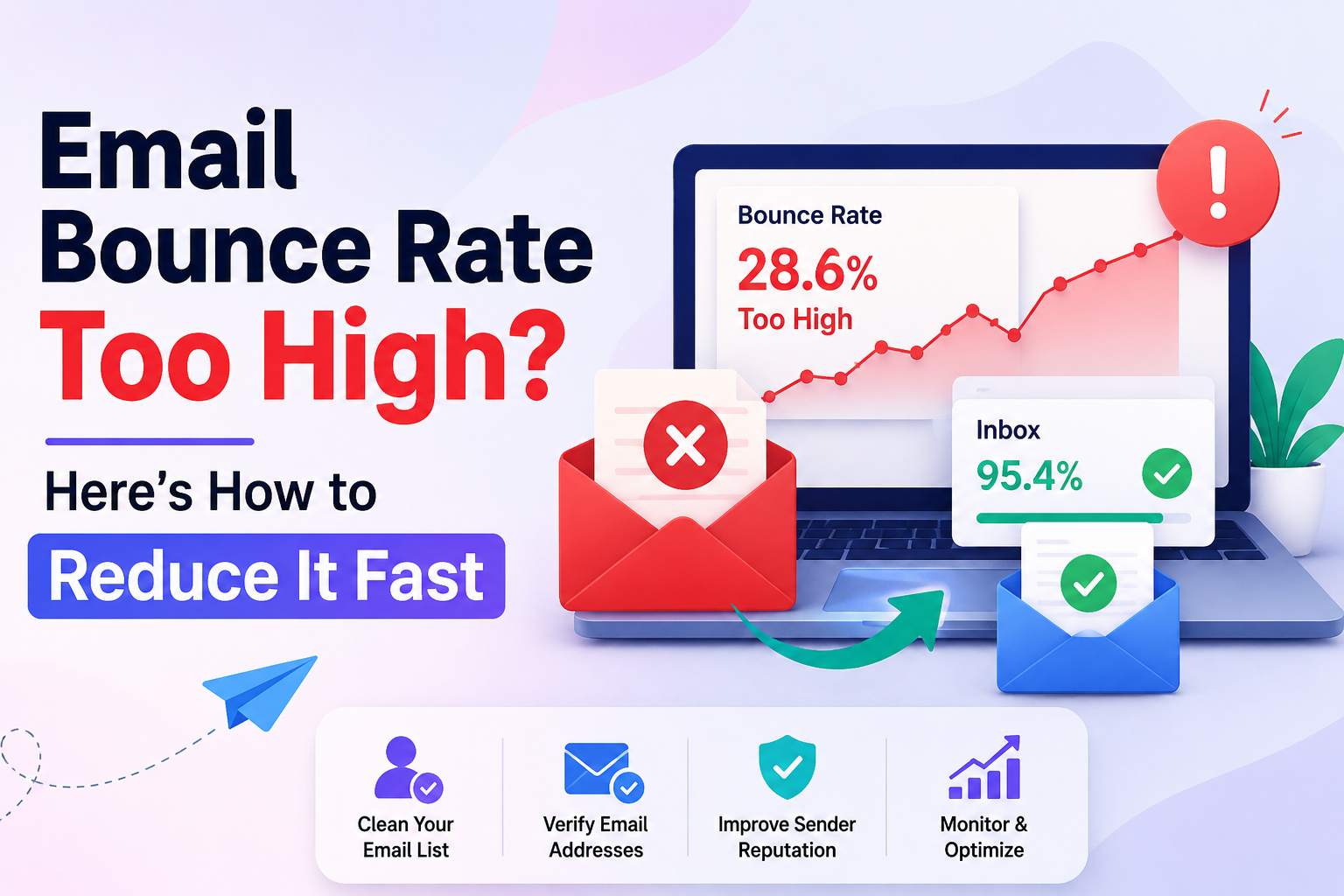





Have you ever wondered why your carefully crafted messages never reach the inbox of your subscribers? When your email bounce rate climbs, it signals to internet service providers that your sender reputation is at risk.
A healthy contact list is the backbone of successful digital marketing. If you ignore these warning signs, your future campaigns may land directly in the spam folder instead of the primary inbox.
Maintaining high deliverability requires proactive management of your data to keep your email bounce rate under control. By identifying invalid addresses early, you protect your domain authority and ensure your content reaches the right people.
In this guide, we will explore actionable strategies to clean your database effectively. You will learn how to optimize your outreach and achieve better engagement results starting today.
Key Takeaways
- High undelivered message counts damage your sender reputation.
- Regular list hygiene is essential for long-term marketing success.
- Invalid addresses are the primary cause of poor deliverability.
- Proactive monitoring helps you avoid the dreaded spam folder.
- Improving your data quality leads to higher conversion metrics.
Stop High Bounce Rates Before They Hurt Your Sender Reputation
Remove invalid email addresses, protect your domain reputation, and improve inbox placement with real-time email verification. Start cleaning your list today with a free trial and experience better deliverability instantly.
What is the Mechanics of Email Bounce Rate?
If you have ever wondered why your messages fail to arrive, you need to look closely at the mechanics of bounce rates. Every time you hit send, a complex series of automated checks determines the fate of your email. Knowing what is an email bounce rate helps you distinguish between temporary glitches and permanent delivery failures.
Defining Hard Bounces vs Soft Bounces
A hard bounce occurs when an email address is permanently invalid or does not exist. This often happens due to a typo in the domain name or because the user has deleted their account. You should remove these addresses from your list immediately to maintain data integrity.
In contrast, a soft bounce indicates a temporary issue with the recipient’s server. Common causes include a full inbox, a server that is currently offline, or an email that exceeds the size limit. These messages might be delivered later once the underlying issue is resolved by the recipient.
Why High Bounce Rates Damage Your Sender Reputation
Internet Service Providers (ISPs) closely monitor your sending habits to protect their users from spam. A consistently high email bounce rate signals to these providers that your list hygiene is poor. When your reputation drops, ISPs may start filtering your messages directly into the junk folder.
Your sender reputation acts like a credit score for your domain, and your email bounce rate is one of the biggest factors influencing it. If you ignore high bounce numbers, you risk being blacklisted by major providers like Gmail or Outlook. Maintaining a clean list is the most effective way to keep your reputation in good standing.
The Impact of Bounce Rates on Email Deliverability
Deliverability is the ultimate measure of your marketing success. Even if your content is engaging, it cannot perform if it never reaches the inbox. A high email bounce rate directly correlates with lower open rates and reduced conversion opportunities.
By understanding these mechanics, you can take proactive steps to improve your reach. Monitoring your bounce data allows you to refine your strategy and ensure your communications remain trusted by major email providers. Consistent attention to these metrics will yield better long-term results for your campaigns.
Analyzing Your Current Email Bounce Rate
Evaluating your current email bounce rate is the first step toward a healthier sender reputation. By consistently tracking these numbers, you gain the visibility needed to identify technical issues before they escalate into major deliverability blocks.
How to Calculate Your Bounce Rate Percentage
To determine your performance, you must use a simple mathematical formula. Divide the total number of bounced emails by the total number of emails sent, then multiply the result by 100.
For example, if you sent 1,000 emails and 20 of them bounced, your calculation would be (20 / 1,000) * 100, resulting in a 2% bounce rate. Keeping this percentage low is vital for maintaining a positive relationship with internet service providers.
“Data is the compass that guides your email strategy toward higher engagement and better inbox placement.”
Identifying Industry Benchmarks for Email Marketing
Understanding where you stand compared to your peers helps you set realistic goals. While every industry varies, maintaining a bounce rate in email marketing below 2% is generally considered the gold standard for healthy lists.
| Performance Level | Bounce Rate Range | Action Required |
|---|---|---|
| Excellent | Below 1% | Maintain current practices |
| Acceptable | 1% – 2% | Monitor for minor spikes |
| Concerning | 2% – 5% | Immediate list cleaning |
| Critical | Above 5% | Pause campaigns and audit |
Tools for Monitoring Your Email Health
You do not have to track these metrics manually. Modern platforms like MailerRocket, Mailgun, SendGrid, and Postmark provide automated dashboards that visualize your email bounce rate in real-time.
These tools offer detailed analytics that categorize bounces by type, allowing you to distinguish between temporary issues and permanent invalid addresses. Utilizing these resources ensures you stay informed about your bounce rate in email marketing without constant manual oversight.
Cleaning Your Existing Email List
If your bounce rate in email marketing is climbing, your existing database likely needs a thorough audit. A cluttered list filled with outdated contacts acts as a weight, dragging down your sender reputation and preventing your messages from reaching the inbox. By taking control of your data, you ensure that your communication efforts remain effective and professional.
Removing Inactive and Invalid Email Addresses
Inactive subscribers are those who have not opened or clicked your emails for an extended period. Keeping these users on your list is a common mistake that inflates your metrics unnecessarily. You should systematically remove these contacts to maintain a healthy, engaged audience.
- Identify subscribers who have been inactive for over six months.
- Run a re-engagement campaign before permanently deleting them.
- Remove addresses that consistently return hard bounce notifications.
Identifying Syntax Errors and Typos in Your Database
Sometimes, a high bounce rate in email marketing stems from simple human error during the signup process. Users often mistype their email addresses, leading to “gmal.com” or “yaho.com” entries that will never receive your content. You can catch these issues by using validation tools that flag common formatting mistakes.
Fixing these syntax errors immediately improves your delivery success and significantly reduces your email bounce rate over time. Regularly scanning your database for these typos prevents wasted effort and keeps your list quality high. It is a small technical adjustment that yields significant results for your overall campaign performance.
The Importance of Regular List Hygiene
Regular list hygiene is a proactive habit that keeps your engagement metrics high and your email bounce rate low. You should view this process as a routine maintenance task rather than a one-time fix. By consistently auditing your data, you protect your sender reputation and ensure that your brand remains a trusted voice in the inbox.
Consistent cleaning allows you to focus your resources on subscribers who actually want to hear from you. This strategy not only lowers your bounce rate in email marketing but also fosters a more meaningful connection with your active audience. Start your cleanup today to see an immediate improvement in your deliverability statistics.
Turn a Messy Email List Into a Revenue-Generating Asset
Identify fake signups, eliminate risky contacts, and keep your database healthy with automated email verification tools. Start improving your email deliverability and campaign performance in minutes.
Implementing Double Opt-In Procedures
Building a high-quality email list starts with a simple yet powerful gatekeeper known as the double opt-in. This process requires new subscribers to confirm their email address before they are officially added to your database. By taking this extra step, you effectively manage your bounce rate in email marketing and ensure that your list remains healthy.
How Double Opt-In Prevents Fake Signups
Automated bots often target signup forms to inject malicious or invalid addresses into your system. When you use a single opt-in method, these fake entries go straight into your mailing list. This leads to immediate delivery failures, which negatively impacts your bounce rate in email marketing.
A double opt-in acts as a filter that only allows verified humans to join your audience. If an address is fake or mistyped, the confirmation email will never reach a real inbox. Consequently, the invalid entry is never activated, keeping your sender reputation intact.
Setting Up Confirmation Emails Effectively
Your confirmation email should be clear, concise, and action-oriented. Users need to understand exactly why they received the message and what they must do next. Follow these best practices to ensure high conversion rates:
- Use a clear subject line that highlights the need for action, such as “Please confirm your subscription.”
- Place the verification button prominently within the first few lines of the email.
- Keep the design simple to ensure the email loads quickly on all mobile devices.
Improving Lead Quality Through Verification
Verification is not just about preventing errors; it is about confirming genuine interest. When a user takes the time to click a confirmation link, they demonstrate a higher level of commitment to your brand. This proactive behavior often leads to better engagement metrics over time.
By focusing on quality over quantity, you protect your domain from being flagged by internet service providers. Maintaining a clean list is the most reliable way to keep your bounce rate in email marketing low while maximizing the return on your communication efforts.
Leveraging Email Verification Services
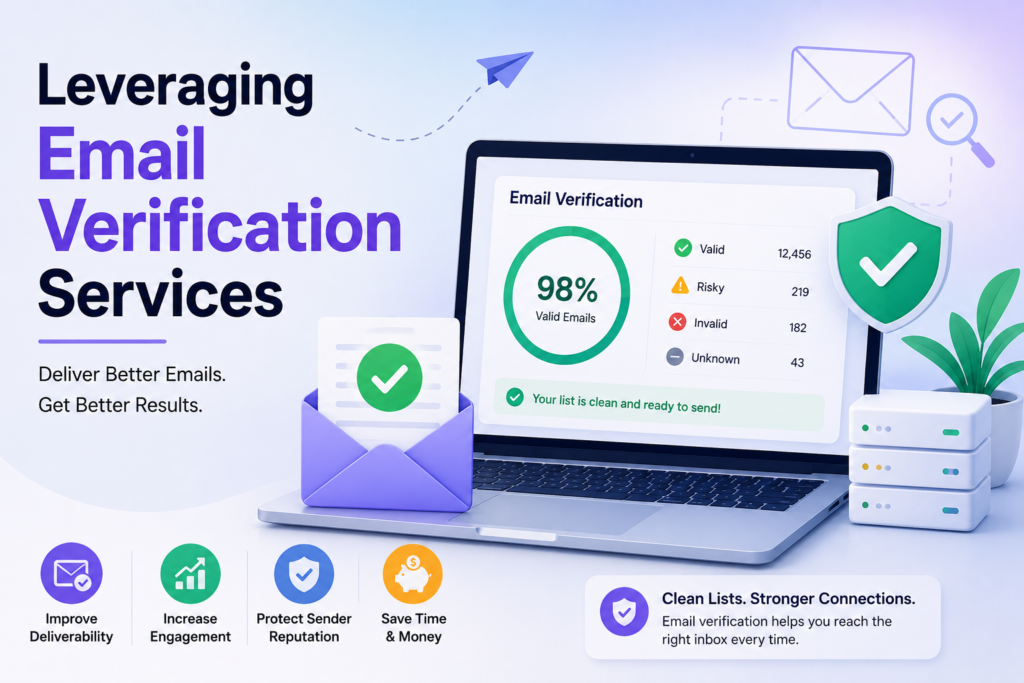
Proactive list management is the cornerstone of effective email bounce rate optimization. By implementing advanced verification services, you ensure that your marketing efforts reach real people rather than dead ends. This approach protects your sender reputation and keeps your engagement metrics high.
How Real-Time Verification APIs Work
Real-time verification APIs act as a digital gatekeeper for your website forms. When a user enters their email address, the system instantly checks the syntax, domain validity, and mailbox existence. This process happens in milliseconds, preventing invalid data from ever reaching your database.
By catching errors at the point of entry, you eliminate the risk of typos or fake signups. This immediate validation is essential for maintaining a clean list without manual intervention. It serves as your first line of defense against high bounce rates.
Top Tools for Bulk Email List Cleaning
Even with strong entry-level security, your existing database may contain legacy contacts that are no longer active. Professional bulk cleaning tools like ZeroBounce, NeverBounce, or Hunter are designed to scrub these lists efficiently. These platforms identify risky addresses, such as catch-all domains or spam traps, that could harm your deliverability.
Using these services regularly is a vital part of your email bounce rate optimization strategy. They provide detailed reports that help you understand the health of your audience. By removing inactive users, you focus your budget on subscribers who actually want to hear from you.
Integrating Verification into Your Signup Forms
Integrating verification directly into your signup forms is a straightforward technical process. Most modern email service providers offer plugins or simple API documentation to connect your forms to a verification engine. Once configured, the system automatically flags or rejects invalid entries before they are saved.
This seamless integration improves lead quality significantly. You will notice a higher conversion rate because your follow-up emails are guaranteed to reach their destination. Consider the following comparison of verification strategies to determine the best fit for your business:
| Strategy | Implementation Speed | Cost Efficiency | Primary Benefit |
|---|---|---|---|
| Real-Time API | Fast | High | Prevents bad data entry |
| Bulk Cleaning | Moderate | Medium | Cleans legacy databases |
| Manual Review | Slow | Low | Limited scalability |
Optimizing Your Email Content for Better Engagement
Strategic content creation is a cornerstone of effective email bounce rate optimization for modern marketers. When your subscribers find value in every message, they are far less likely to abandon their accounts or mark your emails as junk. Consistent engagement signals to internet service providers that your domain is a trusted sender.
Crafting Subject Lines That Encourage Interaction
Your subject line is the first impression you make on a subscriber. To boost open rates, focus on clarity and curiosity rather than aggressive sales tactics. A well-crafted subject line should clearly reflect the value inside the email to ensure the recipient knows exactly what to expect.
Avoid using all caps or excessive punctuation, as these can look like spam to both users and filters. Instead, use action-oriented language that invites the reader to click. Testing different variations helps you understand what resonates best with your specific audience.
Avoiding Spam Triggers That Lead to Bounces
Certain words and formatting choices can trigger spam filters, causing your emails to be blocked before they reach the inbox. Words like “free,” “guarantee,” or “cash” often flag automated systems. By keeping your language professional and avoiding these common pitfalls, you protect your sender reputation.
Ensure your HTML code is clean and free of broken links or missing images. A messy technical structure often leads to delivery failures. Regularly auditing your templates is a simple way to maintain high deliverability standards.
Personalizing Content to Maintain Subscriber Interest
Personalization is essential for long-term email bounce rate optimization. When you tailor content to individual preferences, subscribers remain interested and active. This connection reduces the risk of your emails being ignored or deleted, which keeps your list healthy.
| Strategy | Impact on Engagement | Bounce Rate Effect |
|---|---|---|
| Generic Blasts | Low | High Risk |
| Segmented Content | Medium | Moderate |
| Personalized Campaigns | High | Low Risk |
Use data points like purchase history or past clicks to customize your messaging. When subscribers feel that your content is written specifically for them, they are more likely to stay subscribed. This proactive approach ensures your list remains a valuable asset for your business.
Managing Your Sender Reputation and Authentication
Your sender reputation acts as a digital passport that determines whether your emails reach the inbox or get blocked. When you prioritize technical security, you create a safer environment for your subscribers and improve your overall email bounce rate optimization efforts. Establishing trust with receiving servers is the most reliable way to ensure your marketing messages land exactly where they belong.
Configuring SPF, DKIM, and DMARC Records
Authentication protocols are essential for proving your identity to email providers. By setting up Sender Policy Framework (SPF), you authorize specific servers to send mail on your behalf. This prevents unauthorized parties from spoofing your domain.
DomainKeys Identified Mail (DKIM) adds a digital signature to your emails, ensuring the content remains untampered during transit. Finally, DMARC provides instructions to receiving servers on how to handle messages that fail these checks. Implementing these three records is a non-negotiable step for any professional sender.
“Email authentication is the bedrock of deliverability; without it, even the most engaging content will struggle to bypass modern spam filters.”
The Role of Dedicated IP Addresses
If you send high volumes of email, sharing an IP address with other senders can be risky. A dedicated IP address gives you full control over your sending reputation. You are no longer affected by the poor practices of other businesses on a shared server.
This level of isolation is a powerful tool for email bounce rate optimization. It allows you to build a consistent history with internet service providers. The following table highlights the differences between shared and dedicated infrastructure:
| Feature | Shared IP | Dedicated IP |
|---|---|---|
| Reputation Control | Low | High |
| Cost | Economical | Higher |
| Ideal For | Small Lists | High Volume |
Monitoring Blacklists and Feedback Loops
Even with perfect authentication, you must stay vigilant by monitoring your standing. Blacklists are databases that track domains or IPs associated with spam. If you find your domain listed, you must act immediately to identify the source of the issue.
Feedback loops allow you to receive direct notifications when a subscriber marks your email as spam. By analyzing this data, you can remove unhappy users before they damage your reputation further. Consistent monitoring is the final piece of the puzzle for long-term email bounce rate optimization success.
Strategies for Re-engaging Inactive Subscribers
Reviving your relationship with inactive subscribers is a vital step in maintaining a healthy email bounce rate and email list. When users stop opening your messages, they often become dead weight that negatively impacts your sender reputation. By focusing on these dormant contacts, you can achieve better email bounce rate optimization and ensure your future campaigns reach the inbox effectively.
Creating Effective Win-Back Campaigns
A successful win-back campaign starts with a compelling offer or a simple check-in. You might send a personalized message asking if they still wish to hear from you or offering a special discount to encourage a return. These emails should be concise and provide a clear call to action that makes it easy for the user to re-engage.
Avoid overwhelming the subscriber with too much information at once. Instead, focus on reminding them of the value your brand provides. This approach helps in email bounce rate optimization by filtering out those who are truly uninterested while sparking curiosity in those who simply forgot about your services.
Segmenting Your List Based on Engagement Levels
Effective list management relies on your ability to categorize users based on their recent activity. You should create segments for active, semi-active, and inactive subscribers to tailor your messaging appropriately. Sending the same content to everyone often leads to disinterest and higher bounce rates.
By targeting your inactive segment with specific re-engagement content, you keep your main list clean and responsive. This segmentation strategy is a cornerstone of email bounce rate optimization, as it prevents you from sending irrelevant emails to users who are no longer interested in your content.
Knowing When to Purge Unresponsive Contacts
There comes a time when you must accept that some subscribers will not return. If a contact has remained inactive for six months or more despite your best efforts, it is often best to remove them. Purging these addresses protects your sender reputation and ensures your metrics reflect a truly engaged audience.
Use the following table to determine the best course of action for different subscriber engagement levels:
| Engagement Level | Activity Status | Recommended Action |
|---|---|---|
| Highly Active | Opened in last 30 days | Continue standard nurturing |
| Semi-Active | Opened in last 90 days | Send personalized offers |
| Inactive | No activity for 6+ months | Execute win-back campaign |
| Unresponsive | No activity after win-back | Remove from list |
Regularly cleaning your list in this manner is essential for long-term success. It keeps your data accurate and supports your ongoing email bounce rate optimization efforts by removing potential sources of hard bounces.
Avoiding Common Pitfalls in List Building
Your long-term email success depends entirely on the quality of the audience you cultivate today. Many marketers mistakenly believe that a larger list size automatically equates to higher revenue. However, focusing on quantity over quality often leads to severe deliverability issues and poor engagement metrics.
Prioritizing email bounce rate optimization is essential for maintaining a healthy sender reputation. When you build your list the right way, you ensure that every subscriber actually wants to hear from you.
Why You Should Never Purchase Email Lists
Purchasing email lists is one of the most damaging mistakes a business can make. These lists are often filled with inactive, invalid, or even malicious email addresses that trigger immediate spam filters. When you send messages to people who never opted in, you are essentially sending unsolicited junk mail.
This practice guarantees a spike in your bounce rate and can lead to your domain being blacklisted by major internet service providers. Protecting your sender reputation is far more valuable than the temporary boost in subscriber numbers that a purchased list might provide.
The Dangers of Using Scraped Data
Scraping data from websites or social media platforms is another shortcut that carries significant risks. Not only does this violate the terms of service of most platforms, but it also ignores privacy regulations like the CAN-SPAM Act or GDPR. Using scraped data is a primary driver of high bounce rates, as these addresses are rarely verified or maintained.
Furthermore, recipients who did not sign up for your content will likely mark your emails as spam. This negative feedback loop makes email bounce rate optimization nearly impossible to achieve. You should always focus on building a list of people who have explicitly granted you permission to contact them.
Best Practices for Organic Lead Generation
Organic lead generation is the only sustainable way to grow a responsive and loyal audience. By using clear sign-up forms on your website, you ensure that every new subscriber is genuinely interested in your brand. You can encourage sign-ups by offering valuable lead magnets, such as exclusive guides, discounts, or industry insights.
Always be transparent about what subscribers can expect to receive from your newsletters. Building trust from the first interaction is the most effective strategy for long-term engagement. When your audience chooses to join your list, they are far more likely to open your emails and interact with your content.
Analyzing Bounce Data to Refine Your Strategy
Turning raw bounce data into actionable insights is the secret to maintaining a healthy sender reputation. By looking beyond the surface numbers, you can identify the root causes of delivery failures and implement smarter marketing tactics. This process is essential for keeping your email bounce rate within healthy industry limits.
Interpreting Bounce Codes from Your Email Service Provider
Every time a message fails to reach its destination, your email service provider generates a specific SMTP bounce code. These codes act as a diagnostic tool that tells you exactly why the delivery was rejected. Understanding these codes allows you to distinguish between temporary technical glitches and permanent invalid addresses.
For instance, a 5xx series code typically indicates a permanent failure, such as a non-existent mailbox. Conversely, a 4xx series code often points to a temporary issue like a full inbox or a server timeout. Learning to read these signals helps you clean your list with precision rather than guessing which contacts to remove.
Adjusting Your Sending Frequency Based on Performance
Your sending cadence plays a major role in how mailbox providers perceive your domain. If you notice a spike in your email bounce rate, it may be a sign that you are sending too frequently to an unengaged audience. You should analyze your performance metrics to determine if your current schedule is causing fatigue or triggering spam filters.
Consider slowing down your sending volume if you see a sudden increase in bounces. This gives your reputation time to recover while you investigate the underlying list quality issues. Strategic pacing ensures that you maintain a positive relationship with internet service providers over the long term.
Using Analytics to Predict Future Deliverability Issues
Analytics serve as a powerful predictive tool for your overall email health. By tracking trends in your email bounce rate over several months, you can spot potential problems before they escalate into major deliverability crises. Consistent monitoring allows you to catch patterns, such as a specific signup source that consistently yields low-quality leads.
You can use this data to adjust your acquisition strategy and focus on higher-quality channels. Proactive management of your analytics prevents future blocks and ensures your messages reach the inbox consistently. Staying ahead of these metrics is the most effective way to protect your brand’s communication channel.
Advanced Tactics for Bounce Rate Optimization
Achieving consistent success in email marketing requires moving beyond basic list hygiene. By adopting a proactive stance, you can implement sophisticated strategies that keep your database healthy without constant manual intervention. Mastering email bounce rate optimization involves a combination of smart automation and deep technical oversight.
Automating List Maintenance Workflows
Manual list cleaning is prone to human error and often happens too late to prevent damage. You should integrate automated workflows that trigger verification processes the moment a new contact enters your system. This ensures that invalid addresses are purged before they ever impact your sender reputation.
Modern platforms allow you to set up recurring scrubs that identify inactive users based on engagement triggers. By automating these tasks, you maintain a high-quality list while focusing your energy on content strategy. This approach is essential for long-term email bounce rate optimization.
Testing Different Signup Channels for Quality Control
Not all lead sources are created equal, and some channels may attract more bots or low-intent users than others. You must regularly test your signup forms, landing pages, and social media integrations to determine which sources provide the highest quality leads. Tracking the bounce rate of each channel helps you identify where to double down and where to cut ties.
- A/B test your signup forms to see if adding a captcha reduces fake signups.
- Compare the bounce rates of leads from organic search versus paid social campaigns.
- Use UTM parameters to track the specific origin of every new subscriber.
Collaborating with IT for Technical Deliverability Support
Sometimes, high bounce rates stem from complex server-level issues that go beyond simple list hygiene. You should collaborate closely with your IT department to ensure your technical infrastructure is fully optimized. They can assist with advanced configurations that protect your domain’s reputation.
Your IT team plays a vital role in managing server-level adjustments and monitoring feedback loops. Working together ensures that your authentication protocols remain robust and effective. This partnership is a cornerstone of advanced email bounce rate optimization.
| Strategy | Primary Benefit | Implementation Effort |
|---|---|---|
| Automated Workflows | Real-time list cleaning | Medium |
| Channel Testing | Higher lead quality | High |
| IT Collaboration | Technical stability | High |
Ready to Reduce Your Email Bounce Rate for Good?
Get advanced email verification, real-time monitoring, and powerful deliverability tools designed to maximize inbox placement and conversions. Upgrade to a premium plan or try it free today.
Conclusion
Achieving a low bounce rate requires a shift in how you view your database management. You must treat your subscriber list as a living asset that demands constant care and attention.
Consistent application of list hygiene, proper authentication, and engagement strategies builds a strong foundation for your marketing efforts. These practices ensure your messages reach the inbox of your target audience every time you hit send.
Tools like ZeroBounce or NeverBounce provide the technical support needed to keep your data clean. Integrating these services into your workflow prevents invalid addresses from damaging your sender reputation.
Maintaining a healthy list remains an ongoing process. It requires your vigilance and a firm commitment to quality over quantity. Your dedication to these standards will pay off through higher open rates and better overall campaign performance.
Start auditing your current processes today to see where you can improve. Small adjustments to your signup forms and list maintenance routines lead to significant long-term gains for your brand.
FAQs
What is an email bounce rate and why should I monitor it?
What is an email bounce rate? It is the percentage of your total sent messages that could not be delivered to the recipient’s inbox. Monitoring the bounce rate in email marketing is critical because high rates signal to ISPs like Gmail and Outlook that your sender practices may be poor, which can lead to your messages being diverted to the spam folder or your domain being blacklisted entirely.
What is the primary difference between a hard bounce and a soft bounce?
A hard bounce occurs when an email is permanently undeliverable, often because the email address is invalid or the domain does not exist. A soft bounce is a temporary delivery failure, typically caused by a full recipient inbox or a temporary server issue. For effective email bounce rate optimization, you must remove hard bounces immediately, while soft bounces can be monitored for recurring issues.
How can I accurately calculate the bounce rate for my campaigns?
You can determine this metric by taking the total number of bounced emails, dividing that by the total number of emails sent, and multiplying the result by 100. For instance, if you send a newsletter via Mailchimp to 5,000 subscribers and 100 messages bounce, your email bounce rate is 2%. Keeping this number below 2% is generally considered the industry standard for healthy deliverability.
Why is it vital to implement a double opt-in process?
Using a double opt-in requires new subscribers to click a confirmation link in a verification email before they are added to your database. This process acts as a gatekeeper against bots, fake signups, and simple typos. By ensuring every address on your list is valid and active, you proactively improve your email bounce rate optimization and overall lead quality.
Which tools are recommended for cleaning an existing email list?
To maintain high-level list hygiene, you should utilize professional verification services such as ZeroBounce, NeverBounce, or Kickbox. These platforms can scrub your database of invalid, disposable, and high-risk addresses. Integrating these tools with your CRM, such as HubSpot or Salesforce, ensures that only deliverable contacts remain in your marketing funnel.
How do authentication protocols like SPF, DKIM, and DMARC prevent bounces?
These technical records verify your identity to the receiving mail server. SPF, DKIM, and DMARC act as digital signatures that prove your email is actually from you and hasn’t been tampered with. Without these, many modern filters will reject your messages as potential “spoofing” attempts, causing your email bounce rate to spike due to security rejections.
What are the risks associated with purchasing email lists or using scraped data?
Purchasing lists is one of the fastest ways to destroy your sender reputation. These lists are often filled with “spam traps” and abandoned addresses that trigger immediate hard bounces. Major platforms like Constant Contact and SendGrid have strict policies against purchased data because it inevitably leads to high bounce rates and legal complications under regulations like GDPR or CAN-SPAM.
How does list segmentation help in managing my bounce rate?
By segmenting your list based on engagement levels, you can treat active and inactive subscribers differently. If you notice a segment of users has not opened an email in several months, you can run a targeted win-back campaign. If they remain unresponsive, purging these contacts prevents them from turning into “dormant” accounts that eventually result in bounces, keeping your bounce rate in email marketing at a healthy level.
Can my email content actually influence my bounce rate?
Yes, indirectly. If your content is flagged by aggressive spam filters due to “spammy” keywords, excessive capitalization, or suspicious links, your messages may be blocked at the server level. By crafting high-quality, personalized content and using reliable tools like Grammarly to avoid errors, you ensure that your emails pass through filters and reach your subscribers, which is a key component of long-term email bounce rate optimization.