
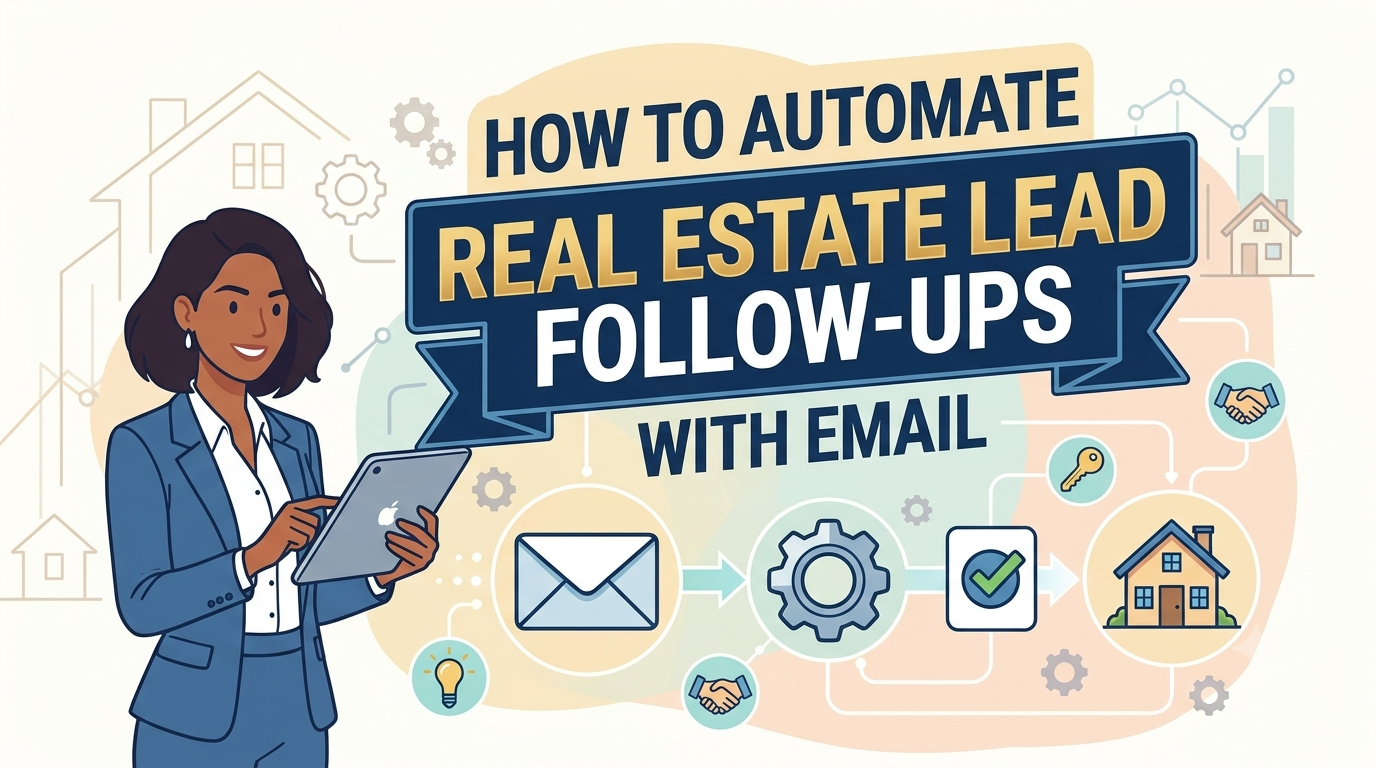





Have you ever wondered how many potential commissions you lose simply because you could not reach out fast enough? In today’s fast-paced market, the difference between a closed deal and a missed opportunity often comes down to speed and consistency.
Manual outreach is no longer enough to keep your pipeline healthy. Relying on memory or spreadsheets to track every real estate lead creates bottlenecks that prevent your business from scaling effectively.
By implementing automated email workflows, you ensure that every prospect receives timely, relevant information without you lifting a finger. This systematic approach serves as the backbone for nurturing a high-quality real estate lead from the first click to the final closing signature.
Adopting these digital tools saves you hours of administrative work each week. More importantly, it significantly boosts your conversion rates by keeping your brand top-of-mind throughout the entire buying journey.
Key Takeaways
- Automation eliminates the risk of forgetting to follow up with prospects.
- Consistent communication builds trust and authority with potential clients.
- Scaling your business requires moving away from manual, time-consuming tasks.
- Automated workflows allow you to focus on high-value face-to-face interactions.
- Strategic email sequences significantly improve your overall conversion metrics.
Automate Every Real Estate Lead Before It Is Too Late
Convert every inquiry into an opportunity with MailerRocket. Automate welcome emails, follow ups, and lead nurturing to save time, increase engagement, and close more deals faster.
The Importance of Speed in Real Estate Lead Response
You might be surprised to learn that the first five minutes are the most critical window for your business growth. In the competitive market of the United States, every real estate lead represents a fleeting opportunity that requires your full attention.
Why Immediate Contact Increases Conversion Rates
Data consistently shows that responding to an inquiry within five minutes increases your chances of conversion by a significant margin. When you wait several hours, the prospect has likely moved on to another agent or lost interest entirely.
Speed is your greatest competitive advantage in this industry. A fast response helps every real estate lead receive attention when it matters most. By automating your initial outreach, you ensure that no real estate lead slips through the cracks while you are busy with other tasks. This proactive approach keeps your pipeline moving and maximizes your overall return on investment. It ensures each real estate lead remains engaged.
The Psychological Impact of Timely Communication
When a prospect receives an instant response, they feel valued and prioritized. This immediate acknowledgment builds instant trust and positions you as a professional who respects their time.
Conversely, a delayed response can signal that you are disorganized or uninterested in their business. By providing a prompt, helpful reply, you create a positive first impression that sets the tone for the entire home-buying journey. Ultimately, your ability to act quickly transforms a cold Real Estate Lead into a warm, engaged client who is ready to work with you.
Choosing the Right CRM for Your Real Estate Lead Automation
A powerful CRM acts as the central nervous system for your entire lead management process. Selecting the right software is a foundational step for any agent looking to scale their operations. When you choose a platform that aligns with your goals, you ensure that every real estate lead receives timely and relevant communication.
Evaluating Features for Automated Email Workflows
Not all platforms are built to handle complex automation tasks. You need a system that offers robust tagging capabilities to categorize prospects based on their specific interests. This allows you to trigger personalized email sequences without manual intervention.
Look for these essential features when evaluating potential software:
- Advanced Tagging Systems: Easily label contacts by property type or budget.
- Visual Automation Builders: Create complex workflows using simple drag-and-drop interfaces.
- Behavioral Triggers: Automatically send emails based on how a lead interacts with your site.
- Mobile Accessibility: Manage your database and view updates while on the go.
Integrating Email Marketing Tools with Your Database
Once you have selected your platform, the next step is connecting your email marketing tools directly to your database. Seamless integration ensures that data flows accurately between systems, preventing information silos. This connectivity is vital for maintaining a clean, organized, and actionable list of prospects at every stage of the funnel.
When your systems communicate effectively, you reduce the risk of sending duplicate or irrelevant messages to a real estate lead. You should prioritize platforms that offer native integrations or support tools like MailerRocket to bridge the gap. By keeping your database synchronized, you maintain a single source of truth that empowers your team to make data-driven decisions every single day.
Segmenting Your Database for Targeted Email Campaigns
Sending the right message to the right person at the right time requires a structured approach to your contact list. This ensures every real estate lead receives content that matches their needs. When you refine your lead generation for real estate, you stop treating every prospect as a generic entry. Instead, you create meaningful connections that resonate with specific needs and goals.
Categorizing Leads by Buyer Intent and Timeline
Successful agents divide their databases based on clear intent and urgency. A first-time homebuyer requires educational content about the mortgage process, while a seasoned investor looks for data on cap rates and market appreciation. Understanding these differences allows you to tailor your communication effectively.
You should also categorize leads by their expected timeline. A prospect looking to move within thirty days needs immediate, high-touch support. Conversely, someone browsing for next year benefits from long-term nurturing campaigns that keep your brand top-of-mind without being intrusive.
Using Tags to Personalize Automated Outreach
Tagging systems act as the backbone of your automated workflow. They allow you to manage each real estate lead with greater precision. By applying specific labels to your contacts, you can track exactly where a prospect sits in their journey. This ensures that your lead generation for real estate efforts remain relevant and highly targeted.
Consider the following table to organize your outreach strategy based on common lead profiles:
| Lead Category | Primary Intent | Recommended Frequency |
|---|---|---|
| First-Time Buyer | Education & Guidance | Weekly |
| Seasoned Investor | ROI & Market Data | Bi-Weekly |
| Cold Prospect | Brand Awareness | Monthly |
| Active Hot Lead | Immediate Showing | Daily |
By moving away from generic mass emails, you significantly improve your engagement metrics. Personalization is the key to building trust, ensuring your automated outreach feels like a helpful conversation rather than a cold sales pitch. This matters for every real estate lead.
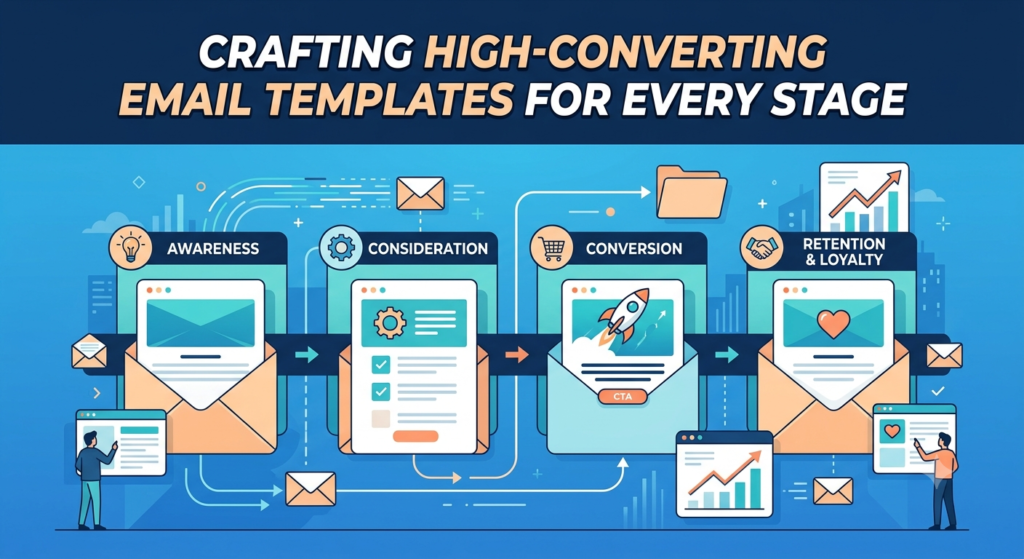
Crafting High-Converting Email Templates for Every Stage
Transforming casual inquiries into loyal clients requires a strategic approach to your email copy. When you prioritize lead generation for real estate, your templates must balance professionalism with a personal touch. A well-crafted email acts as a bridge between a digital lead and a face-to-face meeting.
Writing Subject Lines That Get Opened
Your subject line is the gatekeeper of your message. If it fails to capture attention, the rest of your content remains unseen. Keep your subject lines short, ideally under 50 characters, to ensure they display fully on mobile devices.
Personalization is your greatest asset here. Including the recipient’s name or referencing a specific property they viewed can significantly boost your open rates. Avoid generic phrases that sound like automated spam, as these often trigger immediate deletion.
Structuring Body Copy for Maximum Engagement
Once a prospect opens your email, your body copy must deliver immediate value. Focus on solving a specific problem or answering a question the lead likely has about the market. Use short, punchy sentences to maintain momentum and keep the reader engaged throughout the message.
“The goal of any email is to start a conversation, not to close the deal in the first sentence.”
Effective lead generation for real estate relies on clear, concise communication. Break your text into small paragraphs to make it scannable. Use bullet points to highlight key benefits or property features, ensuring the reader can digest the information quickly.
Best Practices for Call-to-Action Placement
Your call-to-action (CTA) should be the natural conclusion of your email. Place it prominently, ideally as a standalone line or a button, so it is impossible to miss. Ensure the language is action-oriented, such as “Schedule a Tour” or “View Market Report,” rather than passive phrases like “Click here.”
| Email Element | Best Practice | Impact on Conversion |
|---|---|---|
| Subject Line | Personalized & Short | High Open Rates |
| Body Copy | Value-Driven & Scannable | Increased Engagement |
| CTA Placement | Clear & Action-Oriented | Higher Click-Through |
By consistently refining these elements, you create a reliable system for nurturing prospects. Remember that every email is an opportunity to build trust and move the lead closer to a successful transaction.
Setting Up Automated Drip Campaigns for New Inquiries
Mastering the art of the drip campaign ensures that no prospect is ever forgotten in your sales pipeline. These automated systems allow you to maintain consistent contact without the need for manual intervention for every single message. By leveraging these tools, you significantly improve your overall lead generation for real estate efforts.
Grow Faster with Powerful Email Automation
Simplify your marketing with MailerRocket. Create automated campaigns, nurture every prospect, track performance, and scale your real estate business while focusing on closing successful deals.
Designing the Initial Welcome Sequence
The first email in your sequence is the most critical touchpoint in your communication strategy. It shapes the experience of the real estate lead. It should arrive immediately after a prospect submits an inquiry to confirm receipt and establish your professional presence. First impressions matter, so ensure this message clearly articulates your unique value proposition.
Your welcome email should provide immediate utility to the recipient. A thoughtful approach helps convert a real estate lead into a stronger opportunity. Consider including a brief introduction, a link to a helpful resource, or a clear call to action that invites them to schedule a consultation. This proactive approach builds trust and sets the stage for a productive long-term relationship.
Determining the Optimal Frequency for Follow-Up Emails
Finding the right balance in your outreach frequency is essential to staying top-of-mind without becoming a nuisance. You want to remain visible to your prospects while respecting their inbox space. A well-structured cadence prevents your brand from fading into the background during the early stages of the buying process.
Most successful agents find that a front-loaded schedule works best for effective lead generation for real estate. You might send a follow-up one day after the initial inquiry, followed by another three days later, and then transition to a weekly or bi-weekly cadence. Consistency is the key to nurturing these relationships until the prospect is ready to move forward. Every real estate lead benefits from this consistency.
Always monitor how your audience interacts with these automated messages to refine your timing. If you notice a drop in engagement, consider adjusting the interval between your emails. By remaining flexible and data-driven, you ensure your automated sequences continue to deliver high-quality results over time.
Integrating Behavioral Triggers into Your Follow-Up Strategy
Behavioral triggers turn passive website traffic into active conversations by providing timely, relevant information. This approach helps identify a valuable real estate lead. By reacting to these signals in real-time, you demonstrate that you are paying attention to the unique needs of your prospects. This approach is essential for generating leads in real estate and moving them closer to a final decision.

Responding to Website Activity and Property Views
When a prospect spends time viewing a specific listing, they are signaling high intent. You can set up your CRM to trigger an automated email the moment a user visits a property page multiple times. This proactive outreach provides the exact details they need, such as neighborhood insights or recent price adjustments.
By automating these responses, you ensure that no opportunity slips through the cracks. This method of generating leads in real estate allows you to stay top-of-mind without manual intervention. It creates a seamless experience that feels personal and highly attentive to the buyer’s journey.
Automating Responses Based on Email Engagement
Your email engagement analytics provide a goldmine of data regarding what your audience finds valuable. If a lead clicks a link about mortgage calculators or local school districts, your system should automatically send a follow-up resource on that specific topic. This level of generating leads in real estate ensures your content remains relevant to their current interests.
You can also segment users who consistently open your emails versus those who remain inactive. This helps prioritize each real estate lead. For highly engaged users, you might trigger an invitation for a private consultation or a virtual tour. Personalization is the key to building trust, and behavioral triggers make this possible at scale.
Personalizing Automated Emails to Build Trust
When you are generating leads in real estate, the secret to success lies in making your automated messages feel personal. While technology allows you to scale your outreach, your clients still crave a genuine connection. If your emails feel like a cold, robotic blast, you risk losing the trust you worked so hard to earn.
Using Merge Tags for Customization
Merge tags are your best friend when it comes to adding a personal touch to mass communications. By inserting simple placeholders, you can automatically populate emails with the recipient’s first name or specific details about their property search. This small effort makes a massive difference in how your message is perceived.
Instead of sending a generic update, use tags to reference the exact neighborhood or price point a lead has expressed interest in. When a client sees that you are paying attention to their unique needs, they are much more likely to engage. This is especially important for a real estate lead. Customization transforms a standard notification into a helpful resource that feels tailored just for them.
Balancing Automation with a Human Touch
Maintaining a conversational tone is essential for keeping your automated sequences from sounding like a machine. You should write your emails as if you are speaking directly to one person sitting across from you at a desk. Authenticity is the bridge that connects your automated systems to real-world relationships.
Avoid overly formal language or excessive marketing jargon that can create distance between you and your prospect. When you are generating leads in real estate, your goal is to be seen as a trusted advisor rather than a salesperson. By blending efficient automation with a warm, human voice, you ensure that every email you send strengthens your professional reputation.
Monitoring Key Performance Indicators for Your Email Automation
To master the art of generating leads in real estate, you must become a student of your own data. Relying on intuition is rarely enough when you want to scale your outreach effectively. By tracking specific metrics, you gain a clear view of how your audience interacts with your brand.

Consistent monitoring allows you to identify which messages resonate and which ones fall flat. It improves how you handle each real estate lead. This analytical approach transforms your email strategy from a guessing game into a precise engine for growth.
Analyzing Open Rates and Click-Through Metrics
Your open rate serves as the first indicator of whether your subject lines are compelling enough to capture attention. If your open rates remain low, it is time to experiment with more urgent or benefit-driven language. High engagement starts the moment a lead decides to click on your email.
Click-through rates provide deeper insight into the effectiveness of your call-to-action buttons and body copy. When leads click your links, they demonstrate a clear interest in your services. You should track these numbers weekly to spot trends in how your database responds to different property updates or market insights.
Adjusting Strategies Based on Conversion Data
Conversion data is the ultimate measure of success for generating leads in real estate. It reveals how effectively a real estate lead moves through your funnel. It tells you exactly how many recipients moved from being passive readers to active prospects. If your emails generate high traffic but low conversions, you may need to refine your landing pages or offer more value in your follow-up sequence.
Use the table below to evaluate your current performance against industry standards. This comparison helps you determine if your automated workflows require immediate optimization or if they are performing at an optimal level.
| Metric | Average Benchmark | High Performance | Action Required |
|---|---|---|---|
| Open Rate | 20% – 25% | 35% + | Test Subject Lines |
| Click-Through Rate | 2% – 3% | 5% + | Improve CTA Clarity |
| Conversion Rate | 1% – 2% | 3% + | Review Landing Page |
By regularly reviewing these figures, you can make data-driven adjustments that save time and increase your bottom line. Refining your strategy ensures that your efforts in generating leads in real estate remain efficient and highly profitable over the long term.
Avoiding Common Pitfalls in Real Estate Lead Nurturing
Even the best strategies on how to generate leads in real estate can fail if your messages never reach the inbox. Navigating the technical and legal aspects of email marketing is crucial for maintaining your sender reputation. By following these best practices, you ensure that your communications reach your prospects reliably and professionally every single time.
Preventing Your Emails from Landing in Spam Folders
To keep your emails out of the spam folder, you must focus on technical authentication. Ensure your domain has SPF, DKIM, and DMARC records set up correctly. These protocols verify your identity to email providers, proving that you are a legitimate sender.
Avoid using “spammy” trigger words in your subject lines, such as “guaranteed,” “free,” or excessive exclamation points. High-quality content that provides value is the best way to maintain high engagement rates. When recipients interact with your emails, providers are more likely to deliver your future messages directly to the primary inbox.
Maintaining Compliance with CAN-SPAM Regulations
Legal compliance is not optional when you learn how to generate leads in real estate through digital channels. The CAN-SPAM Act requires you to include a clear, physical mailing address in every email footer. You must also provide a simple, one-click way for recipients to opt out of future communications.
Never use deceptive subject lines or misleading header information to trick prospects into opening your messages. Transparency builds trust, which is the foundation of any successful real estate relationship. Keeping your database clean by removing inactive or unsubscribed leads will further protect your sender reputation.
| Action | Best Practice | Common Pitfall |
|---|---|---|
| Authentication | Use SPF/DKIM records | Ignoring domain security |
| Subject Lines | Clear and relevant | Using clickbait phrases |
| Opt-out Process | Easy one-click link | Hiding unsubscribe options |
| Data Hygiene | Regularly scrub lists | Sending to cold leads |
By adhering to these standards, you protect your business from legal risks while maximizing your outreach efforts. This protects the journey of every real estate lead. Consistent, compliant communication is the hallmark of a professional agent who knows how to generate leads in real estate effectively.
Scaling Your Business Through Consistent Follow-Up Systems
Scaling your real estate practice requires moving beyond manual tasks to embrace intelligent automation. When you learn how to generate leads in real estate, you must also prepare the infrastructure to manage them effectively. A robust system ensures that no inquiry slips through the cracks as your marketing efforts gain momentum. This creates a reliable process for managing each real estate lead from inquiry to conversion.

Leveraging Automation to Handle Increased Lead Volume
Automation acts as the ultimate force multiplier for your business. It allows you to manage more than one real estate lead at a time. It allows you to handle a significantly higher volume of inquiries without needing to increase your headcount proportionally. By deploying automated workflows, you maintain a consistent standard of service that keeps your brand top-of-mind for every prospect.
This scalability is essential when you discover effective methods on how to generate leads in real estate. Instead of manually typing responses, your system triggers personalized messages the moment a lead enters your database. This immediate engagement builds trust and keeps your pipeline moving toward a successful closing.
Freeing Up Time for High-Value Client Interactions
Offloading repetitive follow-up tasks provides you with the freedom to focus on what truly matters. You can give each real estate lead more attention. You can dedicate your energy to high-value activities like face-to-face meetings, property tours, and complex contract negotiations. By automating the administrative burden, you position your business for long-term growth and increased profitability.
The following table illustrates the impact of shifting from manual processes to an automated growth model:
| Metric | Manual Process | Automated System |
|---|---|---|
| Response Time | Hours or Days | Seconds |
| Lead Capacity | Limited by Time | Highly Scalable |
| Follow-up Consistency | Inconsistent | 100% Reliable |
| Focus Area | Data Entry | Client Strategy |
Investing in these systems today creates a foundation that supports your future success. When you prioritize high-value interactions, you build stronger relationships that lead to more referrals and repeat business. This strategic shift is the hallmark of a truly professional real estate operation.
Turn More Real Estate Leads Into Loyal Clients
Build stronger relationships through timely email automation. MailerRocket helps you send personalized messages, engage prospects consistently, and convert more leads with less daily effort.
Conclusion
Implementing a robust email automation strategy transforms how you manage your professional pipeline. You now possess the tools to prioritize speed, maintain personal connections, and leverage data to stay ahead of the market.
Understanding how to get leads in real estate requires more than just effort. It demands a smart system that works while you sleep. By refining your workflows, you ensure that every inquiry receives a timely and relevant response.
Your success depends on your ability to nurture prospects through every stage of the buying cycle. Each real estate lead requires a consistent nurturing process. Consistent follow-up builds the trust necessary to turn casual browsers into loyal clients. This approach saves you hours of manual labor each week.
You can now dedicate your energy to high-value tasks like property tours and contract negotiations. Mastering how to get leads in real estate is a journey of continuous improvement. Improving this process helps every real estate lead convert faster. Start building your automated systems today to reclaim your schedule and focus on helping families find their dream homes.
FAQs
Why is immediate response time so critical for a new real estate lead?
Research shows that responding within the first five minutes of an inquiry significantly boosts your engagement rates. In the fast-paced world of lead generation for real estate, prospects often reach out to multiple agents; being the first to provide a professional response establishes you as a reliable partner and triggers a positive psychological response, making the client feel prioritized and valued.
Which CRM platforms are best for generating leads in real estate through automation?
For effective automation, you should look for robust systems like Follow Up Boss, LionDesk, or HubSpot. These platforms allow you to create sophisticated automated workflows and integrate seamlessly with MailerRocket, ensuring that every real estate lead is captured and nurtured without manual entry errors.
How to generate leads in real estate that are highly targeted and relevant?
The key to high-quality lead generation for real estate is database segmentation. Instead of sending generic mass emails, you should categorize your prospects by buyer intent and timeline, such as separating first-time homebuyers from seasoned investors. By using tagging systems within your CRM, you can deliver personalized content that speaks directly to their specific stage in the home-buying journey.
How to get leads in real estate to open and engage with my automated emails?
To improve your open rates, you must craft compelling subject lines that cut through the noise of a crowded inbox. Once the email is opened, keep your body copy concise and value-driven. Incorporating a clear Call-to-Action (CTA), such as a link to a Calendly booking page or a specific property search on your KvCORE website, encourages immediate interaction and moves the prospect further down the funnel.
What is the ideal frequency for an automated drip campaign?
Your initial welcome sequence should begin the moment a real estate lead submits an inquiry. Following the first contact, you should design a cadence that stays top-of-mind without becoming a nuisance. A common effective strategy involves daily follow-ups for the first three days, followed by a transition to a weekly or bi-weekly schedule as you provide ongoing market insights and property updates.
How do behavioral triggers improve my follow-up strategy?
Behavioral triggers allow you to automate responses based on specific actions, such as a prospect viewing a luxury listing on your Lofty (formerly Chime) site or clicking a link in a previous email. By reacting to these real-time signals, you demonstrate that you are paying attention to their unique interests, which builds trust and positions you as a proactive advisor rather than just another salesperson.
Can I automate my follow-ups while still maintaining a “human touch”?
Absolutely. You can use merge tags to automatically insert the recipient’s name, their preferred neighborhood, or a specific property address into your templates. By using a conversational tone and referencing their specific needs, your automated emails through platforms like Mailchimp or Constant Contact will feel like a personalized, helpful resource rather than a cold, generic blast.
What metrics should I monitor to ensure my automation is working?
To refine your strategy, you must track Key Performance Indicators (KPIs) such as open rates, click-through rates, and conversion percentages. Analyzing this data helps you identify which subject lines are underperforming or which stage of your funnel has the highest drop-off rate. Making data-driven adjustments ensures your generating leads in real estate efforts remain efficient and profitable over time.
How do I prevent my automated emails from landing in the spam folder?
Maintaining a healthy sender reputation is vital. You must strictly adhere to CAN-SPAM regulations by providing clear “unsubscribe” links and avoiding “spammy” trigger words in your subject lines. Using professional email authentication protocols (like SPF and DKIM) and regularly cleaning your database of inactive addresses will ensure your messages reach your prospects’ inboxes reliably.
How does automation help in scaling a real estate business?
Automation is the most effective tool for how to get leads in real estate at scale without increasing your workload. By offloading repetitive follow-up tasks to your CRM, you free up your schedule to focus on high-value activities, such as face-to-face consultations, property showings, and contract negotiations. This systematic approach allows you to handle a much higher volume of inquiries while maintaining a premium level of service for every client.