
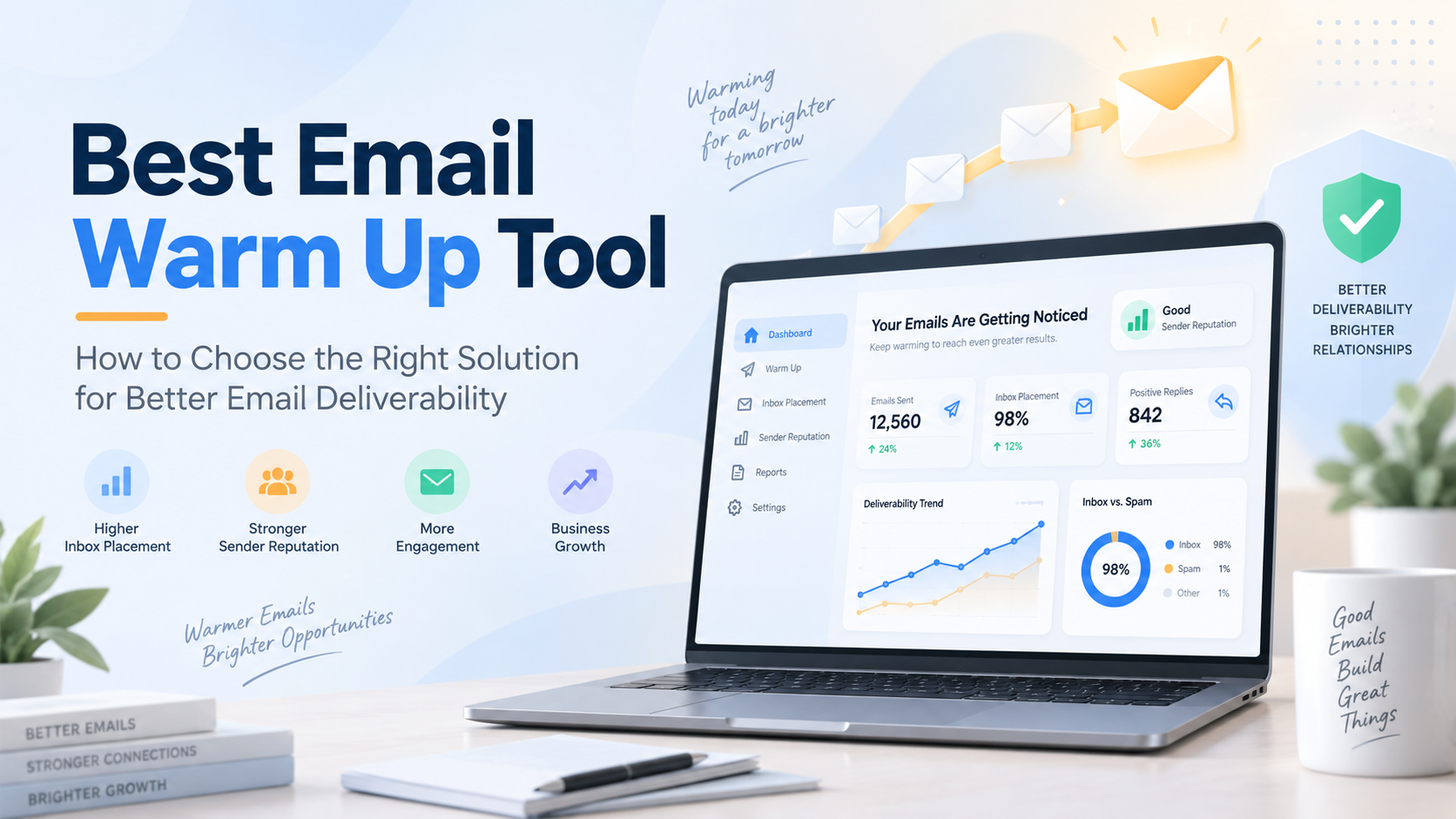


Have you ever wondered why your carefully crafted messages consistently land in the spam folder instead of the inbox? Many businesses struggle with poor sender reputation, which prevents their outreach from reaching the right audience. Utilizing the best email warm up tool can transform your deliverability by gradually increasing your sending volume and building trust with internet service providers.
This guide provides professional insights tailored for organizations in the United States looking to scale their outreach safely. We will explore essential decision criteria, safety protocols, and effective implementation strategies to ensure your domain remains healthy. By following these steps, you can master the art of controlled growth and maintain high placement rates.
Throughout this article, we cover everything from selecting the right software to measuring your success through key performance indicators. You will learn how to protect your sender identity while maximizing the impact of your communication efforts.
Key Takeaways
- Understand how automated warming improves your sender reputation and inbox placement.
- Learn the critical criteria for selecting a reliable solution for your business needs.
- Discover how to implement a gradual sending strategy to avoid triggering spam filters.
- Explore safety considerations that protect your domain from being blacklisted.
- Master the methods for tracking and measuring your deliverability success over time.
Start Building a Healthier Sender Reputation
Gradually warm your mailbox, improve sender reputation, and maintain stronger inbox placement with a reliable email warm up solution designed for consistent outreach.
What Email Warmup Means for Deliverability
Many senders mistakenly believe that an best email warm up tool is a magic button for instant inbox placement. In reality, these tools are designed to help you establish a pattern of consistent, healthy sending behavior. By simulating real-world interactions, you provide mailbox providers with the data they need to trust your sender identity.
How mailbox providers evaluate new sending behavior
Mailbox providers like Gmail and Outlook constantly analyze your traffic to determine if you are a legitimate sender. They look at your authentication protocols, such as SPF, DKIM, and DMARC, to verify your identity. If these are missing, your emails are likely to be flagged as suspicious immediately.
Beyond authentication, providers monitor your bounce rates and spam complaint signals. A sudden spike in volume from a new account is a major red flag that often triggers automated filters. The best email warm up tool helps you avoid these spikes by slowly increasing your daily volume over several weeks.
The difference between warming up an email account, domain, and IP address
It is important to distinguish between the three pillars of sender reputation. Your email account reputation is tied to the specific mailbox you use to send messages. Your domain reputation reflects the history of your website’s address, while your IP address reputation relates to the server infrastructure sending the mail. The best email warm up tool should account for these different reputation layers when managing your sending activity.
If you use a shared IP, your reputation is partially tied to other senders on that same network. However, your domain and account reputation remain under your direct control. Warming up ensures that each of these layers builds a positive history with receiving servers.
| Reputation Factor | Primary Focus | Impact Level |
|---|---|---|
| Email Account | Individual user behavior | High |
| Domain | Brand and link history | Critical |
| IP Address | Server infrastructure | Moderate |
Why gradual, authentic engagement matters more than sending volume
High sending volume is useless if your engagement metrics are poor. Mailbox providers prioritize signals like replies, opens, and the removal of emails from the spam folder. When you use the best email warm up tool, the goal is to generate these positive interactions naturally.
Authentic engagement proves that your recipients actually want to hear from you. By focusing on quality over quantity, you build a resilient reputation that can withstand minor fluctuations in your campaign strategy. Remember that consistency is the most effective way to maintain long-term inbox placement.
Does Email Warm Up Work for Every Sender?
You might be asking yourself: does email warm up work for every single sender? The short answer is that while it is a powerful tool for building reputation, it is not a universal cure for all deliverability problems. Understanding the nuance of this process is essential for your long-term success.
What email warmup can improve
The best email warm up tool can help automate this process while maintaining a gradual sending pattern. Using the best email warm up tool can help establish a positive history with mailbox providers like Gmail and Outlook. By simulating human-like interaction, you gradually signal that your domain is trustworthy. Consistent, authentic engagement helps you move from the spam folder to the primary inbox over time.
When warmup cannot repair poor list quality or spam complaints
It is a common misconception that warmup can fix a broken foundation. If your list is filled with invalid addresses or if you have a history of high spam complaints, even the best email warm up tool will not save you. You must address the root cause of your deliverability issues before expecting results. Even the best email warm up tool cannot compensate for poor list quality or repeated spam complaints.
“Deliverability is not just about the technical setup; it is about the relationship you build with your subscribers through every single email you send.”
How authentication, content, and engagement affect the outcome
Your success depends on a combination of technical standards and human behavior. Even with a perfect warmup, poor content or low engagement will trigger filters. You must ensure your strategy remains holistic. The best email warm up tool works most effectively when these technical and engagement factors are already addressed.
Using SPF, DKIM, and DMARC before you warm up your email
Before you begin any warmup process, you must secure your domain. These protocols act as your digital passport, proving to providers that you are who you say you are.
- SPF: Lists the IP addresses authorized to send on your behalf.
- DKIM: Adds a digital signature to verify your content has not been tampered with.
- DMARC: Provides instructions on how to handle emails that fail authentication.
Removing invalid and inactive contacts from your campaigns
Maintaining a clean list is just as important as your technical setup. Sending to inactive or non-existent addresses will damage your sender reputation faster than even the best email warm up tool can repair it.
| Factor | Impact on Deliverability | Action Required |
|---|---|---|
| List Hygiene | High | Clean regularly |
| Authentication | Critical | Setup SPF/DKIM/DMARC |
| Content Quality | High | Personalize messages |
Ultimately, does email warm up work? Yes, but only when it is part of a broader strategy that prioritizes list health and sender authentication.
When You Need an Email Warmup Tool
Identifying the precise moment to integrate an automated warmup process can save your domain from being blacklisted. While many senders wait until they face deliverability issues, proactive management is always the superior strategy for long-term success.
Launching a new mailbox or sending domain
When you register a new domain or set up a fresh mailbox, it lacks a history of positive engagement. Mailbox providers like Google and Microsoft view unknown senders with suspicion. Using an best email warm up tool during this initial phase helps establish a pattern of legitimate, human-like interaction before you begin high-volume outreach.
Recovering from low inbox placement
If your emails are consistently landing in the spam folder, simply increasing your sending volume will not fix the problem. You must first diagnose the root cause, such as poor list hygiene, missing authentication records, or low-quality content. Once these issues are addressed, the best email warm up tool can become part of your reputation recovery strategy.
“Deliverability is not a destination, but a continuous process of building trust with the inbox providers.”
Increasing outreach volume without creating sudden sending spikes
Sudden spikes in email volume are a major red flag for spam filters. If you plan to scale your campaigns, you must increase your daily sending limits gradually. The best email warm up tool ensures that your volume grows in a controlled, predictable manner that mimics natural growth rather than aggressive marketing. This is where the best email warm up tool can help maintain a controlled increase without requiring constant manual adjustments.
When manual warmup or email warm up free options may be enough
For small businesses or solopreneurs sending only a few dozen emails per day, complex automation might be overkill. You can often achieve sufficient results through manual conversations with colleagues or by using an email warm up free service. However, as your complexity grows, the time saved by a professional email warmup tool often outweighs the cost of an email warm up free alternative. Consistency is the most critical factor when deciding between manual efforts and paid automation.
How to Choose the Best Email Warm Up Tool
Finding the best email warm up tool involves more than just comparing monthly subscription costs. You need a solution that aligns with your specific outreach goals and technical infrastructure. A thoughtful selection process ensures your domain reputation remains protected while you scale your communication efforts. The best email warm up tool should fit your sending volume, provider, security requirements, and outreach goals.

Match the tool to your sending volume and campaign type
The best email warm up tool should scale alongside your business needs. The best email warm up tool should also match your sending volume and campaign requirements. If you are a small startup, you might only need basic features for a single mailbox. However, high-volume senders require robust platforms that handle multiple domains without triggering security alerts.
Check whether the platform supports your email provider
Not every best email warmup service works seamlessly with every provider. Verify that the software integrates directly with your specific host, such as Google Workspace, Microsoft 365, or private SMTP servers. Compatibility issues can lead to authentication errors that damage your deliverability rather than helping it.
Prioritize realistic activity over artificial engagement
The most effective email warm up software mimics human behavior rather than relying on bot-like patterns. Look for services that generate unique, context-aware conversations. Avoid platforms that send repetitive, low-quality messages, as these can quickly flag your account as spam.
Review automation controls, scheduling, and customization
You should maintain full control over your sending schedule. The best tools allow you to set custom ramp-up speeds and define specific time zones for activity. Granular customization prevents sudden spikes in volume that often cause mailbox providers to block your domain.
Compare pricing, account limits, and cancellation terms
Evaluate the total cost of ownership beyond the initial sticker price. Check if the service charges per mailbox or per domain, as this significantly impacts your budget. Always review the cancellation policy to ensure you are not locked into long-term contracts that do not serve your current needs.
Questions to ask before purchasing email warm up software
- Does the service provide transparent reporting on inbox placement?
- How does the platform handle potential security risks or data privacy?
- Can I easily pause or adjust my warming schedule if my bounce rate increases?
- Is the best email warmup service compatible with my existing CRM or outreach stack?
Features That Matter in the Best Email Warmup Tools
When you evaluate the best email warm up tools, you must look beyond basic automation to find robust, data-driven features. Choosing the right email warm up software is a strategic decision that directly impacts your sender reputation and long-term outreach success.
Mailbox rotation and gradual sending controls
Effective tools provide granular control over your daily sending limits. You should be able to set a gradual increase in volume to mimic natural human behavior, which prevents triggering spam filters. Mailbox rotation ensures that your activity remains distributed, reducing the risk of sudden spikes that mailbox providers often flag as suspicious.
Inbox placement and spam-folder monitoring
Real-time tracking is essential for understanding how your emails are perceived by providers. The best email warm up tool should monitor whether your messages land in the primary inbox or the spam folder. This visibility allows you to pivot your strategy immediately if you notice a downward trend in your placement rates.
Authentication and domain-health checks
Your technical setup serves as the foundation for all your sending efforts. A high-quality tool will automatically verify your SPF, DKIM, and DMARC records to ensure your domain is properly authenticated. These checks prevent unauthorized use of your domain and signal to providers that your emails are legitimate.
Reputation alerts and sending-volume recommendations
Proactive management is far superior to reactive troubleshooting. Look for software that sends automated alerts when your reputation score fluctuates or when your bounce rates climb. These systems often provide data-backed recommendations on how much you should adjust your volume to stay within safe thresholds. The best email warm up tool should help you identify these changes before they become larger deliverability problems.
Integrations with Gmail, Microsoft 365, and outreach platforms
Seamless connectivity is vital for a smooth workflow. Ensure your chosen solution offers native integrations with Gmail and Microsoft 365, as these are the most common providers for professional outreach. Compatibility with your existing CRM or outreach platform allows you to sync your warmup activity with your actual campaign schedule.
Why transparent reporting is more useful than a single deliverability score
Many platforms offer a single “health score,” but this metric often hides critical details. Transparent reporting provides a breakdown of bounce rates, reply quality, and specific provider feedback. By analyzing these individual data points, you gain a clearer picture of your domain health than a simplified, opaque score could ever provide.
Comparing Automated, Manual, and Free Warmup Methods
Navigating the landscape of email warmup requires balancing your budget, time, and technical requirements. You must decide whether to invest in specialized technology or dedicate your own resources to the process.
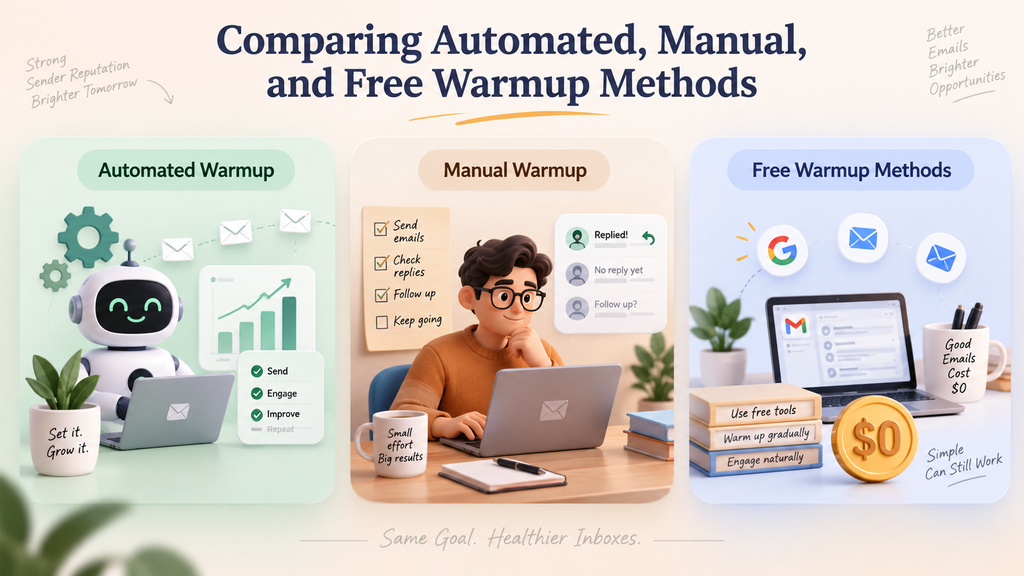
Automated email warmup platforms
Using the best email warm up tool can be an efficient way to scale your deliverability efforts. These best email warm up tools handle the complex task of interacting with various mailbox providers to build a positive sender reputation.
Automation allows you to set specific parameters for volume and engagement. This ensures that your domain activity appears natural and consistent, which is vital for long-term success.
Manual conversations and controlled campaign activity
If you prefer total control, you might choose to conduct manual outreach to colleagues or existing contacts. This method requires significant time but provides a high level of authenticity.
By engaging in genuine, two-way conversations, you signal to mailbox providers that your account is used for legitimate communication. However, this approach is difficult to scale as your outreach volume grows.
Email warm up free tools and trial plans
Many providers offer an email warm up free tier or limited trial to help you get started. These options are excellent for testing the waters without an immediate financial commitment.
Keep in mind that free versions often lack advanced reporting features or priority support. You may find that these tools provide fewer safeguards compared to comprehensive email warm up software packages.
Risks of relying on engagement networks without reviewing their practices
Some services rely on large networks of mailboxes to simulate engagement. You should be cautious, as artificial interactions may not reflect genuine recipient interest.
If a network uses low-quality accounts, your domain could be flagged for suspicious behavior. Always verify that the service prioritizes realistic, human-like activity over high-volume, automated spam.
| Method | Effort | Control | Scalability |
|---|---|---|---|
| Automated Platforms | Low | High | High |
| Manual Outreach | High | Very High | Low |
| Free/Trial Tools | Medium | Medium | Low |
Safety, Compliance, and Deliverability Risks to Check
While tools can accelerate your growth, they also introduce specific risks that you must manage to protect your sender reputation. Selecting the best email warm up tool is only the first step in maintaining a healthy and compliant sending environment. You must remain vigilant about how these platforms interact with your infrastructure.
Protect Your Email Deliverability
Take control of your sending volume with automated warmup, monitoring, and gradual scaling that helps protect your domain reputation while supporting growing campaigns.
How artificial engagement can undermine sender reputation
Some platforms generate fake opens or replies to simulate activity. Mailbox providers like Google and Microsoft are increasingly sophisticated at detecting these patterns. If they identify artificial behavior, they may blacklist your domain, causing long-term damage to your deliverability.
Protecting customer data and mailbox credentials
Granting third-party access to your mailbox is a significant security decision. You should only use services that prioritize data encryption and secure authentication protocols. Never share your primary login credentials with unverified or obscure automation platforms.
Checking compliance with provider policies and applicable laws
Every email campaign must align with regulations like the CAN-SPAM Act in the United States. You are responsible for ensuring that your automation does not violate the terms of service of your email provider. Failure to comply can lead to account suspension or legal consequences.
Why a warmup tool should never replace permission-based email marketing
Even the best email warm up tool cannot substitute for a high-quality, opted-in mailing list. Automation is meant to support your outreach, not to bypass the need for genuine recipient interest. Always prioritize content that provides value to your subscribers.
Warning signs of unsafe automation or misleading deliverability claims
Be wary of services that promise “guaranteed” inbox placement or instant results. These claims are often red flags for unsafe automation practices that could trigger spam filters. If a tool lacks transparency regarding its network or methods, it is likely a risk to your brand.
| Practice Category | Safe Approach | High-Risk Behavior |
|---|---|---|
| Engagement | Real human interaction | Bot-generated replies |
| Data Security | OAuth authentication | Sharing account passwords |
| Compliance | Permission-based lists | Purchased or scraped data |
| Transparency | Clear reporting logs | Hidden network activity |
How to Warm Up Your Email Account With a Tool
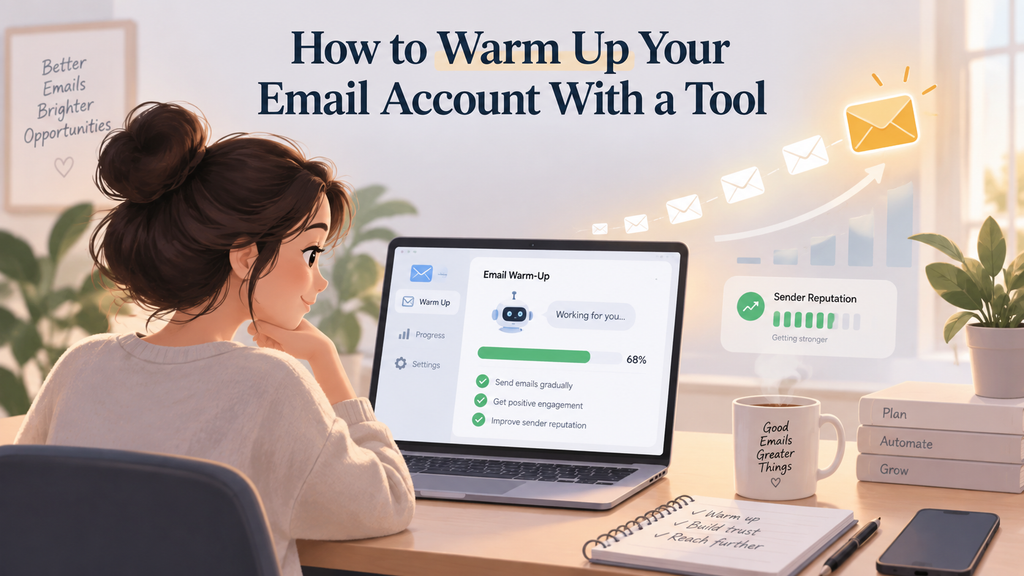
When you decide to warm up your email, the process demands patience and a focus on long-term deliverability. A methodical approach ensures that mailbox providers view your domain as a trustworthy sender rather than a source of unsolicited messages.
By using a dedicated tool, you can automate the complex interactions required to build a solid reputation. Choosing the best email warm up tool for your infrastructure can make this process easier to manage consistently
Connect and authenticate your mailbox securely
Before you begin, you must ensure your technical foundation is rock solid. Connect your mailbox to the chosen platform using secure API integrations or IMAP settings. Proper authentication through SPF, DKIM, and DMARC records is non-negotiable, as these protocols verify your identity to receiving servers.
Set a conservative starting volume
Never rush the initial phase of your campaign. Start with a very low daily volume, often just a few emails per day, to mimic natural human behavior. This conservative approach prevents triggering automated spam filters that look for sudden, massive spikes in activity from new accounts.
Increase sending gradually according to real engagement
As your reputation stabilizes, you can slowly scale your daily volume. The best tools adjust this growth based on actual engagement metrics like opens and replies. Consistent, positive interaction signals to providers that your emails are expected and welcomed by recipients.
Pause automation when bounce rates or spam placement rises
Monitoring is essential throughout the entire process. If you notice an uptick in bounce rates or emails landing in the spam folder, pause your automation immediately. This break allows your account to recover and prevents further damage to your sender score.
Transition from warmup activity to legitimate outreach and campaigns
Once your account shows a history of healthy engagement, you can begin shifting toward your actual business outreach. Gradually reduce the artificial warmup traffic while increasing your real campaign volume. This seamless transition maintains your hard-earned reputation while you scale your marketing efforts.
A practical monitoring schedule for the first several weeks
| Week | Daily Volume Goal | Primary Focus |
|---|---|---|
| Week 1 | 5-10 Emails | Authentication & Setup |
| Week 2 | 15-30 Emails | Engagement Monitoring |
| Week 3 | 40-60 Emails | Bounce Rate Analysis |
| Week 4 | 80-100 Emails | Transition to Outreach |
How to Evaluate Warmup Inbox Reviews and Tool Results
Navigating the landscape of email deliverability tools demands a rigorous approach to verifying performance claims. When you search for the best email warmup service, you will encounter a wide array of marketing materials that promise instant results. However, you must look beyond these claims to ensure the tool actually improves your sender reputation.
Separate verified user experiences from promotional testimonials
Many warmup inbox reviews are biased or lack the necessary context to be useful. Look for feedback that includes specific methodologies, such as the duration of the test and the starting volume of emails sent. Avoid testimonials that only mention “better results” without providing concrete data points or screenshots of their dashboard.
Compare inbox placement, bounce rate, and reply quality
A high-quality tool should provide transparent reporting on where your emails land. You should prioritize platforms that track these three core metrics:
- Inbox Placement Rate: The percentage of emails that reach the primary inbox.
- Bounce Rate: The frequency of failed deliveries due to invalid addresses or blocks.
- Reply Quality: The level of engagement generated by the automated warmup conversations.
Measure results across Gmail, Microsoft Outlook, and other providers
Deliverability is not uniform across all mailbox providers. A tool that performs well with Gmail might struggle with Microsoft Outlook or smaller regional providers. Ensure the service you choose provides granular data for each major provider to give you a complete picture of your domain health.
Look for consistent performance instead of short-term improvements
Avoid services that show a sudden spike in performance followed by a decline. True deliverability improvements take time and require a steady, gradual increase in volume. Consistent data over several weeks is a much stronger indicator of a reliable service than a single week of high inbox placement.
Use a controlled test before connecting multiple mailboxes
Never connect your entire sending infrastructure to a new tool immediately. Start by running a controlled test with one or two secondary mailboxes to observe how the platform handles the warmup process. This approach allows you to verify the tool’s safety and effectiveness without risking your primary domain’s reputation.
Metrics that indicate healthier deliverability
To assess your progress, keep a close watch on the following indicators during your trial period:
| Metric | Goal | Why it matters |
|---|---|---|
| Spam Folder Rate | Below 1% | Indicates high trust from providers. |
| Authentication Status | 100% Pass | Ensures SPF, DKIM, and DMARC are aligned. |
| Engagement Ratio | Increasing | Shows that your emails are being opened and read. |
Scale Your Outreach With Confidence
Choose a professional email warm up solution with flexible controls, transparent reporting, and secure integrations to support reliable deliverability as your outreach grows.
Conclusion
Achieving high inbox placement requires a strategic approach to your outreach efforts. The best email warm up tool serves as a powerful asset, but it functions best when paired with solid authentication and high-quality contact lists. You must prioritize authentic engagement and permission-based marketing to see lasting results.
No software can fix fundamental reputation issues caused by poor content or spam complaints. You should view your chosen platform as a support system for your broader strategy rather than a standalone solution. The best email warm up tool should support this broader strategy rather than replace it. Always verify that your provider supports your specific email infrastructure, such as Google Workspace or Microsoft 365, before committing to a long-term plan.
Take the time to compare reporting features, safety controls, and pricing structures across different platforms. Running a controlled test on a single mailbox helps you gauge performance before scaling your operations. By selecting the best email warm up tool with care, you build a foundation for reliable communication and stronger connections with your audience in the United States.
FAQs
Does email warm up work for every type of sender and domain?
While the best email warm up tool can significantly improve your mailbox reputation, it is not a standalone solution for poor sending practices. To answer the common question, “does email warm up work,” you must understand that it works best when combined with proper technical setup. If you haven’t configured SPF, DKIM, and DMARC, or if you are sending to unverified lists, even the best email warmup service cannot fully protect you from spam filters. Warmup is most effective for new domains or those looking to scale volume without triggering security alerts at Gmail or Microsoft 365.
How do I choose the best email warm up tool for my business?
When evaluating the best email warm up tools, you should prioritize platforms that offer realistic engagement and seamless integration with your email provider. The right email warmup tool should provide you with granular control over your sending schedule, allowing for a gradual increase in volume. Look for email warm up software that includes features like mailbox rotation, inbox placement monitoring, and real-time alerts for domain health to ensure your outreach remains consistent and professional.
Can I effectively warm up your email account using a free tool?
You can find email warm up free options or trial plans, but they often come with limitations. Most free versions restrict the number of daily interactions or lack the advanced spam-folder monitoring found in a premium best email warmup service. If you are managing a small volume, a free tool might suffice; however, for high-stakes professional outreach in the United States, investing in a dedicated best email warm up tool ensures you have the reporting and security features necessary to maintain a high sender score.
What should I look for when reading warmup inbox reviews?
When you analyze warmup inbox reviews, it is essential to distinguish between verified user data and promotional content. Look for feedback regarding consistent inbox placement and how the tool handles bounce rates over several weeks. Authentic reviews for an email warmup tool will often mention how easy it is to connect to providers like Outlook and whether the automated replies feel natural. Avoid software that has a history of triggering security warnings or those that lack transparent reporting on domain health.
Is it safe to use automated email warm up software for my primary domain?
Using email warm up software is generally safe if the tool prioritizes authentic-looking interactions and follows provider policies. To safely warm up your email, ensure the tool you choose does not create sudden, unnatural spikes in activity, which can look suspicious to mailbox providers. The best email warm up tool will allow you to start with a conservative volume and scale slowly, ensuring your mailbox credentials and data remain secure while building a long-term positive reputation.
How long does it typically take to warm up your email account before starting a campaign?
Most experts recommend using an email warmup tool for at least three to four weeks before launching a high-volume campaign. During this time, the best email warmup service will gradually increase the number of messages sent and received, ensuring a high engagement rate. Even after you begin your legitimate outreach, keeping your email warm up software active at a lower volume can help stabilize your reputation and protect your inbox placement against occasional spikes in spam complaints.