




Have you ever wondered how some small businesses manage to stay connected with their customers, promote new products, and bring back previous buyers without spending a fortune on advertising? One of their most useful tools might be sitting right in their customers’ inboxes: email marketing.
Running a small business already means handling multiple responsibilities. You have to attract customers, manage orders, answer questions, create content, and keep your business moving. Finding enough time and money for marketing can feel like another full-time job. This is where choosing the best email marketing for small business can make a meaningful difference.
Email marketing gives you a direct way to communicate with people who have shown interest in your products or services. Choosing the best email marketing for small business can help you make these conversations more consistent and organized.
You can share updates, introduce new offers, welcome new subscribers, educate potential customers, and maintain relationships with existing buyers. More importantly, you can do much of this without manually sending every message.
However, choosing a platform is not always easy. There are dozens of email marketing services available, and each comes with different features, pricing structures, automation options, and limitations. Some are designed for beginners, while others focus on advanced automation, ecommerce, or customer relationship management.
To make your decision easier, we have compared ten popular platforms. This comparison will help you identify the best email marketing for small business based on your goals, budget, and preferred features. Whether you are a freelancer, startup founder, local business owner, online seller, or marketing professional, this guide will help you understand what each tool offers and where it may fit into your business.
Key Takeaways
- MailerRocket is worth considering if you need campaign scheduling, autoresponders, subscriber management, AI email writing, and branded links.
- The right platform depends on your subscriber count, marketing goals, budget, and required automation features.
- Free plans can be useful for beginners, but always check their subscriber limits, monthly sending allowances, and feature restrictions.
- Email authentication, permission-based subscriber lists, and relevant content are essential for maintaining healthy email deliverability.
- You do not need complicated software to begin. Start with a simple email strategy and expand as your business grows.
Start Your Free Email Marketing Trial
Try MailerRocket’s seven-day free trial to explore campaign scheduling, autoresponders, subscriber management, and AI-assisted email creation before deciding whether it fits your business needs today.
Why Does Your Small Business Need Email Marketing?
Before comparing platforms, let’s understand why email marketing deserves a place in your marketing strategy.
Imagine someone visits your website, checks your products, and leaves without making a purchase. You may never see that person again unless you have a way to maintain communication.
Now imagine that the visitor voluntarily subscribes to your newsletter. You can send useful information, introduce relevant products, answer common questions, and remind them about your business over time.
That is the real value of email marketing. It also explains why finding the best email marketing for small business matters when you want to build lasting customer relationships.
Here are some important benefits:
1. Direct Communication With Your Audience
Unlike social media posts, which depend on platform algorithms and changing visibility rules, email lets you communicate directly with subscribers who have given you permission to contact them. The best email marketing for small business should make this communication simple to manage.
2. Affordable Marketing
You can begin with a relatively small subscriber list and scale your campaigns gradually. You do not necessarily need a large advertising budget to maintain regular communication. That is one reason many owners consider the best email marketing for small business an important part of their marketing budget.
3. Better Customer Relationships
Sending helpful information, product updates, useful resources, and personalized messages helps customers become familiar with your business. These relationship-building features are worth considering when choosing the best email marketing for small business.
4. Marketing Automation
You can schedule messages and create automated sequences for activities such as welcoming new subscribers or following up with interested leads. When comparing the best email marketing for small business, look for automation features that match your actual workflow.
5. Measurable Campaign Performance
Email marketing platforms commonly provide reporting on delivery, opens, clicks, bounces, and unsubscribes. These insights help you understand what your audience responds to. Tracking these results can help you decide whether your chosen best email marketing for small business is delivering the outcomes you expect.
The key is selecting the best email marketing for small business based on what you actually need rather than paying for features you may never use.
10 Best Email Marketing Tools for Small Businesses in 2026
Let’s explore ten platforms that small businesses can consider. Each tool serves a slightly different purpose, so the best choice will depend on your business model and marketing requirements. The best email marketing for small business may be different for a local shop, an online store, and a service-based company.
1. MailerRocket: A Practical Email Marketing Platform for Campaign Management and Automation
Best for: Businesses, affiliates, and marketers looking for campaign scheduling, subscriber management, autoresponders, and AI-assisted email creation.
When comparing the best email marketing for small business, MailerRocket deserves the first place in this list, particularly for businesses that want to manage their email campaigns and subscriber lists through one platform.
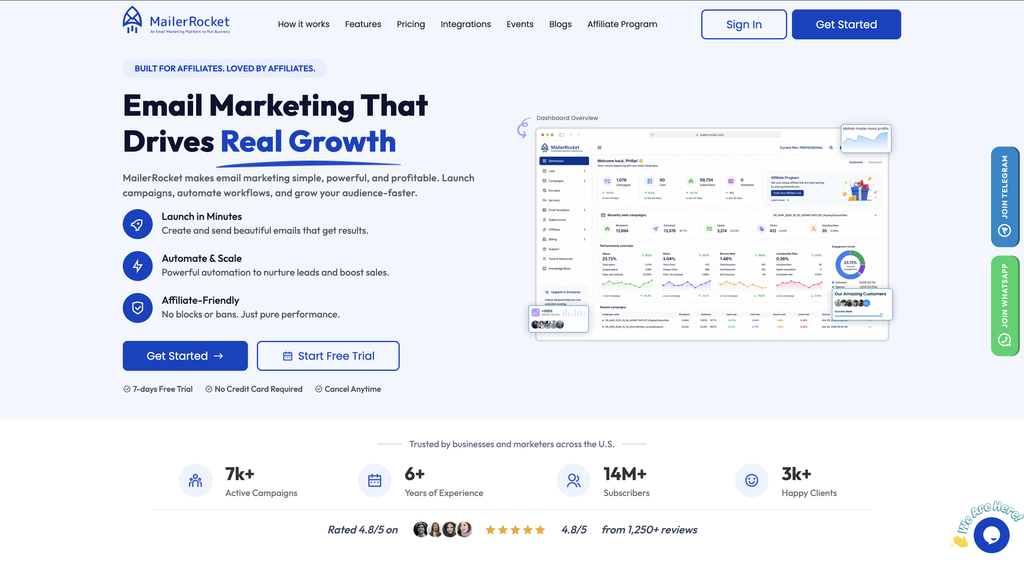
MailerRocket focuses on making email campaign management more straightforward. Instead of handling every marketing message manually, businesses can use its scheduling and autoresponder features to organize communications and maintain contact with their audience.
One useful aspect of the platform is that it combines several campaign management features with AI-assisted email writing. This can be helpful when you need to create regular promotional emails, product announcements, newsletters, or follow-up messages but do not want to start every email from a blank page.
These capabilities make MailerRocket worth comparing when researching the best email marketing for small business.
Key Features of MailerRocket
1. Email Campaign Scheduling
MailerRocket supports one-time, recurring, and broadcast campaign scheduling. This allows businesses to plan messages in advance rather than having to send every campaign manually.
For example, a small online store can prepare a product announcement and schedule it for a suitable time. A service business can plan regular updates for its subscribers. For businesses with recurring campaigns, the best email marketing for small business should offer convenient scheduling options.
2. Subscriber and List Management
Managing subscribers becomes increasingly important as your audience grows.
MailerRocket provides subscriber import and export functionality, list-based signup forms, subscriber management, segmentation, and custom fields. These options help organize contacts and make it easier to send relevant messages to different audience groups. This is an important consideration when selecting the best email marketing for small business as your subscriber list grows.
3. Autoresponders
Autoresponders allow you to send automatic messages based on your email marketing setup.
For example, when someone subscribes to your newsletter, you can use an autoresponder to send a welcome message. You can also create follow-up communication to introduce your services or share helpful information. A platform offering these options can be a useful candidate for the best email marketing for small business.
4. AI Email Content Generator
Writing marketing emails regularly can become time-consuming. MailerRocket offers an AI Email Content Generator that can help generate subject lines, email body content, and calls to action.
It also supports different tones, languages, and email types. You can use the generated content as a starting point and edit it to match your brand voice. For busy business owners, this type of assistance can influence which platform they consider the best email marketing for small business.
Remember to review AI-generated emails before sending them. Your message should sound natural, accurate, and relevant to your customers.
5. Drag-and-Drop Email Builder
You do not necessarily need coding knowledge to create an email campaign. MailerRocket provides a drag-and-drop editor, email templates, and mobile-responsive design options.
This can help small businesses create professional-looking emails without building every layout from scratch. An easy-to-use editor is another feature worth checking when choosing the best email marketing for small business.
6. Domain Authentication and Branded Links
MailerRocket lists domain authentication and branded links among its features. These are useful considerations when setting up business email campaigns.
Proper authentication helps receiving email providers verify that messages are authorized to come from your domain. However, authentication alone cannot guarantee inbox placement.
MailerRocket Pricing
MailerRocket publishes several plans based on subscriber capacity or monthly email volume.
Its listed plans include:
- Starter: Up to 1,000 subscribers.
- Basic: Up to 5,000 subscribers.
- Pro: Up to 25,000 subscribers.
- Premium: Up to 50,000 subscribers.
- Supreme: Up to 100,000 subscribers.
- Additional email-volume plans are also available.
The website displays promotional pricing, and the amount depends on the selected plan and billing option. Compare these costs with other providers to determine whether MailerRocket offers the best email marketing for small business within your budget.
Check the official pricing page for the latest rates and exact limits before subscribing. MailerRocket also advertises a seven-day free trial without requiring a credit card.
What Makes MailerRocket Worth Considering?
MailerRocket brings together campaign scheduling, subscriber management, autoresponders, AI email writing, and branded links. These features can be useful if you want to manage regular email communication without relying on multiple separate tools. For this reason, businesses comparing the best email marketing for small business may want to explore its available features.
It may be particularly relevant to affiliate marketers, small businesses, and marketing professionals who need to organize campaigns and communicate with their audiences.
Things to Consider
MailerRocket may not be the right choice for every business. Before purchasing, check whether its available integrations, reporting, automation capabilities, support arrangements, and sending limits match your requirements.
If you need a highly specialized ecommerce CRM or a large ecosystem of third-party integrations, compare those requirements carefully.
Our take: If campaign scheduling, subscriber management, autoresponders, and AI-assisted content creation are your priorities, MailerRocket is a platform worth exploring. You can visit MailerRocket to review its features and try the advertised free trial.
2. Mailchimp: A Familiar Option for Small Business Email Marketing
Best for: Beginners and businesses looking for an established email marketing platform with campaign design and marketing integrations.
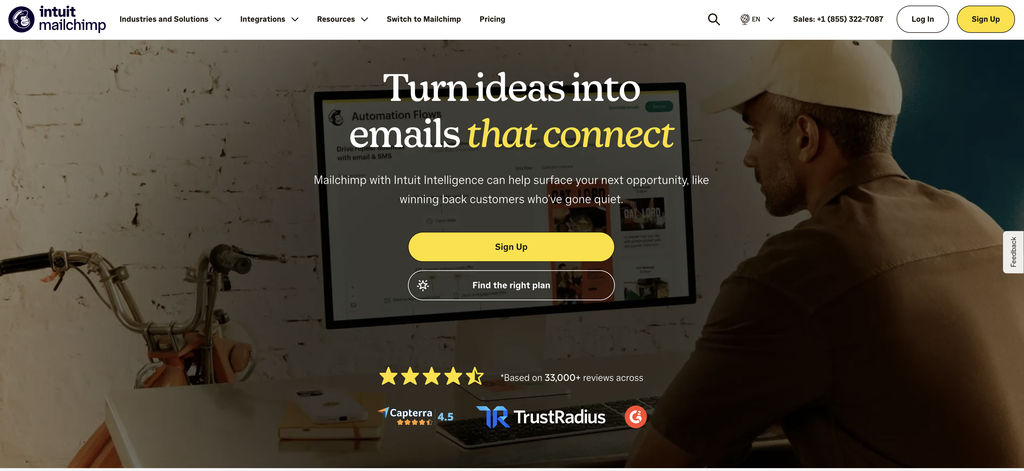
Mailchimp is one of the recognizable names in email marketing. It provides tools for creating campaigns, managing audiences, designing emails, and reviewing campaign performance.
For businesses just starting their email marketing journey, a familiar interface and extensive collection of learning resources can be useful.
Key Features
- Email campaign builder.
- Email templates.
- Audience management.
- Marketing automation.
- Campaign reporting.
- Integrations with supported third-party services.
- Customer journey tools on eligible plans.
Why Consider Mailchimp?
Mailchimp can be useful if you want a recognizable platform with a broad marketing ecosystem. It is worth comparing its features and pricing with other options before deciding which is the best email marketing for small business. Its campaign builder helps you create branded messages, while its reporting tools help you understand how subscribers interact with your emails.
For example, a local clothing business could use it to announce seasonal collections, share promotional offers, and maintain contact with previous customers.
Things to Consider
Some advanced features are available only on paid plans. Pricing can also increase as your contact list grows, so review the subscriber limits and sending allowances carefully.
Mailchimp is a reasonable option for businesses that value its established ecosystem, but compare its cost with other providers before making a decision.
3. MailerLite: A Simple Platform for Small Teams and Beginners
Best for: Small businesses, bloggers, freelancers, and beginners who prefer a relatively straightforward email marketing experience.
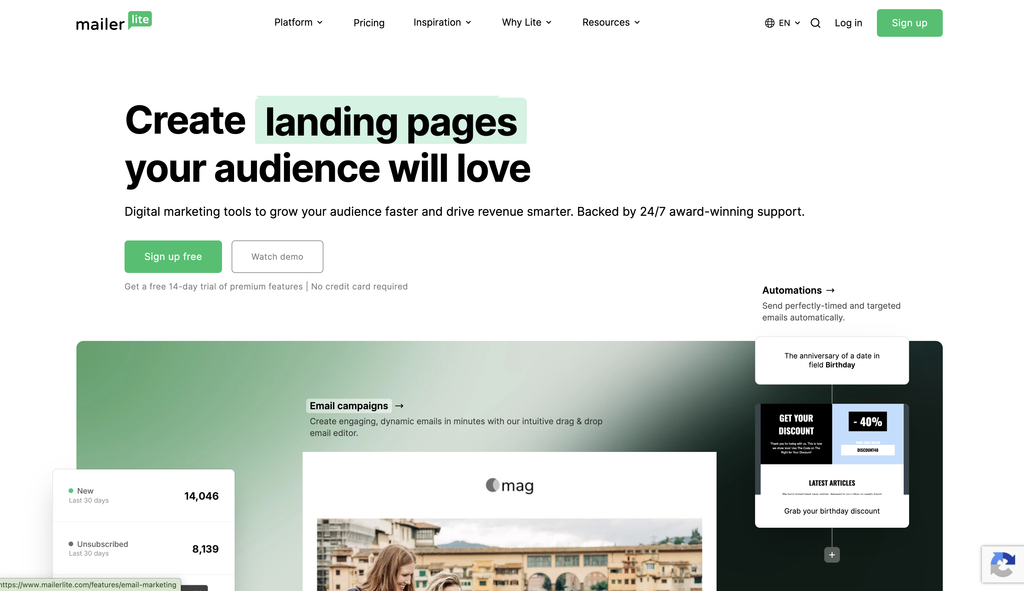
MailerLite focuses on making email marketing accessible to users who may not have extensive technical experience. This makes it worth considering when comparing the best email marketing for small business for beginners.
It offers email campaign creation, subscriber management, automation, landing pages, and other marketing features, depending on the subscription plan.
Key Features
- Drag-and-drop email editor.
- Newsletter creation.
- Email automation.
- Landing pages.
- Signup forms.
- Subscriber management.
- Campaign reporting.
Why Consider MailerLite?
A small business does not always need a complicated marketing system. Sometimes, the ability to create a newsletter, collect subscribers, and send regular updates is enough.
For example, a fitness coach can use an email signup form to collect interested subscribers and send weekly workout advice, class announcements, and educational content.
MailerLite can be a good starting point if simplicity is your main priority. Businesses looking for the best email marketing for small business should consider whether this simple approach meets their future needs too.
Things to Consider
Check which features are included in your selected plan. Subscriber limits, automation options, and other capabilities can differ between subscription levels.
If your business requires advanced CRM features or highly customized automation, compare other platforms too.
4. Brevo: Useful for Businesses That Want Email and Other Communication Channels
Best for: Small businesses interested in combining email marketing with additional customer communication tools.
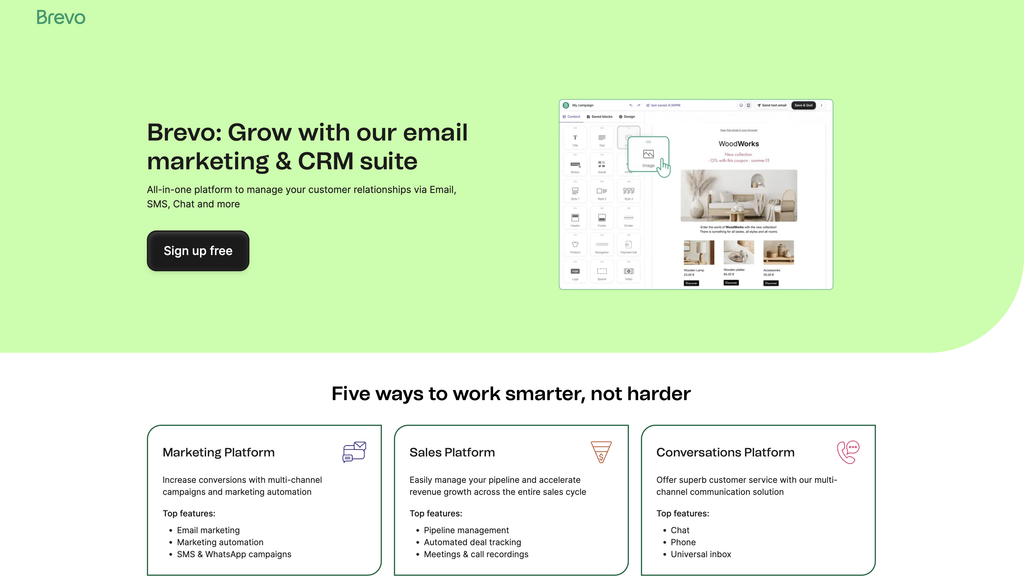
Brevo, previously known as Sendinblue, offers a broader communication platform that includes email marketing and other supported channels.
It can be useful for businesses that want to manage customer communication beyond newsletters.
Key Features
- Email campaigns.
- Marketing automation.
- Contact management.
- Transactional email capabilities.
- SMS marketing on supported plans.
- Reporting and analytics.
- Customer relationship management features.
Why Consider Brevo?
Think about a small ecommerce business that wants to send order-related updates as well as promotional emails.
Using a platform with multiple communication capabilities may help organize these activities in one place. This combination may appeal to owners searching for the best email marketing for small business with broader communication options.
Brevo’s pricing model has historically included plans based on email sending volume rather than simply charging according to the number of stored contacts. Check its current pricing details because allowances and plan conditions can change.
Things to Consider
Some features and sending allowances depend on your subscription. If you only need basic newsletters, a simpler platform may be sufficient.
Brevo is worth comparing if your business wants a combination of email and customer communication tools. These combined capabilities may help you find the best email marketing for small business when you need more than newsletters.
5. ActiveCampaign: Best for Advanced Email Automation
Best for: Growing businesses that need more advanced automation and customer relationship management.
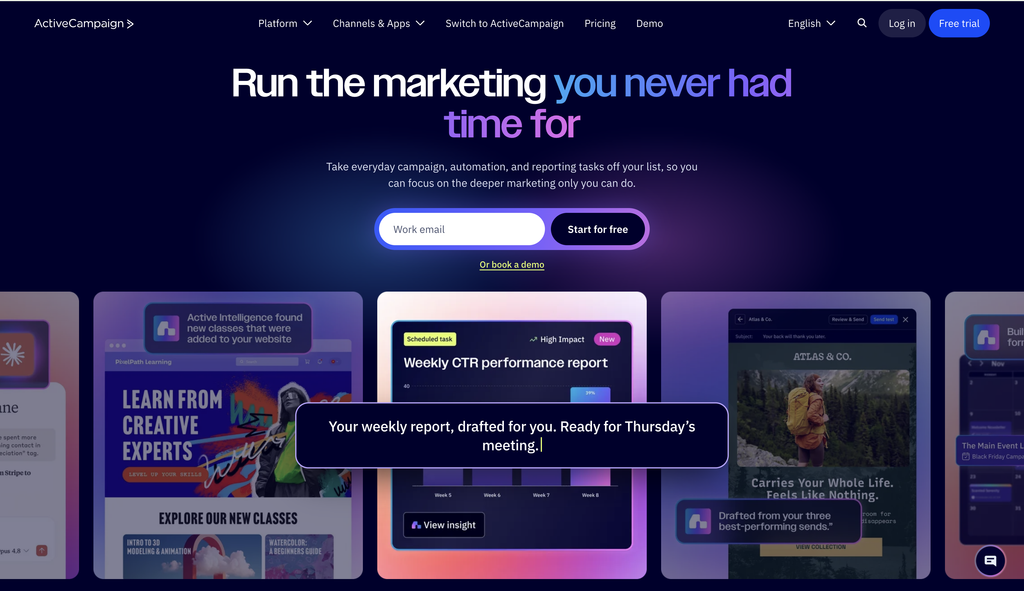
ActiveCampaign is designed for businesses that want to create detailed customer journeys rather than simply send newsletters.
Its automation capabilities can help businesses organize communication based on subscriber actions, interests, and other available customer information.
Key Features
- Marketing automation.
- Email campaigns.
- Customer segmentation.
- CRM capabilities.
- Lead scoring.
- Automated customer journeys.
- Reporting.
Why Consider ActiveCampaign?
Imagine someone downloads a free guide from your website. You want to send a welcome email, follow up with additional educational content, and introduce a relevant service later.
With suitable automation workflows, you can organize this sequence without manually sending each message.
This is where ActiveCampaign can be useful. Its automation capabilities may make it a strong candidate for businesses whose definition of the best email marketing for small business includes detailed customer journeys.
Things to Consider
Its extensive automation options may feel complicated for beginners. Setting up detailed workflows also requires time and a clear understanding of your customer journey.
Pricing and available features depend on the selected plan and contact volume. Review these factors carefully when comparing the best email marketing for small business for advanced automation.
If automation is central to your marketing strategy, it deserves a place on your shortlist.
6. Constant Contact: Useful for Local Businesses and Organizations
Best for: Local businesses, event organizers, nonprofits, and small organizations that want accessible marketing tools.
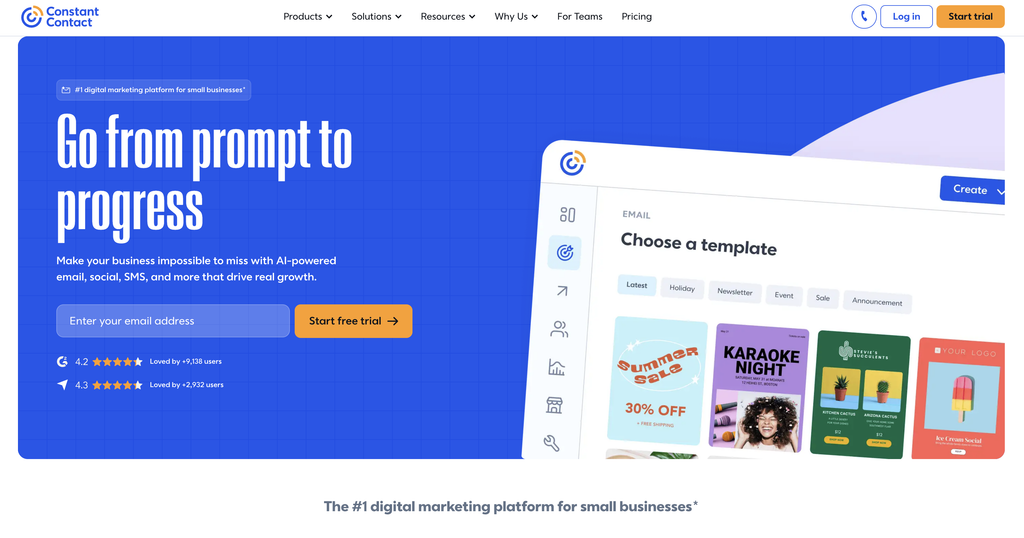
Constant Contact has been providing email marketing services for many years. It offers campaign creation, contact management, event-related marketing capabilities, and additional promotional features.
Key Features
- Email templates.
- Campaign creation.
- Contact management.
- Reporting.
- Marketing automation.
- Event marketing tools.
- Social media marketing features, depending on the plan.
Why Consider Constant Contact?
Consider a local restaurant that wants to announce seasonal menus, special events, or holiday offers.
A business like this can benefit from having a platform to prepare branded email announcements and maintain regular communication with interested customers.
Constant Contact may also be useful for community organizations that need to share updates and event information. Compare its event marketing features with other options to find the best email marketing for small business for your organization.
When choosing the best email marketing for small business, consider whether event-related features are important to your organization.
Things to Consider
Review the available plans and features before choosing it. Some advanced marketing features may require a higher subscription.
If you only want basic email campaigns, compare the cost against simpler alternatives.
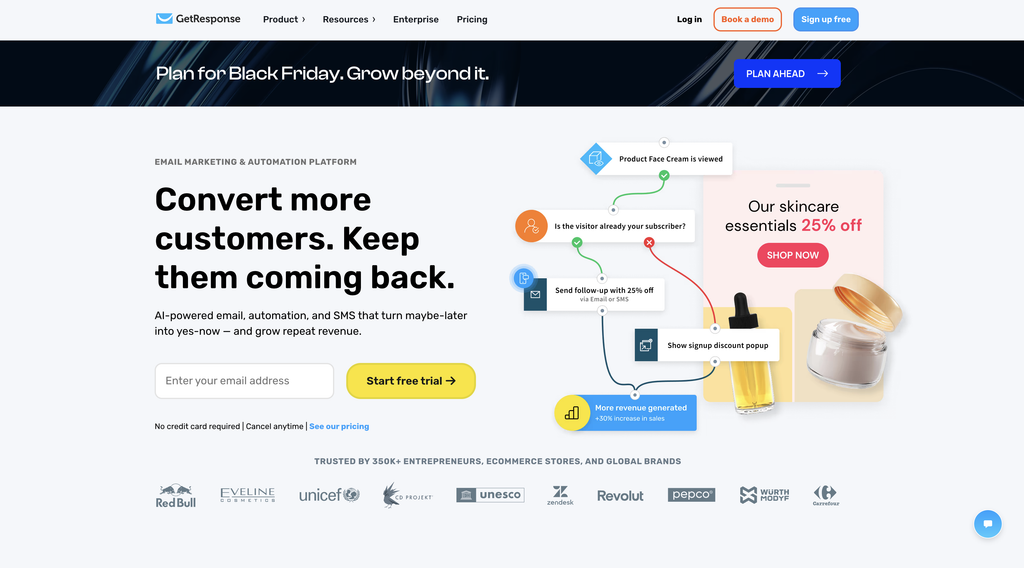
7. GetResponse: Suitable for Businesses Using Email Alongside Funnels
Best for: Businesses interested in email marketing, landing pages, sales funnels, and other marketing activities.
GetResponse offers more than basic newsletter creation. Its platform includes email marketing and additional tools designed to support customer acquisition and online marketing campaigns.
Key Features
- Email campaign builder.
- Marketing automation.
- Landing pages.
- Signup forms.
- Audience segmentation.
- Sales funnel tools.
- Webinar capabilities on supported plans.
Why Consider GetResponse?
Suppose you sell an online course. You need a landing page to explain the course, a signup form to collect interested visitors, and an email sequence to introduce the course and answer common questions.
A platform offering several of these capabilities can help organize your marketing process.
GetResponse may be worth considering if your strategy involves more than sending regular newsletters. Compare its additional tools with other options before deciding whether it is the best email marketing for small business for your marketing strategy.
Things to Consider
Its wider feature set may be unnecessary for a business that only wants occasional email updates.
Check the available plan limits and the specific features included in your subscription.
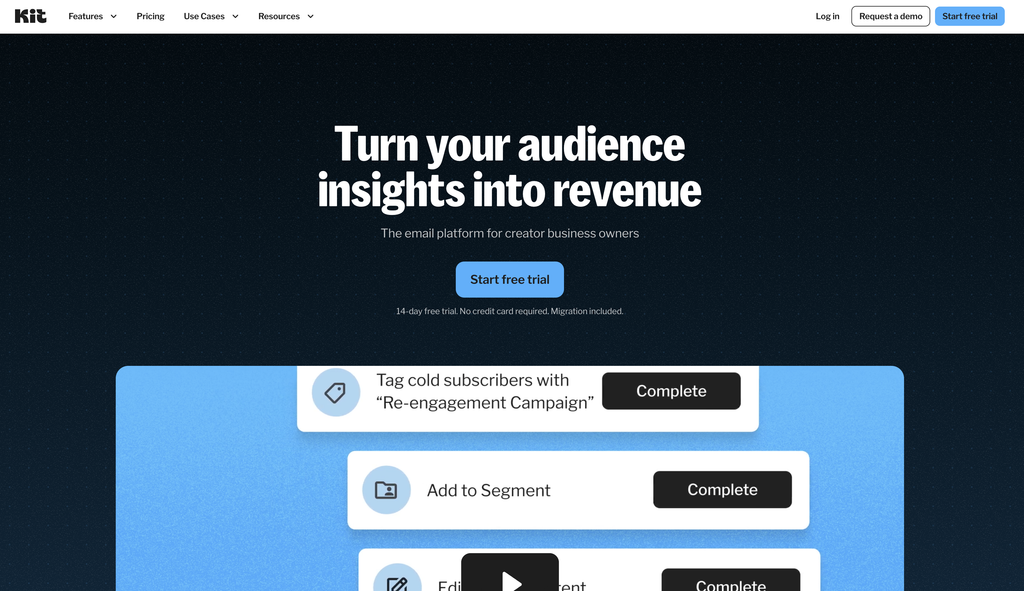
8. Kit: A Useful Option for Creators and Newsletter Publishers
Best for: Bloggers, independent creators, authors, and businesses that build an audience through educational content.
Kit, previously known as ConvertKit, focuses on helping creators grow and communicate with their audiences.
It offers tools for email newsletters, subscriber management, forms, landing pages, and automated sequences.
Key Features
- Newsletter creation.
- Subscriber tagging.
- Email automation.
- Signup forms.
- Landing pages.
- Creator-focused audience tools.
- Digital product and monetization features.
Why Consider Kit?
Imagine you run a blog about personal finance. Readers subscribe to receive practical money-saving tips, guides, and regular updates.
Kit can help you organize subscribers based on their interests and deliver relevant content.
It is especially relevant to businesses that rely on content, personal brands, newsletters, or digital products. These features make it an option to evaluate when searching for the best email marketing for small business for a creator-led brand.
Things to Consider
Kit may not be the most suitable option for businesses that prioritize complex ecommerce marketing or extensive visual email design.
Compare its subscriber limits and monetization features with your business requirements.
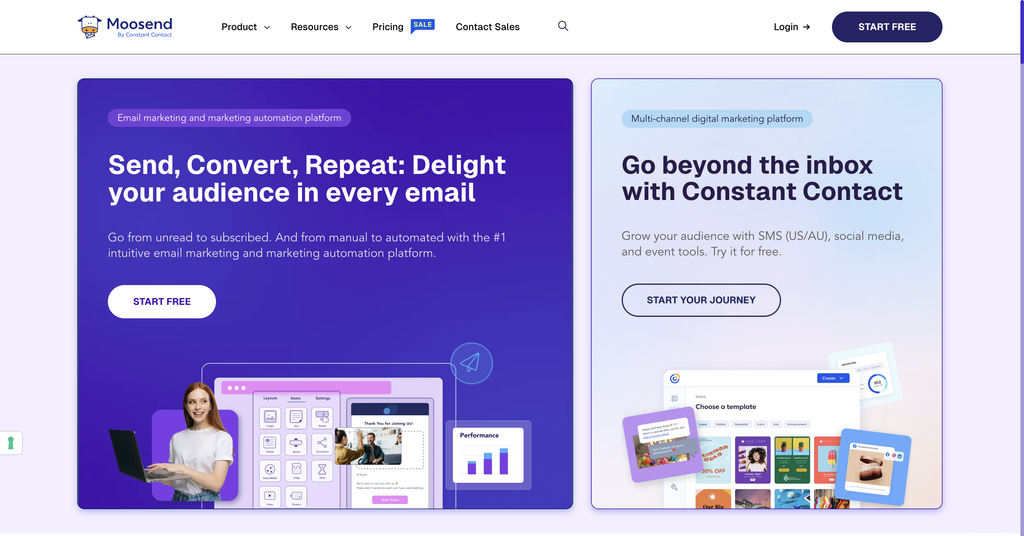
9. Moosend: An Option for Email Campaigns and Automation
Best for: Small and medium-sized businesses looking for email campaign creation, audience management, and automation.
Moosend provides email marketing features designed to help businesses create campaigns and organize communication with subscribers.
Key Features
- Email campaign builder.
- Email templates.
- Marketing automation.
- Audience segmentation.
- Signup forms.
- Campaign analytics.
- Ecommerce-related automation features.
Why Consider Moosend?
A small business may want to send a welcome message when someone subscribes, share useful content over several days, and introduce a product when the subscriber is ready.
Moosend’s automation capabilities can help organize these activities.
Its campaign creation tools can also support regular newsletters and promotional messages.
Things to Consider
Check the current pricing, available integrations, and automation limits. Do not assume that every feature is included in every subscription.
Moosend is worth comparing if you need more than a basic newsletter sender but do not require a complex enterprise-level marketing system. Consider its pricing and features alongside other platforms when choosing the best email marketing for small business.
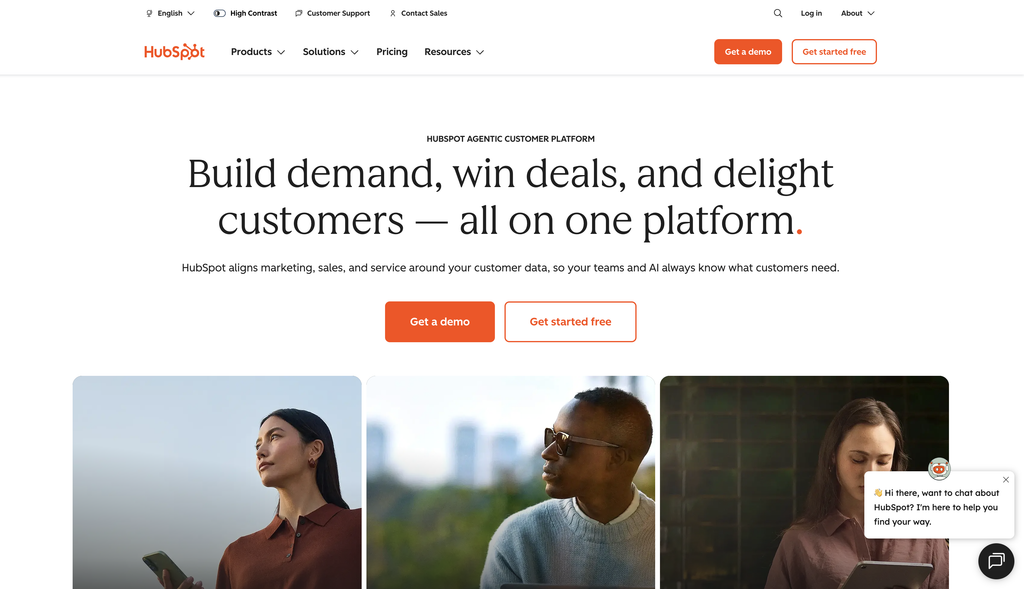
10. HubSpot: Best for Businesses That Want Email Marketing Connected to a CRM
Best for: Businesses that want to connect marketing activities with customer records, sales processes, and broader business operations.
HubSpot is known for its customer relationship management platform and broader collection of marketing, sales, service, and content tools.
Its marketing capabilities include email campaign features, contact management, automation options, and reporting.
Key Features
- CRM contact records.
- Email marketing.
- Marketing automation on eligible plans.
- Landing pages and forms.
- Customer segmentation.
- Campaign analytics.
- Sales and marketing integrations.
Why Consider HubSpot?
Suppose your business receives inquiries through a website. You want to keep track of each lead, understand previous interactions, and coordinate email follow-ups with your sales process.
A CRM-connected marketing platform can help bring these activities together.
HubSpot may be especially useful for businesses with growing sales teams or more detailed customer management requirements. For these businesses, the best email marketing for small business may be a platform that connects campaigns with customer records.
Things to Consider
HubSpot’s feature set and pricing structure can become more complex as your business grows. Some advanced capabilities are available only on higher-tier plans.
If you simply want to send a weekly newsletter, its broader CRM ecosystem may be more than you need.
Discover Smarter Email Marketing with MailerRocket
Visit MailerRocket to discover its email marketing features, review available plans, and see how its tools can support your campaigns as your business grows steadily.
Quick Comparison: 10 Email Marketing Platforms
Choosing between the best email marketing platforms for small businesses becomes easier when you compare their primary strengths. This comparison can help you narrow down the best email marketing for small business according to your priorities.
| Platform | Best suited for | Main strengths |
|---|---|---|
| MailerRocket | Campaign management and affiliate marketing | Scheduling, autoresponders, AI writing, subscriber management |
| Mailchimp | General marketing | Campaign design, audience tools, integrations |
| MailerLite | Beginners and small teams | Newsletters, forms, automation |
| Brevo | Multichannel communication | Email, SMS, CRM capabilities |
| ActiveCampaign | Advanced automation | Customer journeys, CRM, lead scoring |
| Constant Contact | Local businesses | Email campaigns, event marketing |
| GetResponse | Funnels and online marketing | Email, landing pages, webinars |
| Kit | Content creators | Newsletters, subscriber tagging, creator tools |
| Moosend | Campaigns and automation | Email builder, segmentation, automation |
| HubSpot | CRM-focused businesses | Contact management, marketing and sales tools |
How to Choose the Best Email Marketing Service for Small Business
Now that you know about ten popular options, how do you decide which one is suitable for your business?
The answer depends on your current requirements and future plans.
Here are the most important things to consider.
1. Understand Your Business Goals
Start by identifying what you want email marketing to achieve.
Are you trying to:
- Increase product sales?
- Generate leads?
- Share regular newsletters?
- Promote affiliate products?
- Build relationships with customers?
- Announce new products or services?
- Encourage repeat purchases?
A local service business may need simple newsletters and follow-up emails. An ecommerce store may need abandoned-cart messages and purchase-related automation.
Your goals should guide your software selection. They will also help you narrow down the best email marketing for small business instead of getting distracted by unnecessary features.
2. Check Subscriber and Email Sending Limits
Different providers use different pricing models.
Some charge according to the number of subscribers, while others consider monthly email volume or a combination of factors.
For example, a business with 5,000 subscribers sending four newsletters each month may need approximately 20,000 campaign emails, before accounting for automated messages and other communication.
Calculate your expected monthly sending volume before choosing a plan. This calculation can help you find the best email marketing for small business without paying for more capacity than you need.
3. Look for Easy Campaign Creation
You should not have to spend hours learning how to create a simple newsletter.
Look for features such as:
- Ready-made email templates.
- Drag-and-drop editing.
- Mobile-responsive layouts.
- Subject line editing.
- Preview options.
- Scheduling.
A user-friendly editor can save considerable time, especially if you manage marketing yourself.
4. Evaluate Automation Features
Automation is one of the most useful features in modern email marketing.
Depending on the platform, you may be able to create:
- Welcome email sequences.
- Educational follow-ups.
- Product announcements.
- Lead nurturing campaigns.
- Customer re-engagement messages.
- Purchase-related communications.
However, do not pay extra for advanced workflows if your business only needs occasional newsletters. The best email marketing for small business should provide useful automation without making your monthly expenses difficult to manage.
5. Prioritize Email Deliverability and Security
A beautifully designed email is useless if it never reaches the intended recipient.
Before selecting a service, understand its authentication and deliverability support.
Look for guidance and support for:
- SPF (Sender Policy Framework).
- DKIM (DomainKeys Identified Mail).
- DMARC (Domain-based Message Authentication, Reporting, and Conformance).
- Bounce management.
- Unsubscribe processing.
- Suppression lists.
- Sending reputation monitoring.
Remember that no legitimate email marketing provider can guarantee that every message will land in the primary inbox. Your sending practices, domain reputation, recipient engagement, and message quality also matter.
6. Compare the Total Cost
Do not look only at the advertised starting price.
Check:
- Monthly subscriber limits.
- Monthly sending limits.
- Additional contact charges.
- Automation restrictions.
- User or team seat charges.
- Premium integrations.
- Support availability.
- Annual billing requirements.
The best email marketing platform for small business is not necessarily the cheapest one. It is the one that offers the features you need at a cost your business can comfortably maintain. Keep this principle in mind when deciding which option deserves to be called the best email marketing for small business.
7. Check Integrations
Your email marketing platform may need to connect with your website, online store, CRM, payment system, or other business applications.
Before purchasing, confirm that the integrations you actually need are supported and available on your selected plan.
This is especially important for businesses that want to automate customer information and marketing activities.
Essential Email Marketing Features Every Small Business Should Look For
Here is a practical checklist to use while comparing software. Use these points to evaluate whether a platform offers the best email marketing for small business features you actually need.
Campaign Management
You should be able to create, edit, schedule, and manage campaigns without unnecessary complications.
Subscriber Segmentation
Segmentation helps you divide your audience into relevant groups.
For example, an online clothing store could separate customers interested in men’s clothing from those interested in women’s clothing.
Signup Forms
Signup forms help you collect subscribers who want to receive updates from your business.
Automation
Automation allows you to send relevant messages based on predefined schedules or supported subscriber actions.
Analytics
Campaign reports help you understand delivery, engagement, clicks, bounces, and unsubscribes.
Authentication Support
Proper domain authentication helps email providers verify that your messages are authorized.
Unsubscribe Management
Every marketing email should provide an appropriate way for recipients to unsubscribe. The platform should support the applicable legal and technical requirements.
How to Start Email Marketing for Your Small Business: A Step-by-Step Guide
Choosing software is only the first step. You also need a strategy that helps you use it effectively. Even the best email marketing for small business will be more useful when supported by a clear plan and relevant content.
Here is a practical approach for getting started.
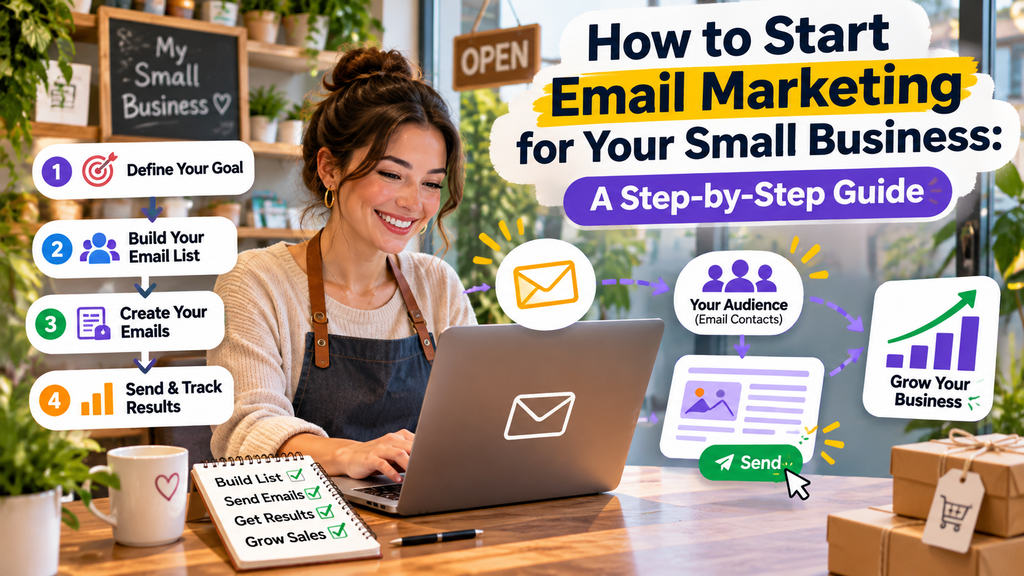
Step 1: Define Your Target Audience
Think about the people most likely to purchase your products or services.
Understand their needs, common problems, interests, and questions.
For example, if you run a digital marketing agency, your audience may include startup founders, local business owners, and independent professionals.
Step 2: Build a Permission-Based Email List
Create a signup form on your website and explain what subscribers will receive.
You could offer:
- A useful checklist.
- An educational guide.
- A discount.
- A free consultation.
- Regular industry updates.
Only add people who have provided the appropriate permission to receive your marketing emails.
Avoid buying email lists. Purchased contacts may not have consented to receive your messages, and sending to them can damage your reputation.
Step 3: Create a Welcome Email
Your welcome email is often the first direct marketing message a new subscriber receives.
Keep it simple.
Introduce your business, explain what subscribers can expect, and provide something useful.
For example:
“Thanks for subscribing! We will share practical tips, helpful resources, and occasional updates to help you make better decisions.”
Step 4: Plan Your Email Content
Do not send promotional messages every time you contact your subscribers.
Mix different types of content:
- Educational articles.
- Practical tips.
- Product announcements.
- Industry updates.
- Customer stories.
- Special offers.
A useful newsletter should provide value even when it is not directly promoting a product.
Step 5: Schedule Campaigns
Consistency is more important than sending emails every day.
Depending on your audience, you might start with one useful email per week or two emails per month.
Monitor engagement and adjust the schedule based on subscriber preferences.
Step 6: Track Performance
Review your campaign reports regularly.
Pay attention to:
- Delivery rate.
- Bounce rate.
- Click-through rate.
- Unsubscribe rate.
- Conversion rate.
Do not judge a campaign only by its open rate. Privacy features and automated image loading can make open tracking less reliable.
Clicks and actual business outcomes often provide more useful insights.
Step 7: Improve Your Campaigns
Test different subject lines, calls to action, email formats, and sending schedules.
Change one important element at a time where possible so you can understand what affected performance.
Over time, these small improvements can help you develop a more effective email marketing strategy. With a clear strategy and the best email marketing for small business for your requirements, you can improve how consistently you connect with your audience.
Email Marketing Mistakes Small Businesses Should Avoid
Even if you choose the right software, poor marketing practices can reduce campaign performance.
Here are some mistakes worth avoiding.
1. Buying Email Lists
Purchased lists often contain people who never agreed to receive your emails. This can lead to spam complaints and poor sender reputation.
Build your audience through genuine subscriptions instead.
2. Sending Too Many Promotional Emails
Subscribers do not want every message to be a sales pitch.
Share educational information, useful resources, and relevant updates alongside promotional content.
3. Ignoring Mobile Users
Many people read emails on smartphones.
Use responsive templates, readable fonts, concise paragraphs, and clear buttons.
4. Writing Misleading Subject Lines
Your subject line should accurately represent the email content.
Avoid exaggerated claims or deceptive language simply to encourage opens.
5. Forgetting Email Authentication
Configure SPF, DKIM, and DMARC correctly for your sending domain.
Follow the instructions provided by your email service and domain administrator.
6. Ignoring Unsubscribes and Complaints
Respect unsubscribe requests promptly and maintain suppression lists.
Make it easy for recipients to control their email preferences.
7. Never Testing Your Campaigns
Always preview your emails and check links before sending.
Where possible, send a test email to yourself to check the layout on different devices.
Free vs. Paid Email Marketing Software: Which Should You Choose?
One of the most common questions small business owners ask is whether they should start with free software or invest in a paid subscription.
The answer depends on the size of your audience and the features you require. Your budget and expected growth also play an important role in finding the best email marketing for small business.
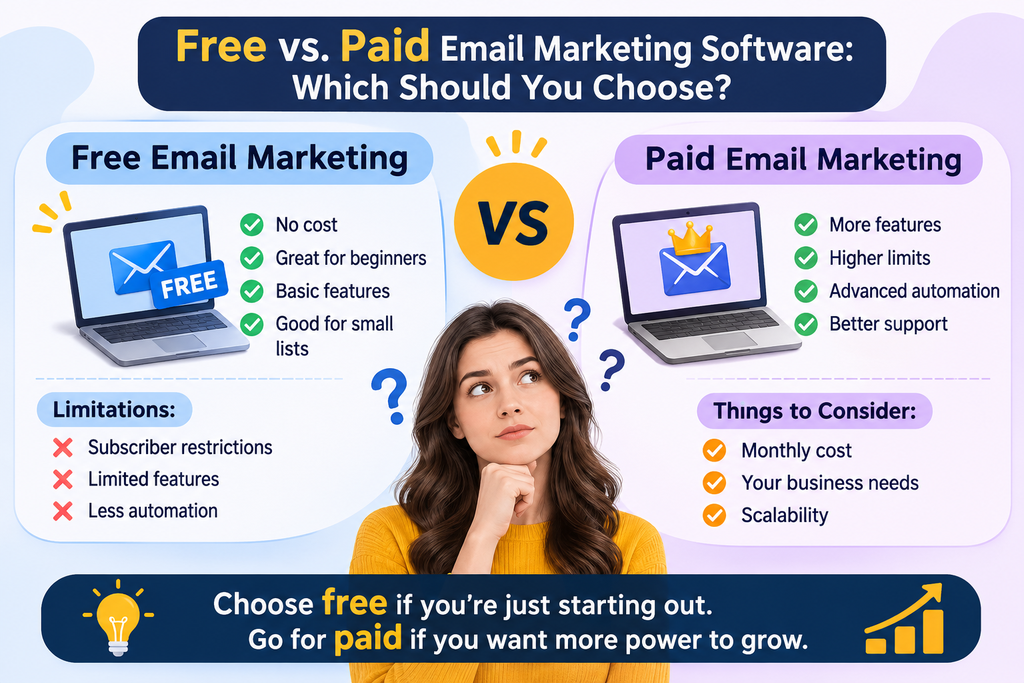
Free Email Marketing Plans
Free plans can be useful when you are just starting out.
They may provide basic campaign creation, subscriber management, and limited automation.
Advantages:
- Lower initial cost.
- Useful for testing a platform.
- Suitable for smaller campaigns.
- An opportunity to learn email marketing.
Limitations:
- Subscriber restrictions.
- Monthly sending limits.
- Limited automation.
- Fewer integrations.
- Possible provider branding.
Always review the current free-plan conditions before signing up.
Paid Email Marketing Plans
Paid plans may offer higher sending limits, more advanced automation, additional integrations, better reporting, and expanded subscriber management.
Advantages:
- More room to grow.
- Additional marketing features.
- Greater sending capacity.
- More advanced automation options.
- Potentially more support resources.
Limitations:
- Recurring costs.
- Additional charges as your audience grows.
- Some features may require higher-tier subscriptions.
If your business is new, start with a plan that meets your immediate needs. Upgrade when your list size or marketing requirements justify the additional expense.
Which Email Marketing Platform Should You Choose?
There is no single platform that is ideal for every business.
Here is a quick recommendation based on different requirements:
- For campaign scheduling and subscriber management: Consider MailerRocket.
- For a familiar marketing ecosystem: Consider Mailchimp.
- For beginners and simple newsletters: Consider MailerLite.
- For multiple communication channels: Consider Brevo.
- For advanced automation: Consider ActiveCampaign.
- For local businesses and events: Consider Constant Contact.
- For landing pages and funnels: Consider GetResponse.
- For bloggers and creators: Consider Kit.
- For email campaigns and automation: Consider Moosend.
- For CRM-connected marketing: Consider HubSpot.
If you are comparing the best email marketing for small business, do not choose software simply because it has the longest feature list.
Think about what you will actually use, what your budget allows, and how much time you can dedicate to managing campaigns.
For businesses that want to explore campaign scheduling, autoresponders, AI email writing, and subscriber management, MailerRocket is a reasonable platform to add to the shortlist.
You can review its features, check the available plans, and decide whether its tools fit your marketing workflow.
Find the Right MailerRocket Plan for Your Business
Ready to send more organized campaigns? Compare MailerRocket’s plans and choose the subscriber capacity and email volume that match your current marketing needs and budget.
Conclusion
Email marketing is not just about sending promotional messages. It is about building relationships, staying connected with customers, sharing useful information, and creating opportunities for future sales.
The right platform can make this process much easier by bringing campaign creation, scheduling, subscriber management, automation, and reporting together. Choosing the best email marketing for small business can also help you manage these activities more efficiently as your audience grows.
When evaluating the best email marketing for small business, focus on your actual needs rather than the number of features advertised. A beginner may be perfectly comfortable with a simple newsletter tool, while a growing business may need advanced automation or CRM integration.
MailerRocket is worth considering if you want campaign scheduling, autoresponders, subscriber management, AI-assisted email creation, and branded links in one platform. Its advertised seven-day free trial also gives interested businesses an opportunity to explore the product before deciding whether it suits their needs.
Take time to compare the options, review their current pricing, and test the platform that matches your requirements.
The best decision is the one that helps you communicate consistently with your audience without making your marketing process unnecessarily complicated.
FAQs
1. What is the best email marketing for small business in 2026?
The right option depends on your goals and budget. MailerRocket is worth considering for campaign scheduling, autoresponders, subscriber management, AI-assisted email creation, and branded links. MailerLite is another option for beginners, while ActiveCampaign is suitable for businesses requiring more advanced automation.
2. What is the best free email marketing tool for small businesses?
Several platforms offer free plans or free trials, including MailerLite, Brevo, Mailchimp, Kit, and HubSpot. Their free features and limits differ. Compare subscriber allowances, sending limits, automation access, and branding restrictions before choosing one.
3. How much does email marketing cost for a small business?
Costs depend on the provider, subscriber count, sending volume, and features. Some platforms offer free plans, while paid subscriptions can range from relatively inexpensive entry-level options to more expensive advanced marketing systems. Always check the latest pricing and potential additional charges.
4. Is email marketing worth it for small businesses?
Yes, email marketing can be valuable for businesses that want to maintain customer relationships, share updates, promote products, and nurture leads. Results depend on audience quality, content relevance, sending practices, and how effectively campaigns support business goals.
5. How do I choose the best email marketing platform for my business?
Start by identifying your marketing goals, expected subscriber count, monthly email volume, and budget. Then compare campaign builders, automation, integrations, authentication support, reporting, and customer service. Test the platform before committing to a long-term subscription. Comparing your goals, budget, and required features will help you identify the best email marketing for small business for your needs.
6. Can I use email marketing without technical knowledge?
Yes. Many modern platforms provide drag-and-drop editors, ready-made templates, signup forms, and simple automation builders. You can start with basic newsletters and gradually learn more advanced features as your business grows.
7. How often should a small business send marketing emails?
There is no universal schedule. Many businesses begin with one email per week or two emails per month. The right frequency depends on subscriber expectations, content quality, and engagement. Monitor unsubscribes and complaints to ensure your schedule is appropriate.
8. What is the difference between email marketing and email automation?
Email marketing is the broader activity of communicating with customers through email. Email automation is a part of that process where messages are sent automatically based on predefined schedules, triggers, or subscriber actions.
For example, a welcome email sent after someone subscribes is an automated email marketing message.
9. How can I improve email deliverability?
Use permission-based subscriber lists, configure SPF, DKIM, and DMARC, maintain clean contact records, remove invalid addresses, send relevant content, and respect unsubscribe requests. Avoid purchased lists and misleading subject lines. No platform can guarantee inbox placement for every message.
10. Is MailerRocket suitable for small businesses?
MailerRocket may suit businesses that need email campaign scheduling, autoresponders, list-based signup forms, subscriber management, AI email content generation, and branded links. Its published plans offer different subscriber and sending-volume options. Review the current pricing, integrations, and feature limits to determine whether it matches your business requirements.