
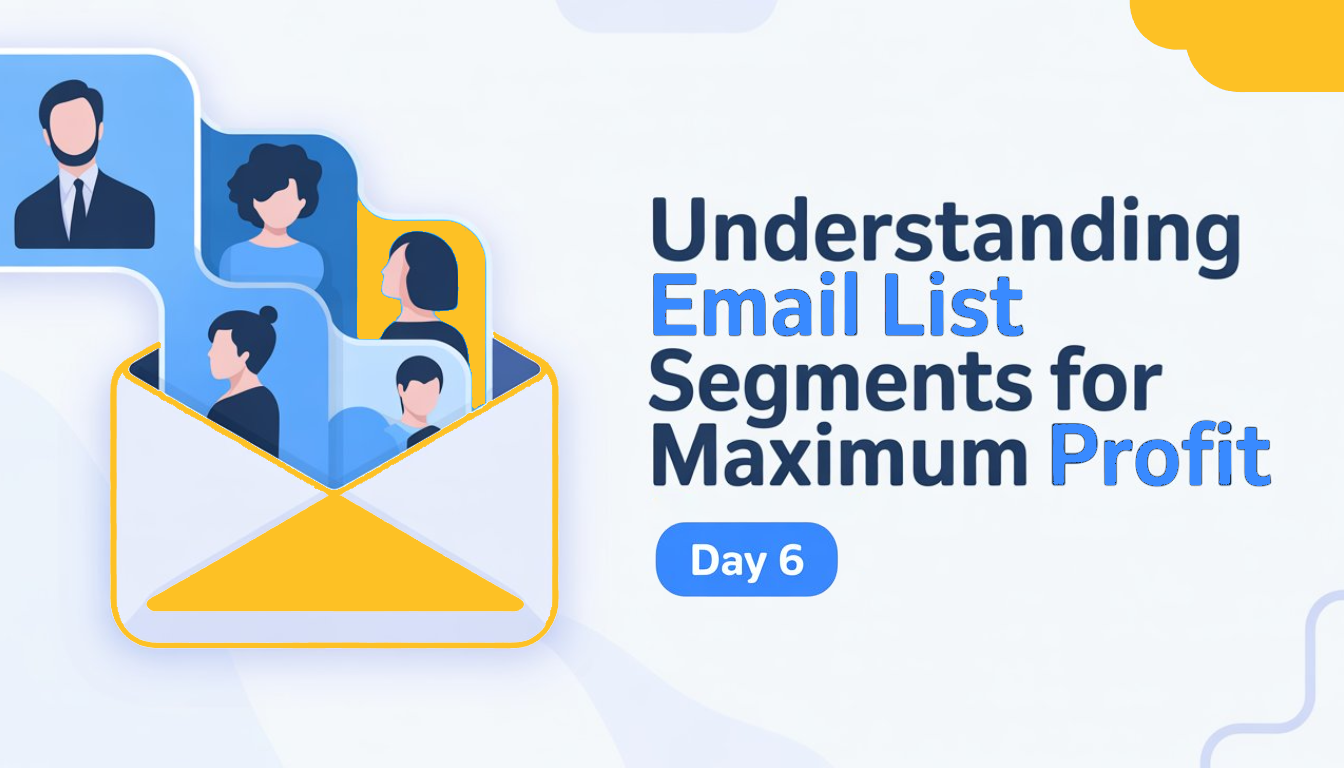





To maximize profit, businesses must adopt a strategic approach to email marketing. One crucial aspect is understanding and leveraging email list segments. By dividing your audience into targeted groups, you can significantly improve conversion rates and revenue.
A well-planned list building strategy enables you to tailor your messaging, increasing the likelihood of resonating with your audience. This, in turn, drives engagement and ultimately boosts profitability. As a business professional or marketer, leveraging these strategies is key to staying ahead in a competitive market.
Key Takeaways
- Segmenting your email audience can lead to higher conversion rates.
- A targeted approach to email marketing improves overall campaign effectiveness.
- Understanding your audience is crucial for maximizing profit.
- Effective list building is foundational to successful email marketing.
- Tailoring your messaging can significantly enhance audience engagement.
Email Segmentation That Drives Profit
Turn targeted email lists into high-converting revenue engines with smarter segmentation strategies.
The Value of Segmented Email Marketing
By tailoring your email campaigns to specific audience segments, you can significantly boost engagement and conversion rates. This approach allows you to deliver relevant content to the right people at the right time, increasing the likelihood of a positive response.
Why Generic Email Campaigns Underperform
Generic email campaigns often fail to resonate with recipients because they lack personalization. When you send the same message to your entire email list, you’re likely to see lower engagement rates. This is because different segments of your audience have different needs, preferences, and behaviors.
To improve performance, it’s essential to understand that a one-size-fits-all approach doesn’t work in email marketing. By not segmenting your list, you’re missing out on opportunities to connect with your audience on a more personal level.
The ROI Benefits of Targeted Messaging
Targeted messaging, on the other hand, offers significant ROI benefits. By segmenting your email list and tailoring your campaigns to specific groups, you can increase open rates, click-through rates, and conversions. This leads to a higher return on investment and more effective use of your marketing budget.
Studies have shown that segmented email campaigns can result in higher revenue and improved customer satisfaction. By leveraging targeted messaging, you can build stronger relationships with your audience and drive more sales.
Building a Strategic Email List for Better Conversions
For businesses aiming to boost conversions, a thoughtfully built email list is indispensable. A strategic email list allows you to target your audience more effectively, leading to improved engagement and higher conversion rates.
Ethical List Acquisition Methods
Acquiring an email list ethically is crucial for maintaining a positive brand reputation and complying with regulations like GDPR. Opt-in forms on your website and social media channels are effective ways to gather subscribers who are genuinely interested in your content.
Data Collection Strategies That Enhance Segmentation
To enhance audience segmentation, it’s essential to collect relevant data about your subscribers. This can include demographic information, purchase history, and engagement levels. By leveraging this data, you can create highly targeted campaigns that resonate with your audience.
List Hygiene and Maintenance Best Practices
Maintaining a clean and up-to-date email list is vital for the success of your email marketing efforts. Regularly removing inactive subscribers and correcting invalid email addresses can significantly improve your deliverability rates and overall campaign performance.
By focusing on ethical list acquisition, strategic data collection, and diligent list maintenance, you can build a robust email list that drives better conversions and supports your overall marketing goals.
Email Segmentation: Core Strategies for Maximum Profit
The key to unlocking the full potential of your email marketing campaigns lies in the application of sophisticated segmentation techniques. By dividing your email list into targeted groups, you can significantly enhance the relevance and impact of your messages.
Demographic Segmentation Techniques
Demographic segmentation involves categorizing your audience based on characteristics such as age, gender, income level, and occupation. This approach allows you to tailor your content to resonate with different demographic groups. For instance, a fashion retailer might send different promotional emails to younger versus older demographics based on their purchasing preferences.
Behavioral Segmentation Models
Behavioral segmentation focuses on the actions and behaviors of your subscribers, such as purchase history, browsing behavior, and engagement levels. By understanding these patterns, you can create targeted campaigns that encourage specific actions. For example, sending a special offer to customers who have abandoned their shopping carts can help recover lost sales.
Psychographic Segmentation Approaches
Psychographic segmentation delves into the psychological aspects of your audience, including their interests, values, and lifestyle. This method enables you to craft messages that resonate on a deeper level. For instance, a brand that promotes eco-friendly products might target subscribers who have shown an interest in sustainability.
Transactional History Segmentation
Transactional history segmentation involves analyzing the past purchases and interactions of your customers. By understanding their buying behavior, you can predict future purchases and tailor your marketing efforts accordingly. For example, offering loyalty rewards to repeat customers can foster brand loyalty and encourage continued patronage.
By implementing these core email segmentation strategies, you can significantly enhance the effectiveness of your email marketing campaigns, leading to increased engagement, conversion rates, and ultimately, maximum profit.
Crafting Targeted Campaigns That Convert
Crafting campaigns that resonate with your audience is essential for driving sales and enhancing brand loyalty. To achieve this, you need to understand the intricacies of email segmentation and how it can be leveraged to create highly targeted campaigns.
Aligning Content with Buyer Journey Stages
Understanding the buyer’s journey is crucial for creating relevant content. By aligning your email content with the different stages of the buyer’s journey, you can guide potential customers through the sales funnel more effectively.
- Awareness Stage: Focus on educational content that addresses pain points.
- Consideration Stage: Provide comparative analyses and product benefits.
- Decision Stage: Offer testimonials, case studies, and special offers.
Personalization Tactics That Drive Sales
Personalization is key to making your emails stand out. Using the recipient’s name, tailoring content based on past purchases, and sending personalized recommendations can significantly boost engagement and conversion rates.
“The future of marketing is not about the product; it’s about the experience. Personalization is not just a nice-to-have, it’s a must-have.”
Subject Line Optimization by Segment
Your subject line is often the first impression you make on your recipient. Optimizing it for different segments can improve open rates. For instance, using urgency for segments that are prone to quick purchases or curiosity-driven lines for segments that are more exploratory.
| Segment | Subject Line Strategy | Example |
|---|---|---|
| New Subscribers | Welcome Offers | “Get 10% Off Your First Purchase!” |
| Active Customers | Personalized Recommendations | “We Think You’ll Love These Products” |
| Inactive Customers | Re-engagement Campaigns | “We Miss You! Here’s a Special Offer” |
By implementing these strategies, you can significantly enhance the effectiveness of your email marketing campaigns, driving higher conversion rates and ultimately, greater revenue.
Unlock Profitable Email Marketing
Leverage data-driven email segmentation to boost engagement, conversions, and ROI
Revenue-Driving Segmentation for E-commerce Businesses
To maximize profits, e-commerce businesses must adopt a nuanced approach to email list segmentation. This involves dividing your email list into distinct groups based on specific criteria, allowing for more targeted and effective marketing campaigns.
Abandoned Cart Recovery Strategies
One of the most effective segmentation strategies for e-commerce is targeting customers who have abandoned their carts. By sending personalized reminders and offers, you can encourage these customers to complete their purchases. Studies have shown that abandoned cart recovery emails can significantly improve conversion rates.
Product Interest and Browse Behavior Targeting
Segmenting your email list based on product interest and browse behavior allows you to send highly relevant content to your customers. For instance, if a customer has shown interest in a particular product category, you can send them targeted promotions or new product releases in that category.
“The key to successful email marketing is not just about sending emails, but about sending the right emails to the right people at the right time.” –
Purchase Frequency and Recency Segmentation
Segmenting customers based on their purchase frequency and recency can help you identify loyal customers and those at risk of churning. You can then tailor your marketing efforts accordingly, offering loyalty rewards to frequent buyers and re-engagement campaigns to inactive customers.
High-Value Customer Nurturing
Identifying and nurturing high-value customers is crucial for driving revenue. By segmenting these customers and offering them personalized experiences, exclusive offers, and premium services, you can increase their loyalty and lifetime value.
By implementing these segmentation strategies, e-commerce businesses can significantly enhance their email marketing tactics and drive revenue growth. Effective list building strategy and segmentation are key to maximizing profits in the competitive e-commerce landscape.
B2B List Building Strategy and Segmentation
Building a robust B2B email list requires strategic planning and precise segmentation. To effectively target your audience, you need to understand the intricacies of B2B list building and how it differs from B2C marketing.
Industry and Vertical-Specific Targeting
Industry-specific targeting allows you to tailor your marketing efforts to the unique needs and challenges of different sectors. By segmenting your list based on industry or vertical, you can create highly relevant content that resonates with your target audience, increasing the likelihood of conversion.
Key benefits include: Improved engagement rates, enhanced brand credibility, and more effective campaign analysis.
Decision-Maker vs. Influencer Segmentation
Understanding the roles within a B2B organization is crucial for effective segmentation. Decision-makers and influencers have different priorities and pain points. By segmenting your list based on these roles, you can craft messages that speak directly to their needs, whether it’s driving a sale or nurturing a lead.
- Decision-makers require content that addresses ROI and strategic value.
- Influencers need information that helps them evaluate options and make recommendations.
Lead Scoring and Marketing Qualification Integration
Integrating lead scoring and marketing qualification into your segmentation strategy enhances your ability to identify high-value leads. By assigning scores based on behavior and demographic data, you can prioritize your efforts on the most promising prospects, thereby optimizing your sales funnel.
This approach not only streamlines your sales process but also improves the overall efficiency of your marketing campaigns.
Technology Stack for Advanced Email Segmentation
The effectiveness of email segmentation strategies heavily relies on the technology stack employed, encompassing email marketing platforms, customer data platforms, and automation tools. To execute advanced email segmentation, businesses must leverage a combination of technologies that can handle complex data analysis, personalize content, and automate campaign execution.
Email Marketing Platforms Comparison
Email marketing platforms are the cornerstone of any email segmentation strategy. When comparing these platforms, consider factors such as segmentation capabilities, automation features, and integration with other tools. Popular email marketing platforms like Mailchimp, HubSpot, and Marketo offer robust segmentation features, but their capabilities can vary significantly.
| Platform | Segmentation Features | Automation Capabilities |
|---|---|---|
| Mailchimp | Basic to advanced segmentation based on subscriber data | Basic automation for welcome emails and simple workflows |
| HubSpot | Advanced segmentation using contact properties and behavior | Advanced automation for complex workflows and lead nurturing |
| Marketo | Highly advanced segmentation with AI-driven insights | Comprehensive automation for multi-channel campaigns |
As shown in the table, the choice of email marketing platform can significantly impact your email segmentation capabilities. It’s essential to evaluate these platforms based on your specific business needs.
Customer Data Platforms and Their Role
Customer Data Platforms (CDPs) play a crucial role in advanced email segmentation by providing a unified customer view. CDPs collect data from various sources, creating a single customer profile that can be used to enhance segmentation. According to
“CDPs are revolutionizing how businesses understand their customers, enabling more precise and personalized marketing efforts.”
By integrating a CDP with your email marketing platform, you can leverage detailed customer insights to create highly targeted segments. This integration allows for more effective personalization and can significantly improve campaign performance.
Automation Tools for Segment-Triggered Campaigns
Automation tools are vital for executing segment-triggered campaigns efficiently. These tools enable marketers to set up complex workflows that respond to subscriber behavior and preferences in real-time. For instance, automation can be used to send a series of nurturing emails to new subscribers or to re-engage inactive customers.
- Set up triggers based on subscriber behavior
- Create personalized content for different segments
- Automate follow-up emails based on user interactions
By leveraging automation tools, businesses can ensure that their email campaigns are timely, relevant, and highly personalized, leading to improved engagement and conversion rates.
Measuring and Optimizing Segmented Campaign Performance
To maximize the effectiveness of your email segmentation strategy, it’s crucial to measure and optimize your campaigns continuously. As you implement targeted campaigns, understanding how to evaluate their performance will help you refine your approach and achieve better results.
Segment-Specific KPIs and Benchmarks
When measuring the success of your segmented campaigns, you need to focus on segment-specific Key Performance Indicators (KPIs). These may include open rates, click-through rates, conversion rates, and revenue per email. Establishing benchmarks for each segment allows you to compare performance over time and identify areas for improvement.
- Open rates: Monitor how different segments respond to your subject lines and email content.
- Click-through rates: Measure the effectiveness of your call-to-action and content relevance.
- Conversion rates: Track the percentage of recipients who complete a desired action.
Revenue Attribution Models
To understand the true impact of your segmented campaigns, you need to implement revenue attribution models. These models help you attribute revenue to specific segments and campaigns, providing a clear picture of your ROI. Common models include last-click attribution, multi-touch attribution, and linear attribution.
| Attribution Model | Description | Use Case |
|---|---|---|
| Last-Click | Attributes revenue to the last click before conversion. | Simple campaigns with a clear conversion path. |
| Multi-Touch | Distributes credit across multiple touchpoints. | Complex customer journeys with multiple interactions. |
Continuous Testing Framework for Segments
A continuous testing framework is essential for optimizing segmented campaign performance. This involves regularly testing different elements of your emails, such as subject lines, content, and calls-to-action, across various segments. By analyzing the results, you can identify what works best for each segment and refine your strategy accordingly.
Some key elements to test include:
- Email content and personalization.
- Subject line variations.
- Call-to-action placement and design.
- Sending frequency and timing.
Avoiding Common Pitfalls in Email List Segmentation
To truly benefit from email list segmentation, marketers need to be aware of and avoid common mistakes. Effective segmentation can significantly enhance the impact of your email marketing campaigns, but it requires careful planning and execution.
Over-Segmentation vs. Under-Segmentation
One of the key challenges in email list segmentation is finding the right balance between over-segmentation and under-segmentation. Over-segmentation can lead to overly complex campaigns that are difficult to manage, while under-segmentation may result in messages that are not tailored enough to the audience. To avoid these pitfalls, consider the following:
- Start with broad segments and refine them based on performance data.
- Use automation tools to manage complex segments efficiently.
- Regularly review and adjust your segmentation strategy.
Data Privacy Compliance Considerations
Ensuring compliance with data privacy regulations is crucial when segmenting your email list. This includes:
- Obtaining explicit consent from subscribers.
- Providing clear options for subscribers to manage their data.
- Keeping your data collection and storage practices transparent.
By prioritizing data privacy, you not only comply with regulations but also build trust with your audience.
Segment Fatigue and List Burnout Prevention
Segment fatigue occurs when subscribers receive too many targeted messages, leading to disengagement. To prevent this, monitor engagement metrics closely and adjust your messaging frequency accordingly. Additionally, varying the content and ensuring it remains relevant can help maintain subscriber interest.
Smarter Email Lists, Higher Revenue
Build, segment, and optimize your email audience to maximize conversions and long-term growth.
Conclusion: Implementing Your Profit-Maximizing Email Strategy
As you’ve learned, effective audience segmentation is crucial for maximizing email list growth and driving revenue. By applying the strategies outlined in this article, you can create targeted campaigns that resonate with your audience and boost conversions.
To implement your profit-maximizing email strategy, focus on building a robust email list through ethical acquisition methods and maintaining list hygiene. Leverage demographic, behavioral, and psychographic segmentation techniques to craft personalized messages that drive engagement.
By integrating audience segmentation into your email marketing efforts, you’ll be able to optimize your campaigns for better ROI and improved customer satisfaction. As you continue to refine your approach, remember to monitor segment performance and adjust your strategies accordingly.
With a well-executed email segmentation strategy, you’ll be poised to achieve sustained email list growth and maximize your profits. Start applying these insights today to elevate your email marketing efforts and drive business success.