





Establishing clear objectives is crucial for the success of any email campaign. On the second day of your campaign strategy, it’s essential to focus on goal setting to drive revenue and enhance overall performance.
Well-defined email marketing goals serve as the foundation for a successful campaign, enabling you to measure progress and make data-driven decisions. Effective campaign planning involves setting specific, measurable, achievable, relevant, and time-bound (SMART) objectives.
By setting clear goals, you can optimize your email campaigns for better performance and higher returns on investment.
Key Takeaways
- Clear goals are essential for a successful email campaign.
- Setting SMART objectives is crucial for effective campaign planning.
- Well-defined goals enable data-driven decision-making.
- Clear objectives help optimize email campaigns for better performance.
- Goal setting drives revenue and enhances overall campaign performance.
Boost Revenue With Smarter Email Goals
Set clear, measurable objectives that turn every email into a profit-driving asset.
The Revenue Potential of Strategic Email Marketing
Email marketing, when done strategically, can unlock substantial revenue streams. This is particularly true when considering the journey of email marketing campaigns, where the second day marks a critical transition from setup to revenue generation.
The Value of Day 2 in Your Email Marketing Journey
The second day of an email marketing campaign is crucial as it signifies the shift from initial setup to actual revenue generation. It’s a period where the groundwork laid out on the first day starts to bear fruit.
Transitioning from Setup to Revenue Generation
Transitioning from the setup phase to revenue generation involves several key strategies. Effective email marketing strategies include segmentation, personalization, and compelling content that drives conversions.
| Email Marketing Strategy | Revenue Impact |
|---|---|
| Segmentation | Increased targeting efficiency |
| Personalization | Higher engagement rates |
| Compelling Content | Improved conversion rates |
By focusing on these strategies, marketers can significantly enhance their affiliate marketing revenue. The key is to continually analyze and adjust campaigns to optimize performance.
Defining Email Marketing Goals for Revenue Growth
To drive revenue growth, it’s essential to establish clear email marketing goals. Effective email marketing campaigns are those that are aligned with specific, measurable objectives that contribute to the overall revenue of the business.
According to a recent study, businesses that set clear email marketing goals for their email marketing campaigns see a significant improvement in their revenue growth. As noted by
“Setting clear goals is the first step towards achieving success in email marketing.”
Types of Measurable Revenue Objectives
There are several types of measurable revenue objectives that businesses can set for their email marketing campaigns. These include:
- Revenue per email sent
- Conversion rates
- Average order value
Aligning Email Goals with Business Objectives
Aligning email marketing goals with overall business objectives is crucial for achieving revenue growth. This involves setting direct sales goals and lead generation goals that are in line with the company’s overall strategy.
Direct Sales Goals
Direct sales goals focus on driving revenue through email marketing campaigns. This can be achieved by promoting products or services directly to subscribers.
Lead Generation Goals
Lead generation goals, on the other hand, focus on capturing new leads and nurturing them through the sales funnel. This can be achieved through targeted email campaigns that offer value to potential customers.
By setting clear email marketing goals and aligning them with business objectives, businesses can drive revenue growth and improve their overall marketing strategy.
Analyzing Your Current Email Campaign Performance
To maximize revenue, it’s crucial to analyze your current email campaign performance regularly. This analysis helps in understanding the strengths and weaknesses of your email marketing strategy.
Evaluating Historical Revenue Data
Evaluating historical revenue data is a fundamental step in assessing your email campaign’s performance. By examining past campaigns, you can identify trends and patterns that contribute to revenue generation. Historical data analysis allows you to understand what worked in the past and what didn’t, enabling you to make informed decisions for future campaigns and achieving email marketing goals.
Identifying Revenue Opportunities in Your List
Identifying revenue opportunities within your email list involves segmenting your subscribers based on their engagement and purchase history. This segmentation helps in targeting the right audience with the most relevant offers, thereby increasing the potential for revenue generation.
Engagement Patterns That Predict Sales
Understanding engagement patterns is crucial for predicting sales. Subscribers who regularly open your emails, click on links, or make purchases are more likely to convert. By analyzing these engagement patterns, you can tailor your content to better meet their needs and preferences.
| Campaign Metric | Description | Revenue Impact |
|---|---|---|
| Open Rate | Percentage of subscribers who open the email | Higher open rates can lead to more conversions |
| Click-Through Rate (CTR) | Percentage of subscribers who click on a link | Increased CTR often correlates with higher sales |
| Conversion Rate | Percentage of subscribers who make a purchase | Directly impacts revenue generation |
By analyzing these campaign performance metrics and optimizing your email campaigns accordingly, you can significantly enhance your revenue potential.
Setting Realistic Affiliate Revenue Targets
The foundation of a successful affiliate marketing strategy lies in setting realistic revenue targets that drive campaign decisions. Establishing clear and achievable email marketing goals enables marketers to focus their efforts and measure the effectiveness of their email campaigns.
Calculating Potential Affiliate Earnings
To set realistic affiliate revenue targets, you first need to calculate your potential earnings. This involves understanding your audience size, engagement levels, and the average conversion rate of your affiliate links. By analyzing historical data, you can estimate the potential revenue from your affiliate marketing efforts.
For instance, if you have an email list of 10,000 subscribers with an average open rate of 20% and a click-through rate of 5%, you can estimate the number of clicks on your affiliate links. Assuming a conversion rate of 2% and an average commission of $20 per sale, you can calculate your potential earnings.
Understanding Commission Structures and Payouts
Affiliate programs offer various commission structures, including pay-per-sale, pay-per-lead, and pay-per-click. Understanding these structures is crucial for setting realistic revenue targets. Some programs offer a fixed commission per sale, while others provide a percentage of the sale amount.
For example, if you’re promoting a product with a 10% commission on sales, and the product costs $100, you’ll earn $10 per sale. Knowing the commission structure helps you forecast your earnings more accurately.
Setting Progressive Monthly Revenue Goals
Once you’ve calculated your potential earnings and understood the commission structures, you can set progressive monthly revenue goals. These goals should be challenging yet achievable, taking into account seasonal fluctuations and market trends.
| Month | Revenue Goal | Growth Rate |
|---|---|---|
| January | $1,000 | – |
| February | $1,100 | 10% |
| March | $1,210 | 10% |
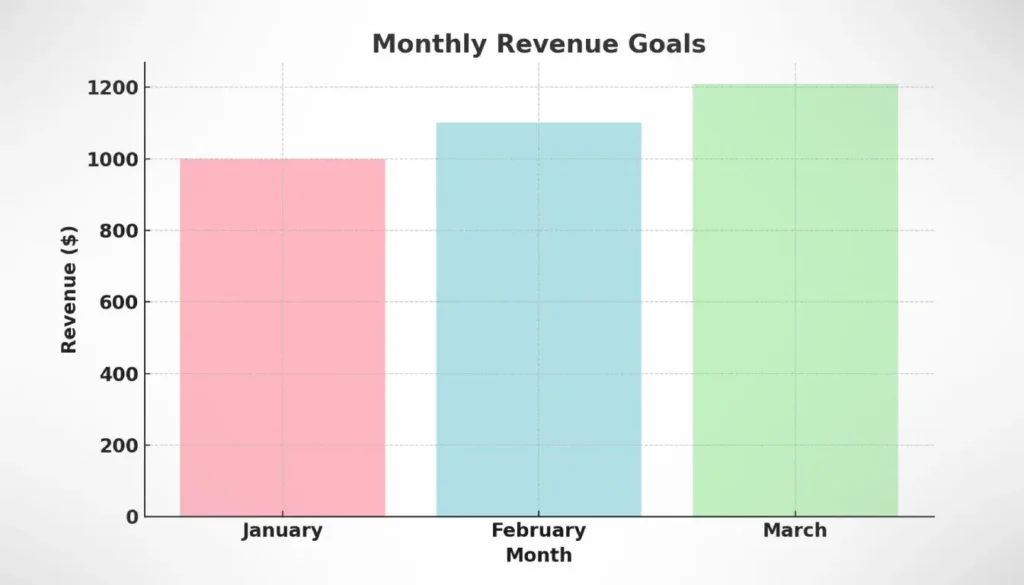
By setting realistic affiliate revenue targets and progressively increasing them, you can create a roadmap for your email marketing campaigns that drives revenue growth and helps achieve your business objectives.
Creating a Revenue-Driven Campaign Planning Framework
A well-designed campaign planning framework is the backbone of any successful revenue-driven email marketing strategy. This framework serves as a guide for marketers to create, execute, and measure campaigns that drive revenue.
Mapping Content Types to Revenue Objectives
To create a revenue-driven campaign, it’s essential to map different content types to specific revenue objectives. This involves understanding how various content formats, such as promotional emails, educational content, and transactional messages, contribute to overall revenue goals.
For instance, promotional emails can drive immediate sales, while educational content can nurture leads and increase long-term customer value. By aligning content types with revenue objectives, marketers can create a more focused and effective campaign strategy.
Developing a Strategic Campaign Calendar
A strategic campaign calendar is a critical component of a revenue-driven campaign planning framework. It helps marketers plan and schedule campaigns in advance, ensuring that content is delivered at the right time to maximize revenue potential.
Balancing Promotional and Value-Based Content
When developing a campaign calendar, it’s crucial to strike a balance between promotional and value-based content. Too much promotional content can lead to subscriber fatigue, while too much value-based content may not drive immediate revenue.
A balanced approach ensures that subscribers receive a mix of content that engages them and drives revenue. For example, a campaign calendar might allocate 60% of content to value-based emails and 40% to promotional emails.
| Content Type | Revenue Objective | Example |
|---|---|---|
| Promotional Email | Drive Immediate Sales | Discount Offer |
| Educational Content | Nurture Leads | Webinar Series |
| Transactional Message | Enhance Customer Experience | Order Confirmation |
Segmentation Strategies for Revenue Optimization
Effective segmentation is key to unlocking revenue potential in email marketing campaigns. By dividing your email list into targeted groups, you can tailor your messaging and offers to resonate with each segment, leading to increased conversions and revenue.
Identifying and Targeting High-Value Subscribers
High-value subscribers are those who are most likely to engage with your content and make purchases. To identify them, analyze your email list based on factors such as purchase history, engagement levels, and demographic data. Targeting these subscribers with personalized content can significantly boost revenue.
Behavioral Segmentation for Increased Conversions
Behavioral segmentation involves categorizing subscribers based on their actions or behaviors. This could include browsing history, purchase behavior, or email interaction. By understanding these behaviors, you can create targeted campaigns that encourage further engagement and conversion.
Build a High-ROI Email Framework
Align content, segmentation, and analytics to maximize revenue from every send.
Purchase History-Based Targeting
Purchase history is a powerful indicator of future buying behavior. Segmenting your list based on purchase history allows you to target customers with relevant offers and products, increasing the likelihood of repeat purchases.
| Segmentation Strategy | Description | Potential Revenue Impact |
|---|---|---|
| High-Value Subscribers | Targeting subscribers with high engagement and purchase history | High |
| Behavioral Segmentation | Categorizing based on subscriber behavior | Medium to High |
| Purchase History-Based | Targeting based on past purchases | Medium |
Crafting High-Converting Email Content
The key to a successful email campaign lies in creating content that resonates with your subscribers and drives them to take action. Crafting high-converting email content is crucial for maximizing revenue from your email marketing efforts.
Writing Persuasive Copy That Drives Action
Writing persuasive copy is an art that requires understanding your audience’s needs and desires. To drive action, your copy must be compelling, clear, and concise. Focus on the benefits of your product or service rather than just listing features.
As noted by marketing expert, Seth Godwin, “People don’t buy what they need, they buy what they want.”
“People don’t buy what they need, they buy what they want.” – Seth Godwin
Designing Effective Call-to-Action Elements
Effective call-to-action (CTA) elements are critical for converting subscribers into customers. Your CTA should be prominent, clear, and actionable. Use action-oriented language like “Buy Now” or “Sign Up Today.”
Product Positioning Techniques
Product positioning is about creating a unique identity for your product in the minds of your subscribers. Techniques include highlighting unique selling points, using social proof, and creating a sense of exclusivity.
| Technique | Description | Example |
|---|---|---|
| Unique Selling Points | Highlight what makes your product different | “Our product is made with all-natural ingredients.” |
| Social Proof | Use customer testimonials to build trust | “Over 10,000 satisfied customers.” |
| Exclusivity | Create a sense of scarcity or exclusivity | “Limited time offer: Exclusive access for subscribers.” |
Creating Urgency Without Desperation
Creating a sense of urgency can motivate subscribers to take action. However, it’s crucial to strike a balance between urgency and desperation. Use time-limited offers, scarcity messaging, and countdown timers to create urgency.
By incorporating these strategies into your email content, you can significantly improve your conversion rates and ultimately drive more revenue from your email campaigns.
Optimizing Email Delivery for Maximum Revenue
Optimizing email delivery is crucial for maximizing revenue in email marketing campaigns. The timing and presentation of emails significantly impact open rates, click-through rates, and ultimately, conversion rates.
Strategic Timing for Different Campaign Types
The timing of email campaigns can greatly affect their success. Different types of campaigns may require different timing strategies. For instance, promotional emails may perform better when sent during peak shopping hours, while newsletters might see more engagement when sent during less busy times.
A/B Testing Elements That Impact Conversion
A/B testing is a powerful tool for optimizing email elements that impact conversion. By testing different subject lines, email content, and send times, marketers can identify the most effective combinations.
Subject Line Optimization
Crafting compelling subject lines is essential for improving open rates. Testing different subject line variations can help identify what resonates best with the audience.
Send Time Optimization
Determining the optimal send time can significantly impact email open and click-through rates. Testing different send times helps identify when the audience is most engaged.
Tracking Campaign Performance Metrics for Revenue Analysis
Tracking campaign performance metrics is essential for optimizing revenue generation. To make data-driven decisions, you need to understand how your email campaigns are performing in terms of revenue.
Essential KPIs That Connect to Revenue
To analyze revenue effectively, focus on key performance indicators (KPIs) and email marketing goals that directly impact your bottom line. These include:
- Conversion Rate: The percentage of recipients who complete a desired action.
- Average Order Value (AOV): The average amount spent by customers in a single transaction.
- Revenue Per Email: The total revenue generated divided by the number of emails sent.
Setting Up Proper Attribution Models
Attribution models help you understand how different touchpoints contribute to your revenue. Proper attribution ensures you’re crediting the right campaigns for conversions.
Using Analytics to Forecast Future Revenue
By analyzing historical data, you can forecast future revenue and adjust your strategies accordingly. Use analytics tools to identify trends and patterns in your campaign performance.
- Analyze past campaign performance to identify successful elements.
- Use data to predict future revenue based on current trends.
- Adjust your strategies to optimize future campaign performance.
By focusing on these metrics and using analytics to inform your decisions, you can optimize your email campaigns for maximum revenue.
Adjusting Email Strategies Based on Performance Data
As your email marketing campaigns unfold, it’s crucial to stay agile and adjust your strategies based on the performance data you’re collecting. This adaptability is key to optimizing your campaigns for maximum revenue potential.
Continuous monitoring of your email campaign performance allows you to identify areas of strength and weakness, informing strategic decisions that drive revenue growth.
When to Pivot Your Approach
Knowing when to pivot your email strategy is crucial. If your data shows consistent underperformance in certain segments or campaign types, it may be time to reassess and adjust your approach.
- Analyze open rates, click-through rates, and conversion rates to identify trends.
- Consider feedback from your audience, such as replies or survey responses.
Scaling Successful Campaign Elements
When certain elements of your email campaigns are performing well, it’s essential to understand why and how to scale these successes.
Replication of successful strategies can be a powerful way to increase revenue. Identify the common factors among your top-performing campaigns and incorporate these elements into future campaigns.
Addressing Underperforming Segments
Not all segments of your email list will perform equally well. Identifying and addressing underperforming segments is crucial for maximizing overall campaign revenue.
Consider re-engagement campaigns for inactive subscribers or revising your segmentation strategy to better target high-value customers.
Advanced Techniques for Maximizing Affiliate Program ROI
To maximize affiliate program ROI, marketers must adopt advanced strategies that go beyond basic email marketing tactics. This involves leveraging sophisticated email marketing techniques to drive significant revenue growth.
Multi-touch Email Sequences for Complex Products
For complex products or services, a single email campaign is often insufficient. Instead, multi-touch email sequences can be employed to nurture leads through the sales funnel. These sequences involve a series of targeted emails, each designed to address specific customer concerns or questions.
For instance, a software company might use a multi-touch sequence that includes an introductory email, followed by emails highlighting key features, and finally, emails offering trials or demos. This approach helps build trust and increases the likelihood of conversion.
Leveraging Seasonal and Trending Opportunities
Seasonal and trending opportunities can significantly boost affiliate program ROI. By aligning email campaigns with current events, holidays, or trends, marketers can capitalize on increased consumer interest.
For example, a fashion retailer might launch a campaign around Black Friday, featuring exclusive deals and promotions. This not only drives sales but also enhances the brand’s relevance and appeal.
Cross-promotion and Bundle Strategies
Cross-promotion and bundle strategies involve partnering with other businesses or promoting complementary products to enhance the overall value proposition. This can be particularly effective in affiliate marketing, where partners can promote bundled offers to their audiences.
“The key to successful cross-promotion is selecting partners whose products or services align with your brand and audience interests.” – Marketing Expert
Partner Selection Best Practices
When selecting partners for cross-promotion, consider the following best practices:
- Align with brands that share your target audience
- Choose partners with complementary products or services
- Evaluate the potential partner’s brand reputation and customer engagement
| Partner Selection Criteria | Description | Importance Level |
|---|---|---|
| Audience Alignment | Shared target audience | High |
| Complementary Products | Products or services that complement each other | High |
| Brand Reputation | The reputation of the potential partner’s brand | Medium |
Turn Email Strategy Into Sales
Discover how day-2 goal setting accelerates engagement, conversions, and long-term revenue.
Conclusion: Implementing Your Revenue-Focused Email Strategy
Implementing a revenue-focused email strategy is crucial for maximizing the potential of your email marketing campaigns. By setting clear revenue goals, analyzing your current performance, and creating a revenue-driven campaign planning framework, you can significantly enhance your email marketing efforts.
A well-planned email strategy allows you to align your email marketing goals with your overall business objectives, ensuring that your campaigns drive meaningful revenue growth. By leveraging segmentation strategies, crafting high-converting email content, and optimizing email delivery, you can increase conversions and boost revenue.
To achieve success, it’s essential to track campaign performance metrics, adjust your strategies based on performance data, and continually optimize your approach. By doing so, you’ll be able to implement an effective revenue-focused email strategy that drives long-term revenue growth and helps you achieve your email marketing goals.