





Streamlining your marketing efforts begins with a well-structured email content calendar. By planning and scheduling your campaigns in advance, you can ensure consistency and reduce the risk of last-minute scrambles.
This strategic approach not only improves overall campaign performance but also enhances your ability to analyze and adjust your marketing strategy. A 30-day email content calendar provides a clear roadmap for your marketing initiatives, allowing you to focus on other critical aspects of your business.
Key Takeaways
- Plan and schedule your marketing efforts in advance.
- Improve consistency and reduce last-minute scrambles.
- Enhance your campaign performance analysis.
- Focus on other critical business aspects.
- Gain a clear roadmap for your marketing initiatives.
Master Your 30-Day Email Marketing
Plan, schedule, and optimize campaigns for consistent engagement and higher ROI.
Why Your Email Marketing Strategy Needs a Content Calendar
To achieve optimal results in email marketing, having a content calendar is no longer a luxury, but a necessity. A content calendar serves as the foundation for a successful email marketing strategy, enabling businesses to maintain consistent communication with their audience.
Consistency is key to building trust and driving conversions. By planning your content in advance, you can ensure that your messaging is cohesive and aligned with your overall marketing goals.
The ROI of Consistent Email Communication
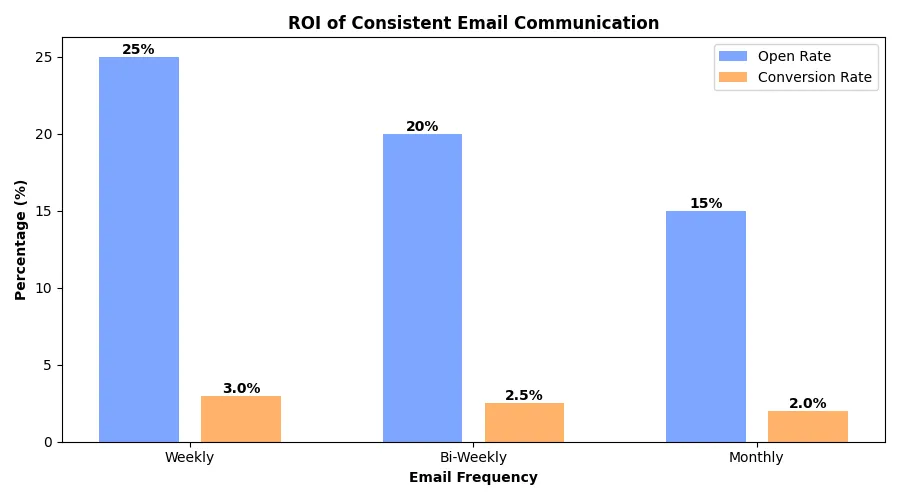
Consistent email communication can significantly impact your return on investment (ROI). Studies have shown that businesses that maintain a regular email schedule tend to have higher engagement rates and conversion rates compared to those that don’t.
| Email Frequency | Open Rate | Conversion Rate |
|---|---|---|
| Weekly | 25% | 3% |
| Bi-Weekly | 20% | 2.5% |
| Monthly | 15% | 2% |
Challenges Marketers Face Without Structured Campaign Planning
Without a structured campaign plan, marketers often face challenges such as:
- Inconsistent messaging
- Lack of cohesion across campaigns
- Difficulty in tracking performance
- Inability to adapt to changes in the market
How a Marketing Content Calendar Transforms Results
A marketing content calendar can transform your results by providing a clear plan and structure for your email marketing campaigns. This enables you to:
- Plan and schedule content in advance
- Ensure consistency and cohesion across campaigns
- Track performance and make data-driven decisions
- Adapt to changes in the market and adjust your strategy accordingly
By implementing a marketing content calendar, you can take your email marketing strategy to the next level and achieve better results.
Setting Clear Goals for Your Email Campaign Schedule
To maximize the effectiveness of your email marketing efforts, setting clear goals for your email campaign schedule is crucial. This foundational step ensures that your email marketing strategy is aligned with your overall business objectives, driving tangible results and enhancing your marketing content calendar.
Identifying Your Primary Email Marketing Objectives
Your email marketing objectives should be the guiding force behind your campaign planning. These objectives can vary, but they generally fall into two main categories:
Revenue and Conversion Goals
For many businesses, the primary purpose of email marketing is to drive revenue and conversions. This could involve promoting products, offering limited-time discounts, or nurturing leads through the sales funnel. By focusing on revenue and conversion goals, you can create targeted email campaigns that resonate with your audience and drive sales.
Engagement and Retention Targets
Beyond driving immediate sales, email marketing can also play a crucial role in building long-term relationships with your subscribers. Engagement and retention targets focus on keeping your audience engaged, fostering brand loyalty, and ensuring that your subscribers remain active and interested in your content.
Establishing Measurable Key Performance Indicators
Once you’ve identified your primary email marketing objectives, it’s essential to establish measurable key performance indicators (KPIs). These KPIs will help you track your progress, understand what’s working, and make data-driven decisions to optimize your email campaigns. Common KPIs for email marketing include open rates, click-through rates, conversion rates, and unsubscribe rates.
Aligning Email Goals with Overall Marketing Strategy
Your email marketing goals should not exist in a vacuum; they should be closely aligned with your overall marketing strategy. By ensuring that your email campaign schedule is integrated with your broader marketing efforts, you can create a cohesive and impactful marketing strategy that drives results across multiple channels.
Analyzing and Segmenting Your Email Audience
A well-structured email content calendar relies on a thorough analysis of your audience’s demographics, behaviors, and engagement levels. To create targeted campaigns that drive meaningful engagement, you need to understand who your subscribers are and what they prefer.
Conducting Subscriber List Analysis
Begin by analyzing your subscriber list to identify patterns and preferences. This involves examining demographic data, such as age, location, and job title, as well as behavioral data, like purchase history and email interaction. Segmenting your list based on these factors allows you to tailor your content to specific groups, increasing its relevance and effectiveness.
Creating Actionable Audience Segments
Once you have analyzed your subscriber list, the next step is to create actionable audience segments. This involves categorizing your subscribers into distinct groups based on their characteristics and behaviors.
Demographic Segmentation
Demographic segmentation involves grouping subscribers based on characteristics like age, gender, location, and occupation. For example, a fashion retailer might segment their list by gender to send targeted promotional emails.
Behavioral Segmentation
Behavioral segmentation focuses on subscribers’ actions, such as purchase history, browsing behavior, and email engagement. This helps in creating content that aligns with their interests and behaviors.
Engagement Level Segmentation
Segmenting based on engagement levels allows you to identify highly engaged subscribers versus those who are less active. This helps in crafting re-engagement campaigns for inactive subscribers and rewarding highly engaged ones with exclusive content.
- Identify inactive subscribers and create re-engagement campaigns.
- Reward highly engaged subscribers with exclusive content or offers.
- Tailor content based on the segment’s preferences and behaviors.
Matching Content Types to Subscriber Preferences
After segmenting your audience, it’s crucial to match your content types to their preferences. This involves understanding what type of content resonates with each segment and adjusting your email content calendar accordingly.
For instance, some segments might prefer educational content, while others might be more interested in promotional offers. By tailoring your content to the preferences of each segment, you can significantly improve engagement and conversion rates.
To effectively match content types to subscriber preferences, consider the following strategies:
- Analyze engagement metrics to understand what content types perform well with each segment.
- Use feedback mechanisms, such as surveys, to directly ask subscribers about their content preferences.
- Continuously monitor and adjust your content strategy based on the insights gained from your audience’s behavior and feedback.
Determining Email Content Types and Themes
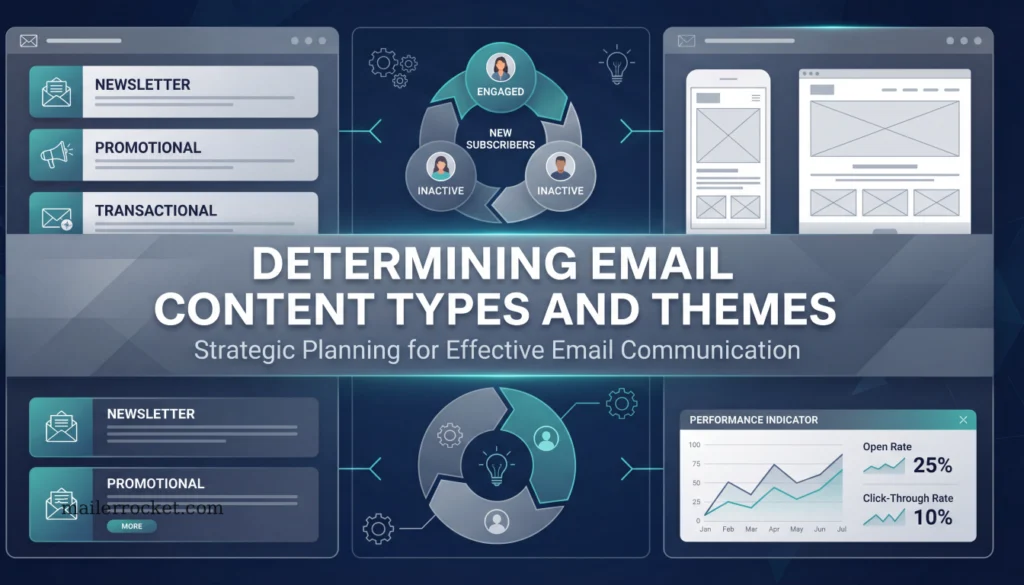
The next step in creating an effective email content calendar is determining the types of content that will resonate with your audience. This involves selecting a mix of content types and themes that cater to different subscriber preferences and behaviors.
To develop a comprehensive email content calendar, you need to consider various content categories. These include promotional and sales-driven campaigns, educational content and value-based emails, transactional and lifecycle messages, engagement campaigns, and seasonal or event-triggered communications.
Promotional and Sales-Driven Campaigns
Promotional emails are designed to drive sales, boost conversions, and increase revenue. These campaigns can include limited-time offers, special discounts, or product launches. To maximize their effectiveness, ensure that your promotional content is:
- Targeted to specific audience segments
- Personalized based on subscriber data
- Visually appealing with clear calls-to-action
Educational Content and Value-Based Emails
Educational content helps establish your brand as a thought leader in your industry. By providing valuable insights, tips, or tutorials, you can build trust with your subscribers and keep them engaged. Examples include:
- Industry news and updates
- How-to guides and tutorials
- Webinars and online courses
Transactional and Lifecycle Messages
Transactional emails are automated messages triggered by specific actions, such as purchases or sign-ups. These emails are crucial for building customer relationships and can include:
- Order confirmations and receipts
- Password reset instructions
- Welcome emails and onboarding sequences
Engagement Campaigns and Community Building
Engagement campaigns aim to foster a sense of community among your subscribers. These can include surveys, contests, or social media integrations. By encouraging interaction, you can increase brand loyalty and retention.
Seasonal and Event-Triggered Communications
Seasonal and event-triggered emails are designed to capitalize on holidays, special events, or timely opportunities. These campaigns can help you stay top-of-mind with your audience and drive sales during peak periods.
To illustrate the different content types and their applications, consider the following table:
| Content Type | Purpose | Examples |
|---|---|---|
| Promotional | Drive sales and conversions | Discounts, limited-time offers, product launches |
| Educational | Build trust and establish thought leadership | Industry news, how-to guides, webinars |
| Transactional | Automate customer interactions | Order confirmations, password resets, welcome emails |
| Engagement | Foster community and increase loyalty | Surveys, contests, social media integrations |
| Seasonal/Event-Triggered | Capitalize on timely opportunities | Holiday promotions, special event emails |
Streamline Your Email Campaign Calendar
Boost conversions and maintain audience trust with a well-structured email schedule.
By incorporating these content types and themes into your email content calendar, you can create a diverse and engaging email marketing strategy that resonates with your audience and drives results.
Building Your Email Content Calendar Step-by-Step
With your goals defined and audience analyzed, it’s time to construct a robust email content calendar. This process involves several key steps that will help you create a structured and effective email marketing strategy.
Step 1: Choose Your Digital Marketing Calendar Platform
Selecting the right digital marketing calendar platform is crucial for organizing your email content effectively. You have two primary options to consider:
Spreadsheet Templates for Simple Planning
Spreadsheet templates, such as Google Sheets or Microsoft Excel, offer a straightforward and familiar way to plan your email content. They provide flexibility and ease of use, especially for smaller campaigns or simpler content calendars.
Specialized Marketing Calendar Software
For more complex campaigns or larger teams, specialized marketing calendar software can offer advanced features such as automated scheduling, collaboration tools, and integration with your email marketing platform. Examples include CoSchedule, Trello, and Asana.
| Feature | Spreadsheet Templates | Specialized Marketing Calendar Software |
|---|---|---|
| Ease of Use | High | Medium to High |
| Collaboration Features | Limited | Advanced |
| Integration with Email Marketing Platforms | Limited | Native Integration |
| Cost | Low to Medium | Medium to High |
Step 2: Determine Your Optimal Email Frequency
Determining the optimal email frequency is critical to maintaining subscriber engagement without overwhelming them. Analyze your audience’s preferences and your resources to find the right balance.
Step 3: Identify Critical Dates and Campaign Milestones
Identify key dates and milestones relevant to your campaigns, such as product launches, holidays, or industry events. These will help you plan your content in advance and ensure timely delivery.
Step 4: Assign Content Themes to Each Week
Assigning content themes to each week helps maintain a consistent flow of relevant content. Align these themes with your overall marketing strategy and audience interests.
Step 5: Schedule Individual Email Send Times
Once you have your content calendar framework, schedule individual email send times. Consider factors like subscriber time zones, typical open times, and avoiding spam filters.
By following these steps, you can create a comprehensive email content calendar that enhances your campaign planning, improves content scheduling, and optimizes your overall email campaign schedule.
Mapping Out Your 30-Day Content Scheduling Strategy
To take your email marketing to the next level, developing a comprehensive 30-day content schedule is essential. This involves planning specific content and campaigns for each week of the month, tailored to achieve your email marketing goals.
Week 1: Subscriber Engagement and Onboarding
The first week is crucial for setting the tone for your email marketing campaign. It’s about engaging new subscribers and onboarding them into your brand’s ecosystem.
Welcome Series Components
A welcome series is a sequence of emails designed to introduce new subscribers to your brand. It typically includes:
- An initial welcome email with a warm greeting and introduction.
- Follow-up emails that provide value, such as exclusive content or offers.
Baseline Engagement Campaigns
Baseline engagement campaigns are designed to encourage interaction with your brand. This can be achieved through:
- Surveys or polls to gather feedback.
- Interactive content like quizzes or contests.
As emphasized by Marketer’s Guide, “A well-crafted welcome series can significantly improve subscriber engagement and retention.”
Week 2: Educational Value and Trust Building
The second week focuses on providing educational value to your subscribers, thereby building trust and establishing your brand as an authority in the industry.
How-to Guides and Resources
Creating and sharing how-to guides and resources is an effective way to educate your audience. This can include:
- Detailed guides on topics relevant to your audience.
- Webinars or video tutorials.
Industry Insights and Tips
Sharing industry insights and tips helps in positioning your brand as a thought leader. Consider:
- Newsletters that summarize key industry developments.
- Tips and best practices related to your products or services.
“Educational content not only informs but also builds trust with your audience, making them more likely to engage with your brand.” –
Week 3: Conversion-Focused and Promotional Content
By the third week, the focus shifts to conversion-focused and promotional content aimed at driving sales and revenue.
Product Highlights and Offers
Highlighting specific products or services and offering promotions can stimulate sales. This includes:
- Featured product emails.
- Special discounts or bundle deals.
Limited-Time Promotions
Creating a sense of urgency with limited-time promotions can boost conversions. Consider:
- Flash sales.
- Limited-time offers.
Week 4: Re-engagement and Feedback Collection
The final week is dedicated to re-engaging inactive subscribers and collecting feedback to improve future campaigns.
Win-Back Campaigns
Win-back campaigns are designed to re-engage subscribers who have become inactive. Strategies include:
- Personalized emails.
- Special offers for inactive subscribers.
Survey and Review Requests
Requesting feedback through surveys or review requests helps in understanding subscriber preferences and improving content.
By following this 30-day content scheduling strategy, you can create a comprehensive email marketing campaign that engages, educates, and converts your audience.
Selecting Tools for Effective Content Strategy Planning
Your email marketing success hinges on selecting the appropriate tools for content strategy planning. To create and manage a successful 30-day email content calendar, you need a combination of tools that can help you plan, execute, and analyze your campaigns effectively.
Let’s explore the various categories of tools that can support your content strategy planning:
Email Marketing Platform Calendars
Email marketing platforms often come with built-in calendar features that allow you to visualize and manage your email campaigns. These calendars provide a clear overview of your email schedule, making it easier to plan and avoid sending conflicting messages.
- Scheduling: Plan and schedule emails in advance.
- Drag-and-Drop Editors: Easily design and adjust email content.
- A/B Testing: Compare different email versions to optimize performance.
Project Management Tools for Marketing Campaign Calendar
Project management tools can be invaluable for planning and executing complex marketing campaigns. They help teams collaborate, assign tasks, and track progress.
| Tool | Key Features | Benefits |
|---|---|---|
| Asana | Task assignment, project tracking, reporting | Enhances team collaboration and productivity |
| Trello | Boards, lists, cards for project visualization | Provides a visual overview of campaign progress |
| Basecamp | Message boards, schedules, file sharing | Centralizes campaign information and communication |
Collaborative Planning Software Options
Collaborative planning software enables teams to work together more effectively on content calendars. These tools often include features like shared calendars, task management, and real-time commenting.
- Google Workspace: Offers shared calendars and collaborative document editing.
- Microsoft Teams: Integrates with Outlook for calendar management.
- Notion: Provides an all-in-one workspace for notes, tasks, and calendars.
Automation Features That Save Time
Automation is key to saving time and increasing efficiency in your email marketing efforts. Look for tools that offer automation features such as:
- Triggered Emails: Automatically send emails based on user actions.
- Drip Campaigns: Set up series of emails sent at predetermined intervals.
- Personalization: Use data to personalize email content for better engagement.
By leveraging these tools and features, you can streamline your content strategy planning, improve team collaboration, and ultimately enhance the effectiveness of your email marketing campaigns.
Monitoring and Optimizing Your Marketing Campaign Calendar
To maximize the effectiveness of your email marketing strategy, it’s crucial to continuously monitor and optimize your campaign calendar. This involves tracking key performance metrics, implementing A/B testing, adapting content based on subscriber behavior, and maintaining flexibility to capitalize on timely opportunities.
Tracking Essential Email Performance Metrics
To optimize your email marketing campaign, you need to track the right metrics. These metrics provide insights into how your emails are performing and where improvements can be made.
Open Rates and Click-Through Rates
Open rates indicate the percentage of recipients who opened your email, while click-through rates (CTR) measure the percentage of recipients who clicked on a link within your email. Both metrics are crucial for understanding how engaging your content is.
- Monitor open rates to gauge the effectiveness of your subject lines and sender name.
- Analyze CTR to determine how well your email content resonates with your audience.
Conversion and Revenue Metrics
Ultimately, the success of your email marketing campaign is measured by its impact on conversions and revenue. Tracking these metrics helps you understand the ROI of your email marketing efforts.
- Monitor conversion rates to see how effectively your emails drive desired actions.
- Track revenue generated from email campaigns to assess their financial impact.
List Health Indicators
Maintaining a healthy email list is vital for the long-term success of your email marketing strategy. List health indicators, such as bounce rates and unsubscribe rates, provide insights into the quality of your email list.
- Regularly clean your email list to remove inactive or invalid addresses.
- Monitor unsubscribe rates to identify potential issues with your content or frequency.
Implementing A/B Testing in Your Schedule
A/B testing, or split testing, involves comparing two versions of an email to determine which one performs better. This can be applied to various elements, such as subject lines, email content, or calls-to-action.
By incorporating A/B testing into your email marketing schedule, you can make data-driven decisions to improve your campaign’s effectiveness.
Adapting Content Based on Subscriber Behavior
Understanding your subscribers’ behavior is key to creating relevant and engaging content. Analyze how subscribers interact with your emails to identify patterns and preferences.
Use this information to tailor your content to better meet their needs, increasing the likelihood of conversion.
Maintaining Flexibility for Timely Opportunities
While having a structured content calendar is important, it’s equally crucial to remain flexible. This allows you to capitalize on timely opportunities, such as trending topics or unexpected events, to stay relevant and engage your audience.
By balancing planning with flexibility, you can ensure your email marketing strategy remains dynamic and responsive to changing circumstances.
Optimize Content for Maximum Impact
Use segmentation, targeted content, and performance tracking to enhance results.
Conclusion
Creating a 30-day email content calendar is a crucial step in enhancing your email marketing strategy. By following the steps outlined in this article, you’ve learned how to plan, schedule, and optimize your email campaigns with confidence. Your email content calendar serves as the backbone of your marketing efforts, ensuring consistency and relevance in your messaging.
To maximize your results, continually monitor and refine your marketing content calendar. Analyze your campaign performance, and make adjustments to your campaign planning as needed. This will help you stay aligned with your marketing goals and audience needs.
By implementing a well-structured email content calendar, you’ll be able to drive better engagement, boost conversions, and ultimately achieve your marketing objectives. Stay focused on delivering value to your subscribers, and you’ll reap the rewards of a successful email marketing strategy.