





You are constantly looking for innovative ways to captivate your audience and foster a deeper connection with your customers. One effective approach is to incorporate narrative marketing into your email marketing strategies.
By leveraging the power of email storytelling, you can create a more engaging and memorable experience for your customers. This involves crafting a compelling narrative that resonates with your audience and drives meaningful interactions.
Key Takeaways
- Discover the importance of narrative marketing in enhancing customer engagement.
- Learn how to effectively incorporate storytelling into your email marketing strategies.
- Understand the benefits of creating a memorable experience for your customers.
- Explore ways to drive meaningful interactions through email storytelling.
- Gain insights into crafting a compelling narrative that resonates with your audience.
The Power of Email Storytelling
Transform your email marketing with compelling narratives that boost engagement, loyalty, and conversions.
The Power of Narrative in Email Marketing
Narrative marketing has become a crucial element in email marketing campaigns, enabling businesses to connect with their audience on a deeper level. By incorporating storytelling techniques, marketers can create a more engaging and memorable experience for their recipients.
Why Stories Resonate with Email Recipients
Stories have a unique ability to resonate with email recipients, creating an emotional connection that goes beyond mere promotional content. This resonance is largely due to the way stories are processed in our brains, which can lead to increased empathy and understanding.
Emotional Connection Through Digital Channels
Digital channels, including email, offer a unique opportunity to create an emotional connection with customers. By using narrative marketing, businesses can tap into the emotions of their audience, fostering a deeper and more meaningful relationship.
Attention Retention in Crowded Inboxes
In today’s crowded inboxes, attention retention is a significant challenge. Storytelling can help marketers stand out from the noise, capturing the attention of their recipients and keeping them engaged.
The Psychology Behind Storytelling in Digital Communication
The psychology behind storytelling in digital communication is rooted in how our brains process information. Stories are more memorable and engaging than factual information alone, making them an effective tool for marketers.
| Storytelling Element | Effect on Recipients | Marketing Benefit |
|---|---|---|
| Emotional Connection | Increased empathy and engagement | Deeper brand relationships |
| Memorable Narrative | Better recall and retention | Improved brand recognition |
| Personalization | Increased relevance and interest | Higher conversion rates |
What is Email Storytelling and Why It Matters
Email storytelling is revolutionizing the way businesses connect with their audience through narrative techniques in email marketing. By leveraging the power of stories, brands can create a more personal and engaging experience for their customers.
Defining Narrative Marketing in the Email Context
Narrative marketing in email involves using stories to convey brand messages, rather than simply listing features or promotions. This approach helps to build an emotional connection with the recipient, making the brand more relatable and memorable.
How Storytelling Differs from Traditional Email Approaches
Traditional email marketing often focuses on the features and benefits of a product or service. In contrast, email storytelling shifts the focus to the customer, creating a narrative that resonates with their experiences and needs.
From Feature-Focused to Story-Focused Communication
By adopting a story-focused approach, businesses can move away from dry, feature-focused communication and towards a more engaging and personal style. This helps to capture the recipient’s attention and foster a deeper connection with the brand.
Creating Memorable Brand Experiences
Email storytelling enables brands to create memorable experiences that linger long after the email is read. By using narrative techniques, businesses can make their brand more relatable, increasing the likelihood of customer loyalty and retention.
| Traditional Email Marketing | Email Storytelling |
|---|---|
| Feature-focused content | Story-focused narrative |
| Promotional in nature | Emotionally engaging |
| Often ignored or deleted | Creates memorable brand experiences |
Benefits of Incorporating Storytelling in Email Campaigns
The strategic use of storytelling in email campaigns can lead to substantial improvements in customer engagement. By weaving narratives into your email marketing strategies, you can create a more personal and memorable connection with your audience.
Increased Open and Click-Through Rates
Storytelling can significantly boost your email open and click-through rates. When emails are crafted with compelling narratives, they are more likely to capture the recipient’s attention and encourage interaction.
Enhanced Brand Loyalty and Connection
Through storytelling, businesses can foster a deeper emotional connection with their customers. By sharing relatable stories, brands can build trust and loyalty, leading to long-term customer relationships.
Improved Conversion Metrics
Storytelling can also positively impact conversion metrics. By integrating narratives that highlight the value and benefits of a product or service, businesses can drive more conversions.
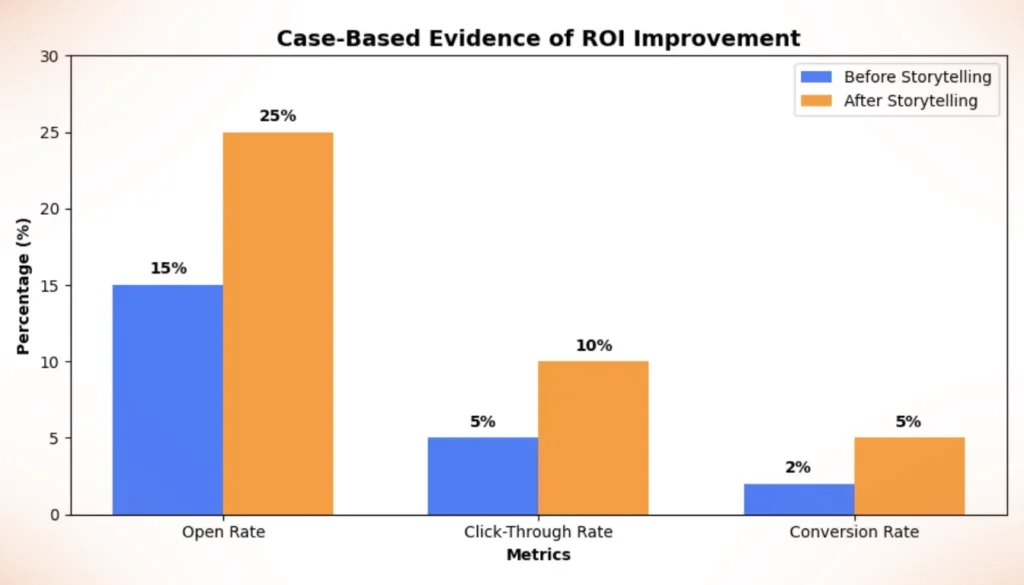
Case-Based Evidence of ROI Improvement
Several case studies have demonstrated the effectiveness of storytelling in improving ROI. For instance, a campaign that utilized customer success stories saw a 25% increase in conversion rates.
| Metric | Before Storytelling | After Storytelling |
|---|---|---|
| Open Rate | 15% | 25% |
| Click-Through Rate | 5% | 10% |
| Conversion Rate | 2% | 5% |
Core Email Storytelling Techniques for Better Engagement
Effective email storytelling can significantly boost engagement by leveraging core narrative techniques. You can captivate your audience by incorporating compelling storytelling methods in your email campaigns.
Character-Driven Narratives
Character-driven narratives are pivotal in making your email stories relatable and engaging. You can make your customers the heroes of your stories or position your brand as a guide to help them on their journey.
Customer as Hero Storytelling
By making the customer the hero, you create a personal connection with your audience. This approach focuses on the customer’s journey, challenges, and successes.
Brand as Guide Approach
Alternatively, positioning your brand as a guide allows you to support and empower your customers. This method emphasizes your brand’s role in helping customers achieve their goals.
Problem-Solution Frameworks
Problem-solution frameworks are effective in email storytelling as they directly address the customer’s pain points and offer solutions. This technique helps in creating a narrative that resonates with the audience.
Journey-Based Storytelling
Journey-based storytelling involves narrating the customer’s journey with your brand. It’s a powerful way to illustrate how your product or service has impacted their lives, fostering a deeper connection.
By incorporating these core email storytelling techniques, such as narrative marketing and storytelling for brand engagement, you can enhance your email marketing efforts and drive better engagement in your campaigns.
Turn Emails Into Experiences
Craft personalized story-driven campaigns that captivate audiences and deliver measurable results.
Crafting Your Email Narrative Strategy
Effective email narrative strategies hinge on understanding your brand’s core stories and how they align with customer journey stages. To craft a compelling narrative, you need to identify the stories that resonate with your audience and drive engagement.
Identifying Your Brand’s Core Stories
Your brand’s core stories are the foundation of your email narrative strategy. These stories should reflect your brand’s values, mission, and unique selling proposition. To identify them, consider the following:
- What sets your brand apart from competitors?
- What are your brand’s core values and mission?
- What customer experiences or testimonials can be turned into compelling stories?
Aligning Stories with Customer Journey Stages
Once you’ve identified your core stories, it’s crucial to align them with the different stages of the customer journey. This ensures that your narrative is relevant and engaging at every touchpoint.
Key stages to consider:
- Awareness: Introduce your brand and its value proposition.
- Consideration: Share stories that highlight your brand’s benefits and unique features.
- Decision: Use testimonials and success stories to build trust and encourage conversion.
Creating a Cohesive Narrative Across Email Sequences
A cohesive narrative across email sequences is vital for maintaining customer engagement. This involves creating a story arc that unfolds over multiple emails.
Story Mapping for Email Campaigns
Story mapping is a powerful technique for visualizing your narrative across email sequences. It helps you plan and ensure a cohesive story arc that resonates with your audience.
By following these steps and leveraging email narrative techniques, you can create a compelling email narrative strategy that drives engagement and conversion. Remember, the key is to be authentic, consistent, and customer-centric in your storytelling approach.
Structural Elements of Engaging Email Stories
To truly resonate with your audience, email stories must be built on a foundation of compelling structural elements. These elements work together to capture attention, convey your message, and drive engagement.
Compelling Subject Lines That Tease the Story
The subject line is your first opportunity to draw the reader into your narrative. Craft it carefully to pique curiosity or create a sense of urgency. For example, using action-oriented language or posing an intriguing question can significantly boost open rates.
Visual Storytelling Components
Visual elements play a crucial role in advancing your email narrative. They not only capture attention but also help to convey complex information in an easily digestible format.
Images That Advance the Narrative
Using relevant, high-quality images can enhance the story you’re telling. Ensure that your images support the narrative and aren’t just decorative. For instance, if you’re sharing a customer success story, include a photo of the customer or a related visual representation.
Design Elements That Support the Story
The design of your email should complement your narrative. Use typography, color schemes, and layout to create a visually appealing and cohesive story. For example, using a consistent color palette that aligns with your brand can reinforce your message.
Call-to-Action Integration Within Narratives
A well-integrated call-to-action (CTA) is crucial for turning your email story into a tangible outcome. Ensure your CTA is contextually relevant and clearly visible. For example, if your story is about a limited-time offer, your CTA should directly relate to that offer, making it easy for readers to take the next step.
By incorporating these structural elements, you can create email stories that not only engage your audience but also drive meaningful results for your business.
Narrative Marketing Through Email Sequences
Effective email sequences can be transformed into compelling narratives that capture the audience’s attention and foster brand connection. By strategically crafting these sequences, businesses can leverage the power of storytelling to enhance customer engagement and drive conversions.
Drip Campaign Storytelling
Drip campaign storytelling involves sending a series of targeted emails that unfold a narrative over time. This approach allows businesses to build a story that resonates with their audience, creating a more personal connection. By using drip campaign storytelling, companies can nurture leads and guide them through the sales funnel.
Welcome Series as a Story Arc
A welcome series can be designed as a story arc, introducing new subscribers to the brand’s narrative. This involves creating a sequence that begins with an introduction, builds to a climax, and resolves with a clear call-to-action. The welcome series serves as a foundational story that sets the tone for future interactions.
Beginning, Middle, and End Structure
A well-structured narrative in an email sequence should have a clear beginning, middle, and end. The beginning introduces the story and sets the context, the middle builds tension or interest, and the end provides resolution or a call-to-action. This structure helps maintain audience engagement throughout the sequence.
Re-engagement Campaigns Through Narrative
Re-engagement campaigns can also benefit from narrative marketing. By telling a story that rekindles interest or addresses customer pain points, businesses can re-engage inactive customers. Using narrative in re-engagement campaigns can help revive the customer relationship and encourage renewed interaction with the brand.
Personalization in Email Storytelling
In the realm of email marketing, personalization transforms storytelling into a powerful engagement tool. By tailoring narratives to individual preferences and behaviors, marketers can create a more immersive experience for their audience.
Personalization in email storytelling involves using data and insights to craft messages that resonate with recipients on a personal level. This approach not only enhances engagement but also fosters a deeper connection between the brand and its audience.
Data-Driven Character Development
Data-driven character development is crucial in creating personalized email stories. By leveraging customer data, marketers can develop characters that reflect the interests, needs, and preferences of their target audience.
Segmentation for Targeted Storytelling
Segmentation is another key aspect of personalized email storytelling. By dividing the audience into distinct segments based on demographics, behavior, or preferences, marketers can tailor their narratives to resonate with each group more effectively.
Dynamic Content That Adapts the Narrative
Dynamic content allows marketers to adapt their email narratives in real-time based on recipient interactions. This ensures that the story remains relevant and engaging throughout the customer journey.
Tools for Personalized Story Delivery
Several tools are available to help marketers deliver personalized email stories. These include:
| Tool | Description | Key Features |
|---|---|---|
| Mailchimp | Email marketing platform | Personalization tags, automation workflows |
| HubSpot | Marketing, sales, and customer service platform | Advanced segmentation, dynamic content |
| Marketo | Marketing automation platform | Personalization engine, lead scoring |
By incorporating these tools into their email marketing strategy, businesses can create more personalized and engaging stories that drive results.
Case Studies: Successful Email Storytelling Campaigns
By examining successful email storytelling campaigns, we can uncover the elements that make them effective and how they contribute to enhanced customer engagement. Brands across various industries have leveraged narrative marketing to forge deeper connections with their audience, drive engagement, and ultimately boost conversions.
B2C Success Stories
In the B2C sector, email storytelling has been particularly effective. Retail brands and service industries have seen significant improvements in customer loyalty and conversion rates.
Retail Brand Narrative Examples
Retailers like Warby Parker have used storytelling to create an emotional connection with their customers. By sharing the story behind their brand and highlighting customer experiences, they’ve fostered a sense of community and brand loyalty.
Service Industry Storytelling
Service industries, such as hospitality and tourism, have also benefited from email storytelling. For instance, Airbnb uses narratives to share unique travel experiences, making their brand more relatable and personal.
B2B Narrative Approaches
In the B2B space, email storytelling helps establish thought leadership and builds trust with potential clients. Companies like HubSpot use storytelling to illustrate the value of their services through customer success stories and case studies.
Non-Profit Emotional Storytelling
Non-profit organizations often use emotional storytelling to connect with their audience and drive donations. The American Red Cross, for example, shares powerful stories of impact, creating an emotional resonance that motivates people to act.
These case studies demonstrate the versatility and effectiveness of email storytelling across different sectors. By understanding what works for others, you can develop your own successful email storytelling campaigns.
Measuring the Impact of Your Email Stories
The impact of email storytelling can be profound, but to gauge its true effectiveness, you must employ a nuanced measurement strategy. As you integrate narrative techniques into your email campaigns, understanding how to measure their impact is crucial for optimizing future content.
Engagement Metrics Beyond Opens and Clicks
While open rates and click-through rates are important indicators of email engagement, they only tell part of the story. To get a more comprehensive view, consider metrics such as:
- Time spent reading the email
- Scroll depth
- Sharing or forwarding rates
- Conversion rates on specific calls-to-action
Qualitative Feedback Analysis
Quantitative metrics are essential, but qualitative feedback can provide deeper insights into how your audience resonates with your email stories. Analyze replies, survey responses, and social media comments to understand the emotional and psychological impact of your narratives.
A/B Testing Narrative Elements
A/B testing is a powerful tool for refining your email storytelling approach. By testing different narrative elements, you can identify what resonates best with your audience.
What Story Elements to Test First
Begin by testing core elements of your narrative, such as:
| Element | Variation 1 | Variation 2 |
|---|---|---|
| Subject Line | Story Teaser | Direct Benefit |
| Narrative Tone | Formal | Casual |
| Call-to-Action | Embedded in Story | Separate from Story |
By systematically testing these elements, you can refine your email storytelling to better engage your audience and drive desired actions.
Narrative Marketing That Converts
Use strategic storytelling techniques to create emotional connections and drive meaningful customer action.
Conclusion: Elevating Your Email Marketing Through Storytelling
As we’ve explored throughout this article, email storytelling is a powerful tool for enhancing your email marketing strategy. By incorporating narrative marketing techniques, you can create a deeper connection with your audience and drive more effective campaigns.
Storytelling in content marketing, particularly in email, allows you to convey complex information in an engaging and memorable way. By leveraging character-driven narratives, problem-solution frameworks, and journey-based storytelling, you can increase open and click-through rates, enhance brand loyalty, and improve conversion metrics.
To successfully implement email storytelling, focus on identifying your brand’s core stories and aligning them with customer journey stages. Use compelling subject lines, visual storytelling components, and call-to-action integration to bring your narratives to life. By doing so, you’ll be able to measure the impact of your email stories through engagement metrics and qualitative feedback analysis.
By embracing email storytelling, you’ll not only elevate your email marketing but also create a more personal and engaging experience for your audience. Start crafting your narrative strategy today and discover the potential of storytelling in content marketing.